China leads by example on Global South climate action







At September's 80th session of the United Nations General Assembly, one statement stood out among many during the week of debate: the presentation by China of its new Nationally Determined Contribution (NDC).
According to the NDC, China will, by 2035, reduce economy-wide net greenhouse gas emissions by between 7 and 10 percent from peak levels. This ambition carries deep implications for global climate action, especially for the countries of the Global South most vulnerable to climate shocks.
As parliamentarians and policymakers associated with the Climate Vulnerable Forum (CVF), an alliance of 74 of the world's most climate-vulnerable nations representing 1.8 billion people, we listened keenly to Beijing's words. For us, decisions made in China increasingly shape the climate destiny of the developing world. China has not only demonstrated leadership in renewable technology, but has also emerged as the clean energy powerhouse that can inspire a new model of growth rooted in sustainability and equity.
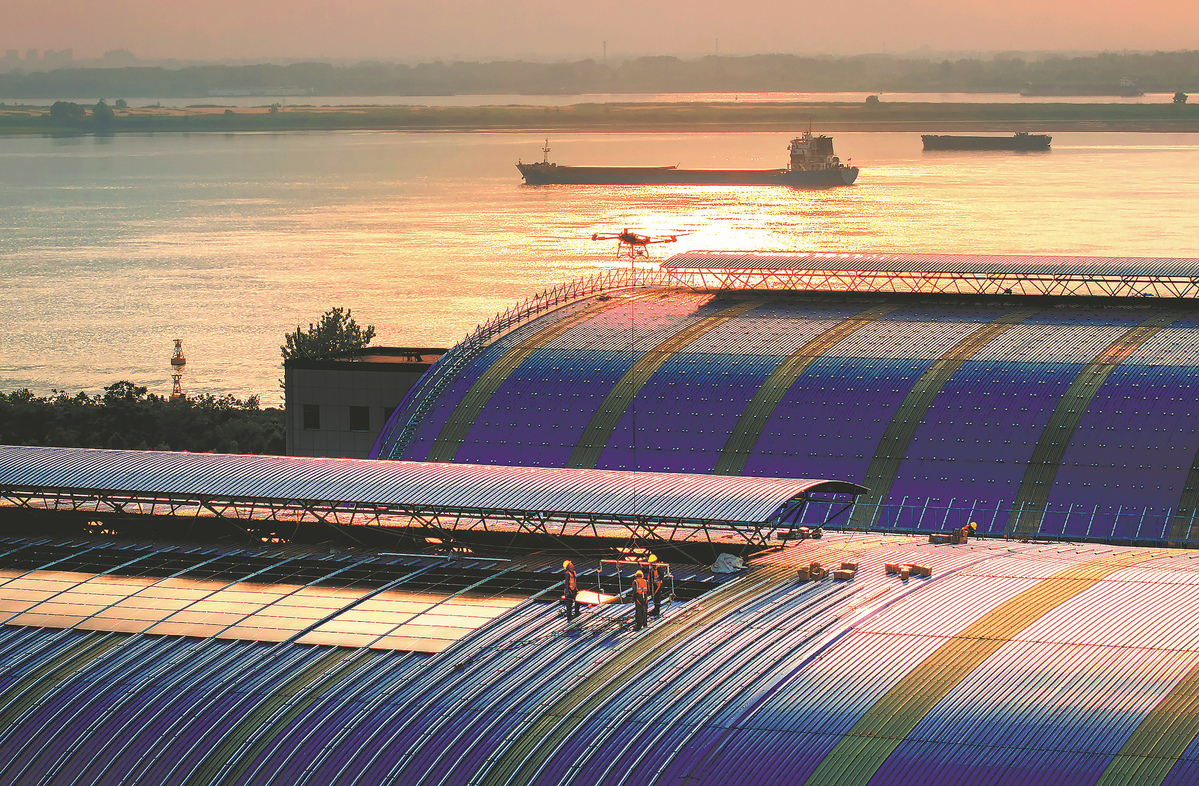
Over the past decade, China has surpassed expectations in renewable energy deployment. Its unmatched investments in solar and wind power, batteries, and electric mobility have transformed global markets.
In Pakistan, the solar revolution largely driven by affordable Chinese imports has illuminated homes, reduced costs and expanded access to green energy. More recently, China's collaboration with Pakistan has extended to the promotion of electric vehicles (EVs) and climate-smart agriculture, offering critical support for the modernization of Pakistan's transport sector and driving its agricultural transformation toward sustainability and efficiency.
This model offers hope to fellow members of the CVF, from small island states and African nations to middle-income economies struggling to secure reliable power.
Each of these nations possesses vast untapped renewable potential, but lacks the investment, technology and grid infrastructure to realize it. This is where China's partnership becomes essential, not just as a financier, but as a collaborator in a shared journey toward resilience and green industrialization.
The CVF's "Climate Prosperity Plans" represent a bold vision for transforming vulnerability into opportunity through strategic investment and technological cooperation. Each country is crafting a national pathway for green growth, adaptation and resilience, with clean energy at the heart of transformation. For these plans to succeed, financing must be predictable, coordinated, and scaled - areas where China's experience and resources can make an immediate impact.
When 74 developing countries act collectively, the opportunities for risk-sharing, efficiency and innovation multiply. Together, they can shape a new framework of equitable development, where no country is left behind in the energy transition.
In a world increasingly divided by economic and political disparities, South–South cooperation stands as a pillar of solidarity and shared growth. It embodies the principle that nations facing similar vulnerabilities, from floods to heatwaves, from droughts to displacement, are also equipped with shared solutions.
Pakistan has consistently emphasized the value of collaborative action among the Global South. Through platforms such as the CVF, the Group of 77 and regional partnerships in South and East Asia, Pakistan advocates that collective wisdom and mutual support are key to advancing the climate agenda.
South–South cooperation is not merely symbolic, it is strategic. By pooling knowledge, technology and finance, developing nations can accelerate their transitions toward low-carbon and climate-resilient economies. Shared research on renewable energy systems, cross-border water management, air pollution, waste management and climate-smart agriculture can multiply regional benefits. Similarly, joint capacity-building and technology transfer can empower countries to leapfrog toward sustainability without repeating the high-carbon trajectories of industrialized nations.
This cooperation also enhances the negotiating strength of developing countries in multilateral fora such as COP30. When the Global South speaks with a unified voice, it shifts the balance toward fairness in climate finance and accountability in global commitments.
With the impact of climate change becoming increasingly severe, the time for isolated responses is over. Whether it is rising sea levels threatening island states, melting glaciers reshaping rivers in South Asia, or desertification affecting food security in Africa, our vulnerabilities are interconnected. Hence, our responses must be too.
By fostering South–South cooperation and deepening alliances with China, the developing world can move from the margins of vulnerability to the center of climate innovation. Through shared technologies, pooled investments and mutual trust, we can redefine prosperity for a generation that refuses to choose between development and survival.
In this shared journey toward resilience and green growth, Pakistan stands ready as both a bridge and a believer in the promise of cooperation, solidarity and collective strength.
The author, Romina Khurshid Alam, is coordinator on climate change for Pakistan's prime minister, and a member of Pakistan's National Assembly.
The views don't necessarily represent those of China Daily.
If you have a specific expertise, or would like to share your thought about our stories, then send us your writings at opinion@chinadaily.com.cn, and comment@chinadaily.com.cn.