China's rise upholds its aspiration of peace







In the mid-20th century, China was one of the world's poorest countries. At the turn of the 21st century, the nation's story changed, with China becoming the second-largest economy in the world. This peaceful rise by China, without the intent to become a hegemon, significantly altered the global power balance by promoting a multipolar world free from unilateralism.
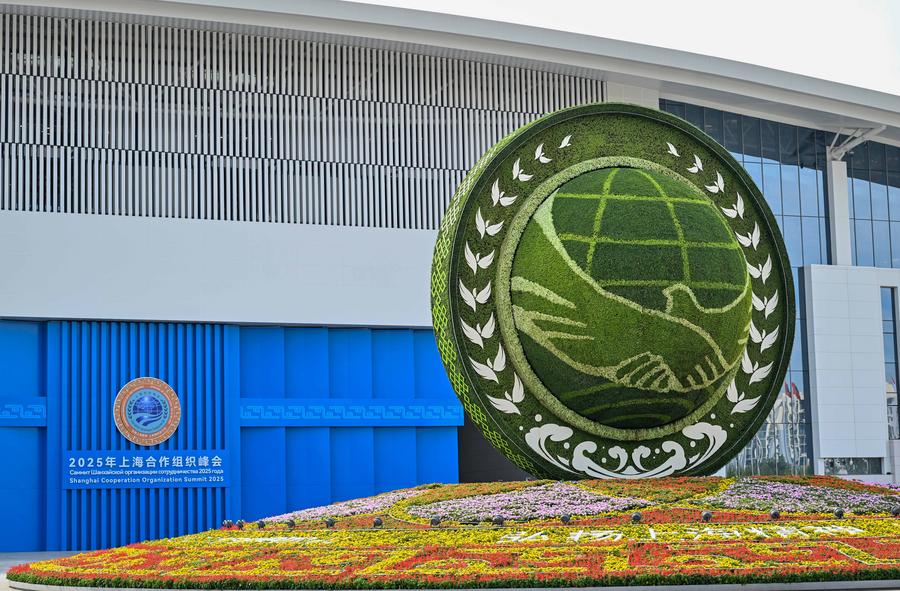
This was well articulated at the recently concluded Shanghai Cooperation Organization Summit 2025 in Tianjin, where President Xi Jinping proposed the Global Governance Initiative to spearhead dialogue on more just and equitable global governance.
In contrast, the United States, once a strong proponent of multilateralism, particularly after World War II, and the leading global power, has become the later-day advocate of anti-globalization, leading to its decline as the once revered global hegemon.
This power shift and China's peaceful rise have also reversed the legacy of liberal modernity, challenging the global hegemony of Western modernity over other civilizations, and asserted a model of modernization that is transformational and emancipatory in nature.
However, the question that this begets is, how has China managed to rise peacefully without the use of hard power or aggression?
First, China is a strong advocate and steadfast practitioner of true multilateralism.
While the US administration withdrew from major international organizations such as the World Health Organization, China is actively supporting a wide range of multilateral organizations.
These organizations include global bodies like the UN, the World Trade Organization and the WHO, regional organizations such as the Shanghai Cooperation Organization and the Association of Southeast Asian Nations and China, Japan and South Korea (ASEAN+3), and transregional groups like the Asia-Pacific Economic Cooperation forum and BRICS.
Additionally, China has spearheaded the creation of new multilateral financial institutions like the Asian Infrastructure Investment Bank, BRICS' New Development Bank and the Asian Development Bank. These multilateral institutions have offered alternative development financing and promoted South-South cooperation.
Second, China's global provision of public goods has significantly contributed to the transformation and empowerment of various civilizations. In 2017, Joseph Nye, a US political scientist, warned that if a rising China failed to supply such public goods, it could fall into the Kindleberger Trap, a scenario in which the absence of leadership by an emerging power, as seen with the US nearly a century ago, plunged the world into global depression and conflict. President Xi has acknowledged this historical lesson, placing the expansion of China's role in delivering global public goods, such as the Belt and Road Initiative, Global Development Initiative, Global Security Initiative and Global Civilization Initiative, and now Global Governance Initiative, at the core of his foreign policy agenda. This shared prosperity has not only transformed China, but also the world, increasing Beijing's influence globally.
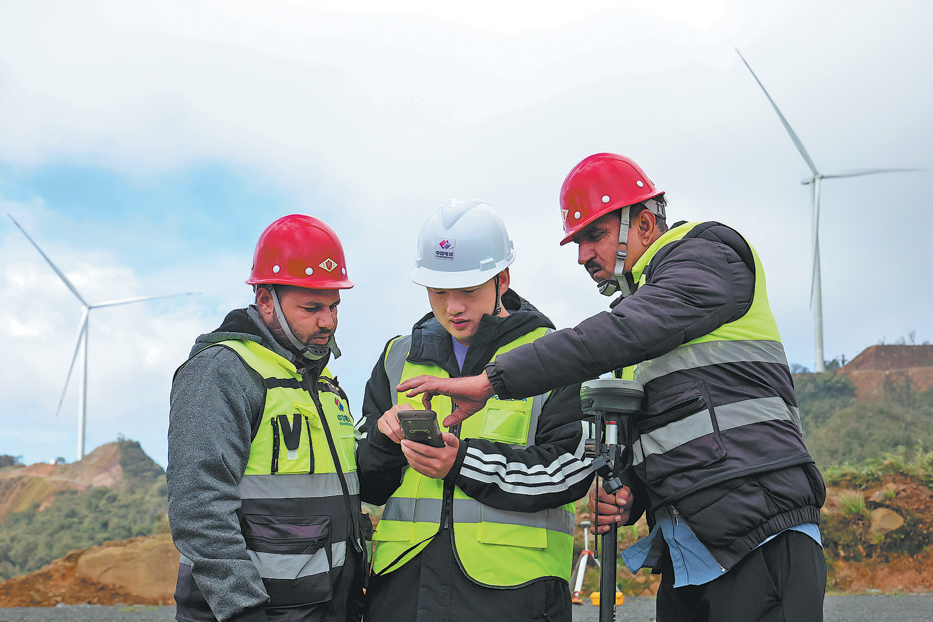
Third, China's peaceful rise has been fueled by its strategic economic reforms, robust manufacturing sector and foreign investments. At the 2025 Ministerial Meeting of Coordinators on the Implementation of the Follow-up Actions of the Forum on China-Africa Cooperation in Changsha, Hunan province, President Xi proposed a China-Africa economic partnership for shared development. This initiative will offer zero-tariff access to products from 53 African countries that maintain diplomatic ties with China, covering nearly all goods, from agriculture and minerals to textiles and manufactured products. This policy will significantly promote Africa's industrialization by leveraging its natural resources. Moreover, through its robust economic reforms, China continues to be the main trading partner of over 140 countries and regional groupings.
In contrast, the recent US protectionist policies of "reciprocal tariffs" under the country's "America First" agenda have disrupted global trade. These tariffs have slowed production, disrupted supply chains and diminished the demand for Africa's raw materials, destabilizing the continent's export economy. Additionally, they have contributed to job losses and the closure of businesses, especially micro, small and medium-sized enterprises, a critical source of youth employment in Africa. Countries like Madagascar and Lesotho, which rely heavily on access to US markets through the US' African Growth and Opportunity Act, are particularly vulnerable. This has pushed many countries in the Global South to look for alternative markets.
Fourth, China focuses on using soft power rather than military power. Many countries in the Global South prefer working with China because it promotes the power of dialogue and preventive diplomacy, rather than coercion and manipulation, to protect development gains in the world. Despite being an emerging power, China has not colonized any countries in the world, but instead engages only in extensive economic partnerships and investments in various countries, particularly in Africa.
Last but not least, China's peaceful development is anchored within the Communist Party of China agenda. For over a century, the CPC has stayed true to its original aspiration and founding mission and has continued to pursue Chinese modernization that breaks the myth of "modernization equals Westernization". This has enabled many other countries to begin pushing for their own style of modernization that is in tandem with their own development aspirations.
Indeed, China's rise has challenged the global hegemony of Western modernity and imperialism, while upholding its aspiration of promoting peace and development, and never seeking hegemony.
The author is executive director of the China-Africa Center at the Kenya-based Africa Policy Institute.
The views do not necessarily reflect those of China Daily.