China's Global Governance Initiative offers guide for regulation of oceans







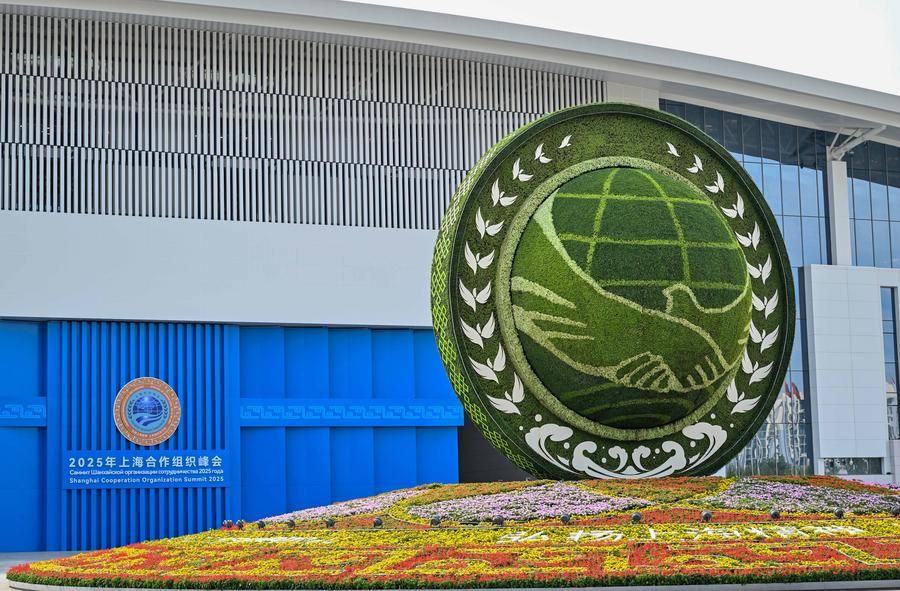
At the "SCO Plus" meeting in Tianjin, China proposed the Global Governance Initiative (GGI). The GGI is the latest in a line of Chinese initiatives and follows on from the Global Development, Global Security and Global Civilization initiatives.
As the world navigates an era of unprecedented turbulence and transformation, the GGI offers critical guidance for addressing complex global threats and challenges. This initiative underscores China's commitment to providing public goods and fostering a more equitable and sustainable international order.
At its core, the GGI is built on five fundamental principles: upholding sovereign equality, adhering to international rule of law, practicing multilateralism, promoting people-centered development, and emphasizing action-oriented approaches. These principles are logically interconnected and mutually reinforcing, forming a comprehensive framework for global governance.
Sovereign equality serves as the cornerstone of contemporary international relations and the prerequisite for effective global governance. It emphasizes that all nations, regardless of size or strength, should enjoy equal rights and opportunities to participate in shaping international rules. This principle directly challenges the power monopolies and inequalities that plague the current global governance system.
Adherence to international rule of law is essential for maintaining stability and predictability in interstate relations. By advocating for a rules-based order centered on the United Nations Charter, the GGI provides institutional safeguards for global governance. Multilateralism, as the operational pathway, emphasizes consultation, cooperation and shared benefits, rejecting unilateralism and hegemonic practices.
The people-centered principle ensures that global governance outcomes benefit all of humanity, enhancing the legitimacy and inclusivity of governance mechanisms. Finally, the action-oriented approach prioritizes systematic planning, coordinated implementation and pragmatic solutions, steering global governance toward greater efficiency and fairness.
Ocean governance is a critical component of international governance, and the GGI holds profound implications for addressing contemporary maritime challenges. The global ocean governance landscape is undergoing significant restructuring, with diverse actors - including states, intergovernmental organizations, NGOs and private entities - participating in governance processes. The scope of governance has also expanded to include marine environmental protection, sustainable resource use, maritime security and polar affairs.
However, the existing ocean governance system suffers from structural deficiencies in power distribution, rule-making and institutional design. While traditional maritime powers no longer monopolize governance processes, their influence remains substantial. A Cold War mentality, hegemonism and protectionism continue to undermine the democracy, inclusivity and representativeness of ocean governance. Unilateral actions further destabilize the international maritime order, which is supposed to be grounded in international law.
The interplay between traditional and non-traditional maritime issues, compounded by geopolitical tensions, adds layers of complexity to ocean governance. For instance, cooperative international ocean initiatives often face resistance, reflecting a troubling "new normal". Some traditional maritime powers are retreating from their international responsibilities, as seen in their reluctance to regulate deep-sea mining. Meanwhile, increased interventions in disputed regions, such as the South China Sea, exemplify the challenges of maintaining stability and cooperation.
China's strategy for global ocean governance is characterized by a clear, phased approach. In the short term, China focuses on safeguarding its territorial sovereignty and maritime rights while demonstrating strategic restraint and initiative. Through proactive diplomacy and functional cooperation, China aims to foster a more stable, secure and equitable regional maritime order. Its principles of "resolving disputes through negotiation, mitigating conflicts through development cooperation and managing disagreements through rules-based mechanisms" have proven effective in building trust and consensus with neighboring countries.
In the medium term, China seeks to inject stability and positive narratives into regional maritime security dynamics. In emerging areas such as deep-sea mining, polar governance and marine biodiversity conservation, China will leverage the GGI's principles to provide high-quality public goods. This phase is critical for enhancing China's soft power and transitioning from a "major maritime nation" to a "strong maritime power".
In the long term, China aspires to evolve from a follower to a leader in shaping the international maritime order. By promoting its vision and solutions, China aims to gain broad international recognition and contribute to a more just and reasonable global governance system.
Realizing this vision requires robust domestic governance. As a land and maritime power, China's domestic ocean governance involves rights protection, economic development, ecological conservation and technological innovation. Success in these areas not only benefits its citizens but also provides valuable experience for global ocean governance.
Hainan province plays a pivotal role in China's maritime strategy. With jurisdiction over vast maritime areas, Hainan is crucial for safeguarding China's sovereignty in the South China Sea. It also serves as a hub for marine ecological protection, scientific research and sustainable resource development. By fostering functional cooperation with ASEAN countries in areas such as fisheries management, marine research and disaster response, Hainan can model regional collaboration and support the development of a China-ASEAN blue economy partnership.
Legal frameworks are essential for guiding and safeguarding ocean governance. Domestically, China must accelerate the improvement of its maritime legal system, ensuring alignment with its unique geographical characteristics, historical traditions and international law. Internationally, China should actively participate in reviewing, revising and refining existing maritime rules, particularly those with significant loopholes or ambiguities. Through state practice, China can contribute to the evolution of customary international law and advance international rule of law in ocean governance.
Soft power building is equally critical. Global ocean governance is a contest of rules and discourse. China must strategically engage in and lead the formulation of international rules, the establishment of international organizations and the design of action paradigms. By enhancing its agenda-setting, rule-making and paradigm-shaping capabilities, China can steer the international maritime order toward greater justice and equity.
Regional ocean governance serves as a practical starting point for broader global efforts. In the South China Sea, China must balance rights protection with stability maintenance, leveraging its maritime strategy to enhance situational control and cooperative capabilities. Simultaneously, addressing global maritime issues requires extensive international cooperation. While great power collaboration is vital for providing global public goods, the Global South must also be engaged. By strengthening policy coordination with major maritime powers and developing nations, China can help build a fair, secure and prosperous global maritime order.
The Global Governance Initiative provides a strategic framework for China's participation and leadership in global ocean governance. As a responsible major power, China is committed to advancing a future of fairness, sustainability and shared prosperity.
While the path forward may be challenging, it is indispensable for building a community with a shared future for the oceans and fulfilling China's solemn promise to the world. Through concrete actions and unwavering dedication, China will continue to contribute to the evolution of global governance in the 21st century.
Ding Duo is the director of the Center for International and Regional Studies, National Institute for South China Sea Studies.
The views don't necessarily reflect those of China Daily.
If you have a specific expertise, or would like to share your thought about our stories, then send us your writings at opinion@chinadaily.com.cn, and comment@chinadaily.com.cn.