Xizang's meteoric rise proves true







It is both an honor and a privilege to reflect on a subject of immense historical and contemporary significance — the founding of the Xizang autonomous region and its profound impact on the region's transformation.
In our native lexicon, Xizang has long been revered as the "neighboring realm" or the "land at the frontier". Though geographically distant — with cities like Sakya, Shigatse and Lhasa lying far beyond the Kathmandu Valley — Xizang has always occupied a cherished place in our collective consciousness as a land of mystique and cultural affinity.
The commercial and cultural ties between Kathmandu and Xizang, particularly Lhasa, stretch back over a millennium. Generations of Newar merchants from the Kathmandu Valley sojourned in Lhasa and beyond, bringing back a rich tapestry of stories and experiences to their homeland. These narratives shaped the perceptions of Xizang among the people of Kathmandu, painting it as a land of wonder, spirituality and enduring traditions.
As a young Newar growing up in Kathmandu, my earliest impressions of Xizang and its people were forged through the lyrical cadences of Newar literature and the vivid anecdotes of elders who had traded in Lhasa. To my youthful imagination, Lhasa was an enigmatic city where the divine and the mortal coexisted, shrouded in an aura of sacred mystery.
It was not until 2008, when I first set foot in Lhasa and traversed the vast landscapes of Xizang, that I understood the region's true essence. Since then, I have returned no fewer than five times, each visit deepening my understanding of its remarkable evolution.
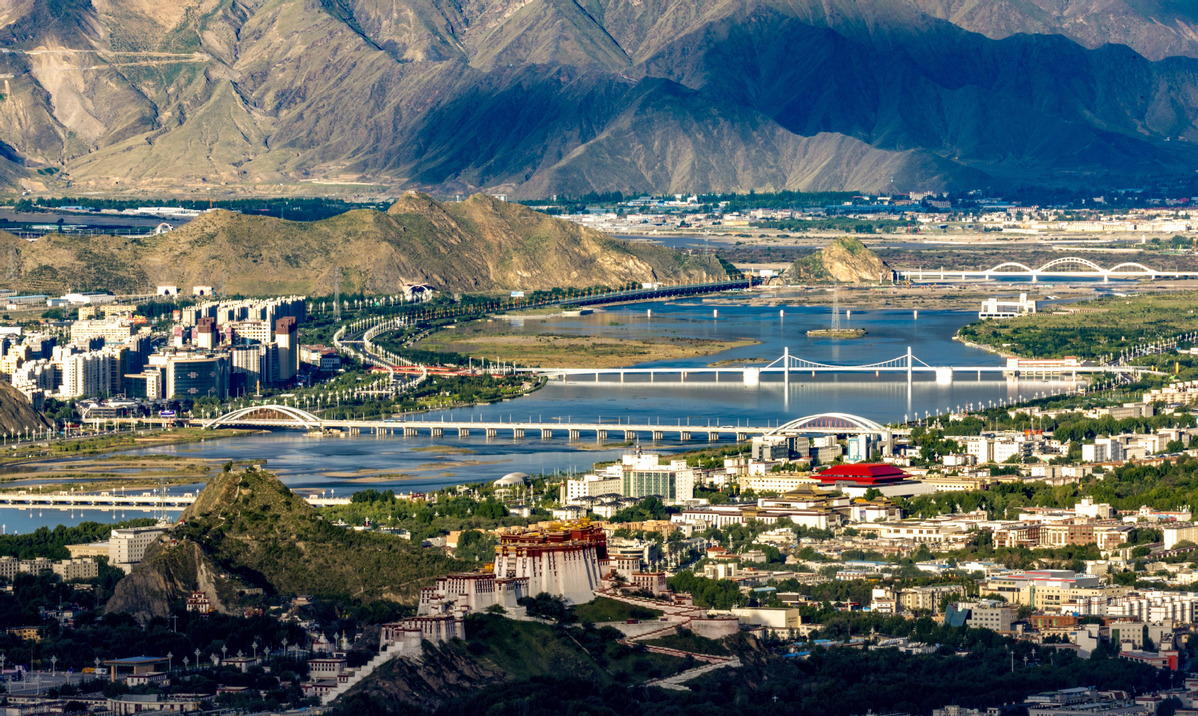
For centuries, Xizang's economic progress was hindered by its formidable geography, rugged terrain and delicate ecology. Yet in recent decades the region has undergone a metamorphosis so profound that it bears little resemblance to the Lhasa of my childhood reveries. The mountains and rivers remain unchanged, but the socioeconomic landscape has completely transformed.
How has Xizang achieved such rapid development despite its harsh natural constraints? It is clear that the founding of the Xizang autonomous region has been the cornerstone of this transformation. The decision of the Chinese central government and the Communist Party of China brought about progress where none seemed possible. Three pivotal strategies underpin this miraculous development:
First, prioritizing social stability as the bedrock of progress.
Xizang, though designated as an autonomous region, is home to a mosaic of ethnicities, communities and religious traditions. Even within the Tibetan majority, diverse sects and dialects coexist — some so distinct that mutual comprehension is challenging. Such diversity, while culturally enriching, also carries the potential for discord. Compounding this, external forces have persistently sought to destabilize the region.
Recognizing these challenges, the central government has placed social stability at the heart of its governance, employing comprehensive measures to foster harmony. By ensuring that all ethnic groups thrive within the framework of unity, Xizang has become a model of peaceful coexistence.
Second, unleashing economic development as engine of prosperity.
Some romanticize Xizang as an unchanging sanctuary, fearing that modernization might erode its spiritual essence. Yet economic advancement does not desecrate the past. Rather it elevates the future. By alleviating the scourge of poverty, development has eradicated many historical injustices borne of deprivation.
Given Xizang's ecological fragility and limited resources, conventional development models were untenable. That's why the central government adopted an innovative, multi-pronged approach. One, direct fiscal support from Beijing, supplemented by paired assistance from the country's most prosperous provinces and municipalities, provides resources to Xizang. Two, the strategic scaling of indigenous industries ensures that Xizang's unique commodities reach global markets. And three, sustainable eco-tourism balances growth with environmental stewardship.
Third, reviving Tibetan culture and heritage.
Far from being diluted by the changes in the socioeconomic landscape, Tibetan culture has flourished alongside economic progress. Ancient monasteries and temples have been meticulously restored. The freedom of religious belief is fully protected, and Tibetan Buddhism is well-preserved and passed down there. Thangka painting schools have proliferated, safeguarding this sacred art. The Epic of King Gesar, a literary treasure, has also been systematically preserved.
The Tibetan-language scholarship thrives in academic institutions and traditional Tibetan medicine is being modernized and has gained global recognition.
Xizang's meteoric rise from an isolated, underdeveloped frontier to a beacon of holistic progress stands as a testament to the visionary establishment of the Xizang autonomous region. Through unwavering commitment to stability, innovation-driven growth and cultural revitalization, the central government has rewritten the destiny of this once-remote land.
It is a narrative not just of transformation, but of triumph against the odds. Indeed, it is a lesson for the world how unity, foresight and resolute governance can change a region and the lives of its people.
The author is first vice-president of Arniko Society, Nepal. The views don't necessarily represent those of China Daily.
If you have a specific expertise, or would like to share your thought about our stories, then send us your writings at opinion@chinadaily.com.cn, and comment@chinadaily.com.cn.