Famed American British writer Henry James once said, "It takes a great deal of history to produce a little literature."
As artificial intelligence (AI) rapidly evolves, it may take only minutes or even seconds for AI tools to generate poetry in the style of Li Bai, craft short stories with an O. Henry twist, and translate lengthy texts into various foreign languages.
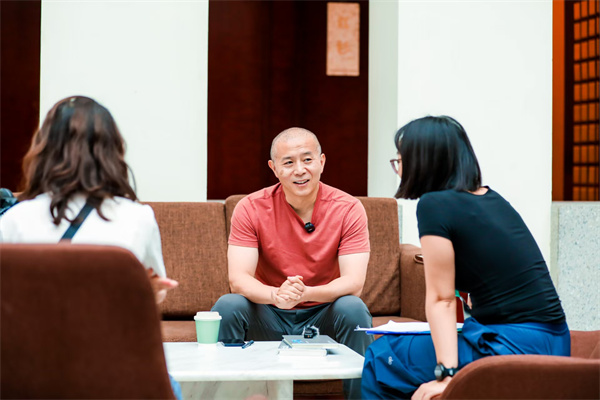
Can AI truly replace writers and translators? Participants of the 7th International Sinologists Conference on Translating Chinese Literature, held in Nanjing, East China's Jiangsu province, from Monday to Wednesday, faced this significant issue head-on.
The event, co-hosted by the China Writers Association and the Nanjing municipal people's government, brought together 39 Sinologists from 31 countries and 39 Chinese writers to discuss the latest developments in Chinese literature and how to expand its reach in the fast-changing era.
Bi Feiyu, a Mao Dun Literature Prize recipient and author of Massage, The Moon Opera, and Three Sisters, strongly disapproves of the use of AI in writing.
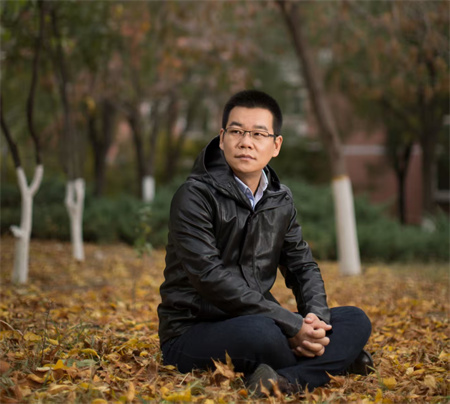
"I will never use AI to write," thundered the established writer, whose works have been translated into more than 20 languages.
Identifying himself as a pleasure-seeking writer, Bi said that the main reason he chose writing as a profession is that it allows him to experience and express the world through words, which he enjoys most in life.
"To write is my ability. It is also my right," he stated.
"I wouldn't use AI even if it could better my novel writing. That means I would lose my right. Then what do I need this better novel for?"
"Technological progress certainly provides us with convenience and happiness in many areas of life. However, when it comes to writing, I prefer to do it myself. It is my sacred right, and I will not allow anything to infringe upon it," the writer expressed.
Xu Zechen, another winner of the Mao Dun Literature Prize, showed mixed feelings about this subject.
"Although AI hasn't yet affected my writing, I feel pessimistic about its rapidly evolving creative capabilities. As AI continues to expand its database, it is likely to replace most creatives, including writers, since truly original works are rare in the world," the author of Northward and Jerusalem told the China Daily website.
On a more positive note, Xu, lauded as one of the best Chinese writers born in the 1970s, said he believes in humans' ability to upgrade themselves, especially for writers.
"As long as we work hard to stimulate our potential, find our unique voice, and update our understanding of the world, we, as humans, can hardly be replaced by machines," he said.
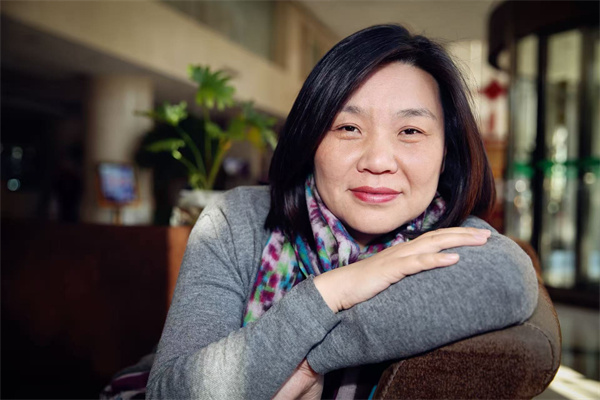
Writer and academic Liang Hong, acclaimed for her non-fiction trilogy based on Liang Village, her hometown in Central China's Henan province, voiced a similar sentiment.
Liang recalled when AI tool DeepSeek surged as a sensation earlier this year, she, in the middle of a writing retreat, felt a strong sense of rebellion.
"I thought I would never use AI in my writing. Instead, I felt a strong desire to portray my characters vividly and in detail," she said. "Even if, someday, the characters in my book are included in an AI database, I would still feel proud because it represents my contribution".
"AI can expand our perspectives," the writer acknowledged. "However, it can never substitute for the gaze I have on the subject of my writing or the deep emotions I feel toward it. This profound emotion is the foundation for every writer's creation, whether it's in shaping characters or exploring social life," she added.
Liang said she, as a writer, wouldn't fight against AI, which, after all, is an unstoppable trend. "I think I must be stronger and have more emotional power so that I can build a more authentic connection with the era I'm living in".
Sinologists participating in the discussion, many of whom have dedicated decades to translating and researching Chinese literature, agreed that while AI can serve as a useful tool, it should never replace human translators in the realm of literary translation.