Zhangjiagang powered up with hydrogen
East China city using clean energy to support public transport







As a bus glides away from a station in Zhangjiagang, Suzhou, eastern China's Jiangsu province, a faint wisp of steam rises from its tailpipe and vanishes into the cool morning air. There's no roar, no rumble, just the silent whoosh of progress.
Such a scene is an everyday life phenomenon in Zhangjiagang, where hydrogen-powered public transport has become the new normal. Now, one in every 10 city buses in Zhangjiagang runs on hydrogen.
For this compact port city nestled along the Yangtze River, once synonymous with steel mills and freight yards, the quiet hum of hydrogen buses signals an emerging industrial transformation — one not only powered by coal or oil, but by hydrogen, the lightest and most abundant element in the universe.
In a world racing toward a low-carbon future, Zhangjiagang has not only caught up with peers — it's taken the lead. Whether talking about repurposed industrial gases, zero-emission fleets, port tractors or aviation engines, the city has turned hydrogen from a distant dream into a visible, breathable reality.
Zhangjiagang's hydrogen ambitions stretch back to 2018, long before the chemical element became a buzzword in China's clean-energy playbook. Recognizing the looming need to decarbonize and armed with a deep reservoir of hydrogen byproducts from its local chemical and steel plants, the city made an early gambit on hydrogen as the fuel of the future.
That prescient foresight is now bearing fruit. Today, more than 40 hydrogen-related companies operate within the city. The industry's annual output has skyrocketed from 500 million yuan ($69.7 million) in 2017 to over 10 billion yuan in just a few years. From a fledgling experiment to a thriving ecosystem, Zhangjiagang is fast becoming one of China's most complete hydrogen clusters — and its ambitions are only accelerating.
Hydrogen vehicles — ranging from buses and heavy-duty trucks to port tractors and even public bicycles — are now woven into the city's daily life. As of mid-2025, Zhangjiagang had deployed more than 220 hydrogen-powered vehicles. Five dedicated refueling stations, scattered across the urban landscape, keep these fleets moving. Each station can top up a vehicle in less than 15 minutes, delivering enough hydrogen to power up to 500 kilometers of travel.
Beyond convenience and range, the transition to hydrogen has measurable climate benefits. Since the rollout began, Zhangjiagang estimates it has reduced over 10,000 metric tons of carbon emissions.
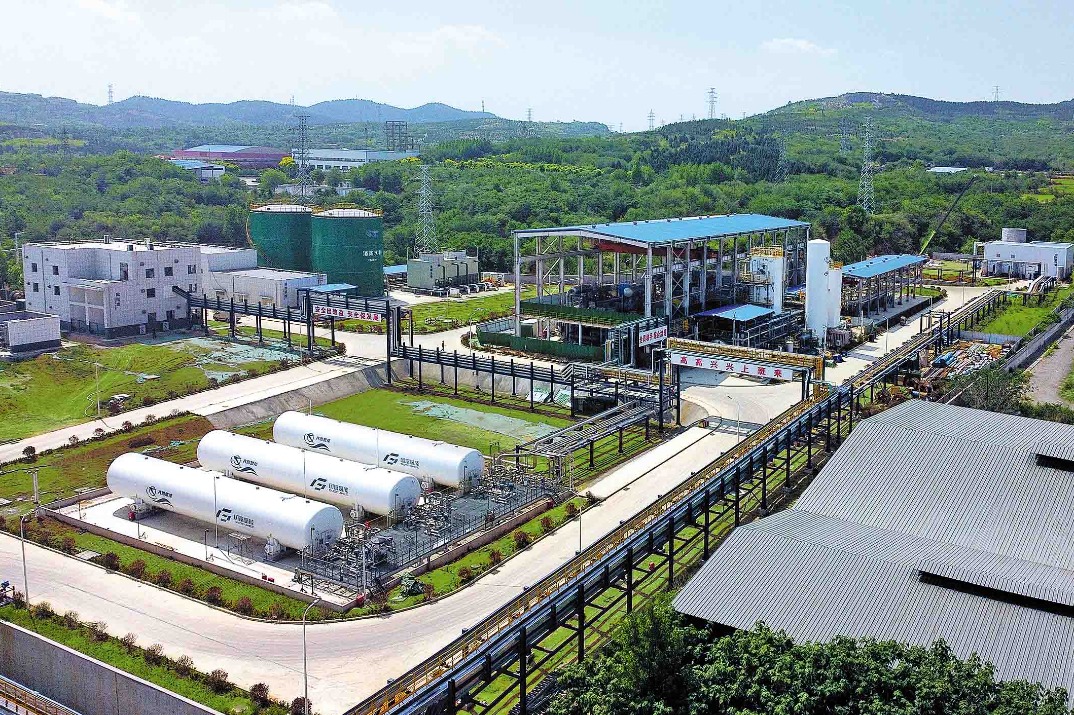
At the heart of this transformation stands Jiangsu Guofu Hydrogen Energy Equipment Co Ltd, which has helped shape the city's entire hydrogen ecosystem. Founded in 2016, Guofu has risen from a startup producing single-component hydrogen tanks to a national champion manufacturing along the entire value chain — from storage systems to refueling stations and onboard vehicle modules.
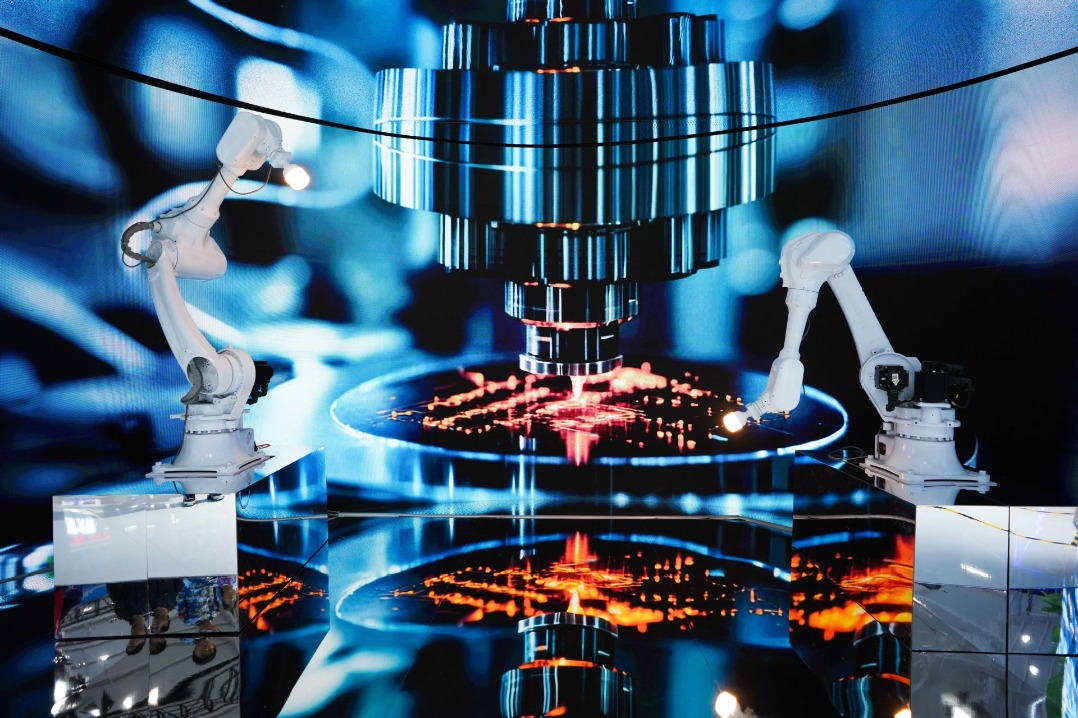
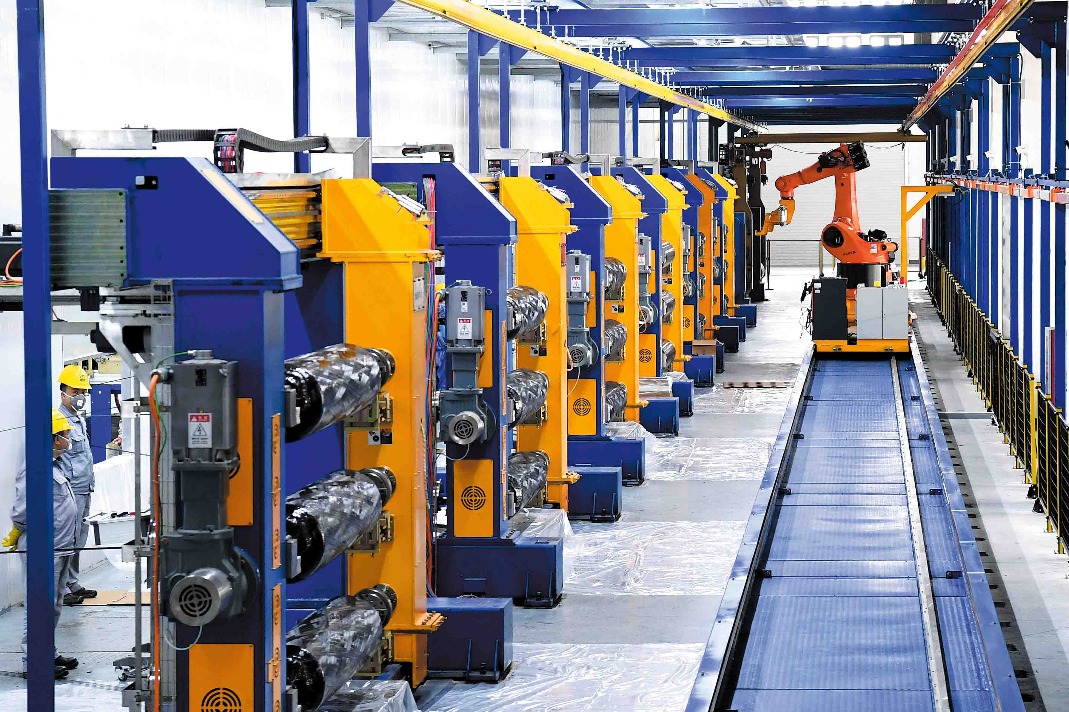
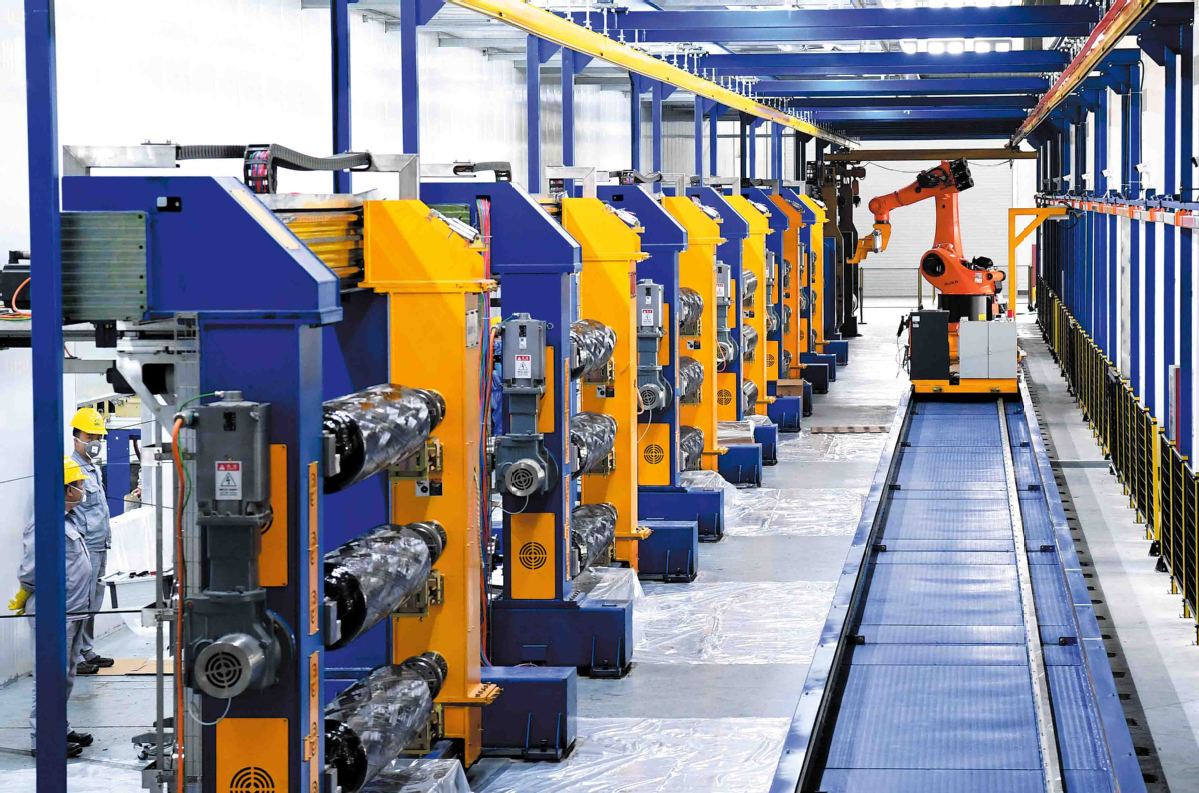
Inside Guofu's 300-meter smart manufacturing plant, the future is already in motion. Robotic arms weld and polish high-pressure hydrogen cylinders with near-microscopic precision. Sensors and control systems are assembled on high-speed lines. Engineers monitor performance metrics in real-time through intelligent dashboards. It resembles less a factory and more a space-age command center.
Ding Leizhe, executive deputy general manager of marketing and sales of Guofu, recalled the early days. "We started with a simple hydrogen bottle," he said. "Now, we produce everything — storage, transport and control. And not a single piece of core equipment is imported anymore."
That achievement is both technological and symbolic. For years, China relied on foreign suppliers for critical components — especially in high-pressure storage and liquefaction. Guofu has since broken these bottlenecks.
One of its proudest milestones is China's first civilian-grade hydrogen liquefier, capable of processing 10 tons per day. Developed entirely in-house, it ends a decades-long foreign monopoly and signals a new phase of industrial self-sufficiency.
Guofu's hydrogen cylinders, valves and digital control systems now meet global standards. They're being exported across continents. The company's trajectory took another leap in November when it became China's first full-chain hydrogen equipment firm to list on the Hong Kong bourse.
CEO Wang Kai believes that milestone is just the beginning.
"The listing is a launchpad," he said. "It gives us capital to expand capacity, double down on R&D, and bring our solutions to the world."
In early 2025, the company established its first overseas joint venture, an electrolyzer manufacturing plant in Southeast Asia. Contracts have since been signed in over 20 countries and regions, including India, Brazil, Australia and several European Union members. By the end of 2025, Guofu expects to ship more than 200 megawatts of hydrogen equipment globally.
That vision doesn't stop on the ground. Guofu is partnering with Germany's Wankel Aviation to develop hydrogen-powered aircraft engines — focused on drones, short-haul cargo planes and even orbital vehicles. Hydrogen, with its high energy density and zero-carbon emissions, could redefine aviation's next chapter.
While Guofu builds the backbone, Huachang Energy Technology Co, a spinoff from local chemical conglomerate Huachang Chemical, is focused on putting hydrogen into motion.
Their journey began with the founding of a hydrogen research institute in collaboration with the University of Electronic Science and Technology of China. By July 2019, they had launched their first hydrogen fuel cell engine — a 60-kilowatt system designed and built entirely in-house. From the membrane electrode assembly to the fuel stack and control module, every component was a domestic innovation.
In August, Huachang delivered 10 hydrogen-powered heavy trucks, each with a 49-ton payload capacity and a 400-kilometer range. Today, their fuel cell systems power 45 demonstration vehicles across municipal fleets, logistics fleets and trial zones. These vehicles have collectively logged nearly 3 million km on the road.
He Yuhao, sales director of Huachang Energy Technology Co, said that Huachang isn't slowing down.
"Our latest engine model boasts 150 kW of power, 60 percent system efficiency, and a lifespan exceeding 20,000 hours," he said.
The company is now constructing a semiautomated production line for fuel stacks, targeting an annual output of 10,000 units. And its long-term roadmap includes building integrated microgrids that combine wind, solar and hydrogen storage, along with EV charging — essentially a zero-carbon energy system in a box.
What makes all this possible is more than just industrial grit. It's a city that knows how to build a runway for the future. Since 2018, Zhangjiagang's government has issued at least seven policies targeting the hydrogen sector, from production incentives to special loans for infrastructure build-out.
In April 2024, the city released a three-year action plan outlining clear targets: 100 hydrogen enterprises, 30 billion yuan in annual industrial output, over 10 refueling stations and at least 360 hydrogen-powered vehicles or vessels by 2026.
To deliver on those promises, the city has implemented what officials call a "five-in-one" support system — combining capital investment, R&D funding, preferential financing, policy coordination and talent development.
This comprehensive push is tracked through a live "hydrogen task list", updated continuously to resolve challenges in areas like regulatory compliance, technology standards and supply chain management.
Mei Sinan, deputy director of the Zhangjiagang Municipal Development and Reform Commission, emphasized that the city's ambitions align with larger provincial goals.
"Hydrogen is one of Jiangsu's 10 key emerging industries. We're working to turn Zhangjiagang into a core node in the Yangtze River Delta region hydrogen corridor. This isn't just about decarbonization. It's about future industries and high-quality growth."