New day of observance more than just symbolic







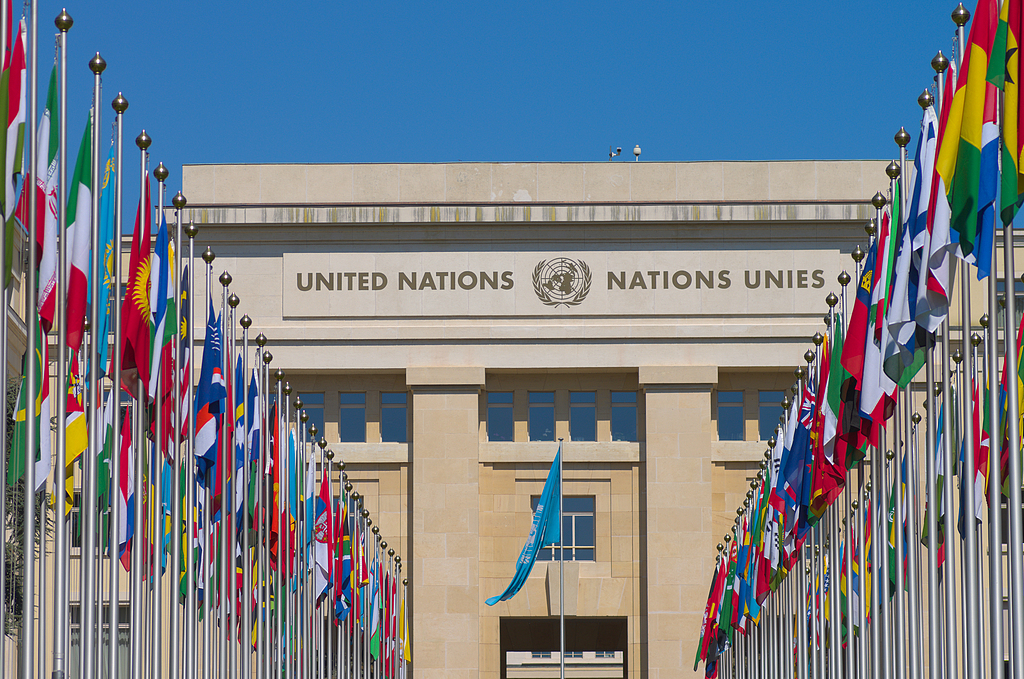
By a recorded vote of 116 in favor of and 51 against, with six abstentions, the United Nations General Assembly adopted a resolution on Monday establishing Dec 4 as the "International Day against Unilateral Coercive Measures". The day, to be observed annually, will be introduced this year.
It is the rise of unilateralism, hegemony and protectionism that has prompted the move. The Assembly urged states to refrain from adopting, promulgating and applying any unilateral economic, financial or trade measures not in accordance with international law and the UN Charter.
As Eritrea's delegate said, such unilateral coercive measures — commonly cloaked in the misleading language of sanctions — are not instruments of justice, but "tools of political and economic compulsion" applied against the less-developed countries.
Usually, it is the developed economies — which constituted the main body of member states voting against the resolution — that take advantage of their dominant position in the global value chains and world economic, trade and financial rules-making mechanisms to subdue the less-developed economies to sanctions in pursuit of their own interests.
The representative of the United States claimed that unilateral sanctions are an effective means to respond to "malign activity" and "to address the most abhorrent and destabilizing activities of our time", such as terrorism, proliferation of weapons of mass destruction and transnational organized crime.
But representatives of the less-developed countries, particularly those suffering from such US sanctions, rebutted that view. As they said, the sanctions and other unilateral coercive measures actually punish millions of people worldwide, blocking their access to food, medicines, technology and development, and the measures' extraterritorial effects extend even further, destabilizing global supply chains and threatening international cooperation.
Even the developed economies cannot deny that almost all such unilateral sanctions have ulterior political motives behind them. Their purported purpose of protecting human rights, democracy and freedom is only a cover to disguise their true purpose. The rights and interests these countries try to protect through the sanctions are only those of their local pawns not those of the general public.
An important reason why they like sanctions is not only that they can conveniently hide their political purposes behind their do-good claims, but also the sanctions are conducive to serving their own economic and trade interests in one way or another. They know the common people suffer from the sanctions, some of which last decades, but to make the people angry and prompt them to vent their anger against their own government is usually part of a plan to realize a regime change in the targeted countries.
In other words, if the countries imposing the sanctions really care about the people's well-being as they claim, they would not have turned a deaf ear to the people's outcry for so long. The true aim is to separate the targeted countries from the global economic system, stifle their development and isolate them from the "civilized world". These effects serve to reinforce the customized rhetoric demonizing them on the world stage.
Although the developed economies' representatives stressed the "transparency" of their sanction moves, they cannot deny the fact, as the Chinese delegate said, that their unilateral coercive measures invariably "place the domestic laws of one country above international law and the laws of other countries".
Sanctions imposed willfully without authorization from the UN Security Council also disregard the authority of that world body's collective decision-making mechanism, and they in effect replace "dialogue and consultation with coercion and power politics". Although some Western observers call the Assembly's adoption of the resolution merely "symbolic", as Eritrea's representative said, "Let us be clear: symbols matter. They are expressions of collective conscience, sympathy and understanding".
The observance of an International Day against Unilateral Coercive Measure undoubtedly represents another step toward reform of the world system in the direction of fairness and justice.