Combat IUU fishing, but don't use it as a political tool







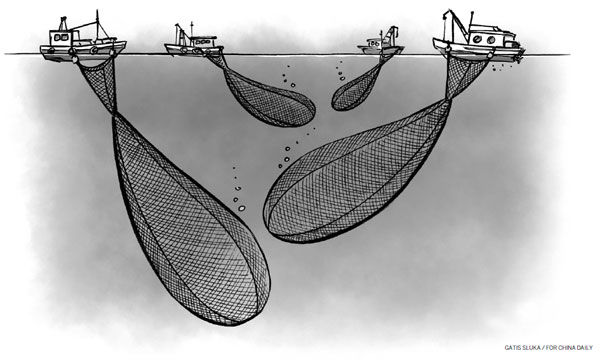
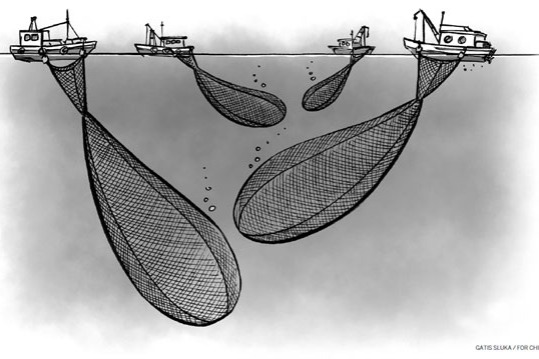
IUU fishing, which stands for illegal, unreported and unregulated fishing, encompasses a variety of fishing activities that are unauthorized, violate administrative rules, fail to comply with reporting requirements, involve unregistered fishing vessels, or fishing operations in waters beyond national jurisdiction in a manner that undermines conservation obligations. In 2017, the 72nd Session of the UN General Assembly, through its Resolution on Sustainable Fisheries, designated June 5 as the International Day for the Fight against IUU Fishing. This designation aims to enhance global awareness and underscore the significance of addressing IUU fishing in marine conservation and sustainable development.
But how did the concept of IUU fishing evolve and come to be enshrined in UN documents as an international consensus? IUU fishing was recognized because there was a need to address the challenge from fishing activities going on in international waters, specifically in the high seas. The 1982 United Nations Convention on the Law of the Sea, or UNCLOS, and the 1995 Fish Stocks Agreement, or UNFSA, proposed the establishment of subregional or regional fisheries management organizations or arrangements (RFMO/A) to manage straddling fish stocks and highly migratory fish stocks. RFMOs have established various requirements for carrying out fishing operations, such as registration of the fishing vessel and catch reporting. Such requirements have raised the barriers to entry for fishing and increased regulatory costs, effectively excluding some developing countries.
However, in reality, some developing countries continue fishing in the high seas. As these developing countries haven't joined RFMOs, their fishing isn't covered by the institutional framework shaped by the United States and Western countries, and therefore not subject to the institutional restrictions imposed by them. In light of this, the US and Western countries deem it necessary to establish a new institutional framework to regulate the fishing activities of these developing countries. Against this backdrop, the US and Western countries have developed the concept of IUU fishing. This is a move to further restrict developing countries within their institutional framework. Should developing countries fail to cooperate, they will be excluded from legitimate fishing in the high seas.
To get the new institutional framework accepted by developing countries, the US and Western countries developed the scientific foundation of this framework. US and Western scientists have stated that in 1992, the gross tonnage of large-scale marine fishing vessels reached an all-time high of 1.56 million, primarily due to unregulated fishing. Meanwhile, the US and Western countries actively worked to incorporate these issues into Agenda 21 and secure the UN's endorsement. Agenda 21 became the first international legal instrument following the UNCLOS to delineate what is now referred to as IUU fishing. Subsequently, RFMOs quickly followed this lead. In 1999, the concept of IUU fishing was formally established at the 23rd Session of the FAO Fisheries Committee. Since then, IUU fishing has become a globally recognized concept and a major international concern.
In recent years, to wage strategic competition against China, the US has exploited, politicized, and overstretched the issue of IUU fishing. Since its first convening in 2014, under the Barack Obama administration, the "Our Ocean Conference" has prominently included the IUU fishing issue on its agenda. The Obama administration's 2010 "Asia-Pacific Rebalance" was subsequently expanded by the first Trump administration into the "Indo-Pacific Strategy," which, under the Biden administration, further evolved into the "Indo-Pacific Partnership for Maritime Domain Awareness". Under the guise of combating IUU fishing, these initiatives aim to enhance maritime monitoring capabilities across the "Indo-Pacific" region. In June 2022, Biden signed the first US National Security Memorandum on Combating IUU Fishing and Associated Labor Abuses. The same year, the US sanctioned two Chinese distant-water fishing companies, their affiliated entities, and a total of 157 fishing vessels on the grounds of "IUU fishing" and "forced labor".
The US also publishes the Report to Congress on Improving International Fisheries Management every two years, unilaterally designating countries, including China, as "countries engaged in IUU fishing" and imposing sanctions such as prohibiting port entry. Under the guise of "IUU fishing", the US has been conspiring with the Philippines, Japan, Australia, India, and others to exert maritime containment and encirclement against China. Its ultimate aim is to reshape the strategic landscape in China's peripheral regions. In addition, the US has concluded shiprider agreements with Pacific Island Countries and those along the African shoreline. Under these agreements, it has conducted frequent boarding operations and law enforcement actions against Chinese fishing vessels. Moreover, the US has employed coercion and inducement against Latin American coastal countries. Under the guise of enhancing capacity building to "combat IUU fishing", it has undermined China's normal fishery cooperation with Latin American countries and has strived to exclude China from the global ocean governance system.
Unlike the US' unilateral and hegemonistic moves, China, as a responsible fishing country, actively implements the "the maritime community with a shared future" concept, combats IUU fishing via multiple measures, and works to achieve the SDG targets 14.4.
First, China has revised the Regulations on the Administration of Distant-Water Fisheries and the Fisheries Law, promulgated the Interim Measures for the Monitoring and Management of the Position of Distant-Water Fishing Vessels, Notice of the Ministry of Agriculture and Rural Affairs on Strengthening the Management of High Seas Transshipment in Distant-Water Fisheries, Opinions of the Ministry of Agriculture and Rural Affairs on Promoting the High-Quality Development of Distant-Water Fisheries during the 14th Five-Year Plan Period, and other regulations and systems, and fully and strictly fulfill the obligations of flag states under international law.
Second, Chinese authorities integrate administrative and criminal enforcement to establish a comprehensive regulatory framework for combating illegal fishing activities. To strengthen source management, they implement measures such as offshore fishing licensing, qualification certification and annual review of offshore fishing enterprises, as well as approval of offshore fishing projects. In terms of production management, systems such as monthly reporting of distant-water fishing production, 24-hour real-time dynamic monitoring of fishing vessels, and the dispatch of observers are enforced. Regarding output management, the certificate of legality for distant-water catches and bycatch reporting systems have been established. To punish illegal fishing, Chinese authorities carry out routine law enforcement, launch special operations, and impose stricter penalties.
Third, Chinese authorities actively assume port-state responsibilities and promote accession to the Agreement on Port State Measures (PSMA). They fulfill market-state obligations by implementing import and export legality certification for relevant aquatic products. They reformed fishery subsidy policies and joined the WTO Agreement on Fisheries Subsidies. They effectively implement the conservation and management measures of RFMOs, achieving remarkable performance in agreement fulfillment. High-seas patrol and law enforcement are carried out, alongside routine coast guard patrols and law enforcement in the North Pacific. Chinese authorities register coast guard law-enforcement vessels with the Western and Central Pacific Fisheries Commission. They also collaborate with the international community to combat IUU fishing in the high seas.
IUU fishing undermines the order of fisheries and the aquatic ecological environment, and consequently has a severe negative impact on marine biodiversity, ecosystems, and the livelihoods and welfare of fishermen. Nations must strengthen global cooperation to combat IUU fishing. IUU fishing must not be weaponized as a tool for political manipulation on the international stage.
The author is office director of the Marine Strategy Think Tank Research Center at Shanghai Ocean University and professor of the College of Marine Living Resources Science and Management.
The views expressed here are personal and don't necessarily reflect those of China Daily.
If you have a specific expertise, or would like to share your thought about our stories, then send us your writings at opinion@chinadaily.com.cn, and comment@chinadaily.com.cn.