More publications, more knowledge application







More than 2,500 years ago, Confucius said, the "essence of knowledge is, having it, to apply it". As knowledge advanced, the quality of life and standard of living of the people advanced as well. During the early part of human history, philosophers such as Confucius, Aristotle and Leonardo da Vinci mastered almost all available knowledge.
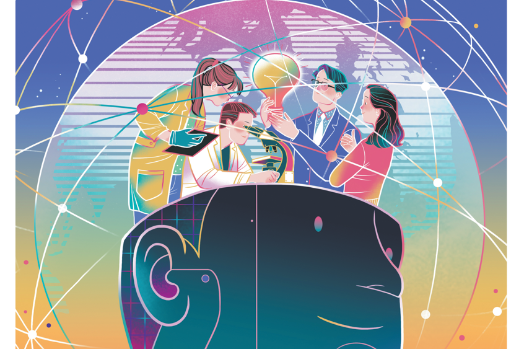
Human knowledge had doubled every century until about 1900. Doubling time reduced to 25 years by the end of World War II and 13 months by 2010. By 2035, it may double every 12 hours.
This raises two important questions: How can society keep abreast of and use this deluge of new knowledge? And how can available knowledge be used to improve human conditions and welfare across the world?
Advances in science and technology during the post-1980 period have been revolutionary. It's estimated that in 1980, storing 1 GB of data cost more than $1 million, but by 2005, it cost a fraction of 1 US cent. Many companies now provide storage of several GBs of data for free. Computing costs have come down exponentially since around 1980, as has computing capacity. In 2017, the cost of translating 1 million Chinese words into English was roughly $1 million. Five years later, such translations could be done for free. These advances are likely to continue well into the future.
An estimated 90 percent of all data currently available globally was collected in the past two years, with technological advances in data collection, storage and analyses revolutionizing the data management processes.
The advancement of knowledge over the past 300 years has mostly been beneficial to society. Until the late 17th century, all disciplines of knowledge were known as natural philosophy. That is why the highest degree awarded to a scholar for mastering knowledge was called philosophiae doctor (PhD). Initially, a PhD degree was not given for original research, as is the case today, as PhD refers to the original Greek root of the word philosophy: "love of wisdom". Philo means love, and sophia wisdom. Initially, PhDs were awarded only in theology, law and medicine.
The concept of earning a PhD by conducting research started around 1500 in universities such as Paris and Bologna, and gradually spread to other universities. By the 17th century, it was evident that knowledge was expanding so fast that no one could master it all. So physics became a separate discipline in the 17th century, chemistry in the 18th century and biology in the 19th century.
In 1660, 12 men met at Gresham College, London, and decided to set up the first scholarly society in the world, the Royal Society of London. Its objective was to "promote physio-mathematical experimental learning", and motto Nullius in verba (take nobody's word for it). Its journal, "Philosophical Transactions of the Royal Society", published many pioneering papers on science. In 1832, it started scrutinizing papers which later became the standard practice of all science journals.
Since the knowledge level during Confucius' time was low, he focused only on knowledge generation and application. Knowledge generation was mostly gradual till about 1650, after which it started accelerating, increasing exponentially during and after World War II.
Consider water. Up to about 1970, it was possible for a good scholar to keep abreast of new developments, even though the number of good journals published was in single digit; new books were few. But after 1970, the number of new books and journals dealing with water started proliferating. And around 1980, the objectives of scholarly publications changed.
To obtain tenures in universities, professors had to publish as many papers as possible, as their career advancement depended not on how good or how knowledgeable teachers were but on how many papers they had published in reputable journals. As a result, academics everywhere started to "artificially "increase the number of their publications primarily to boost their career prospects. It was also a byproduct of universities' quest for higher global rankings, which not only enhanced their prestige but also got them more funding, and attracted the best professors and students.
The generation of knowledge today is expected to address critical social, economic and environmental challenges facing countries, and help improve people's well-being. Knowledge should be aligned with national economic goals and contribute to industrial breakthroughs and formulation of better policies.
Countries such as China and Singapore have put knowledge generation at the center of their national policies for well over two decades. In the water sector, the focus on knowledge generation and application with Chinese characteristics has made China one of the most advanced in the world. With strong and consistent support from the Chinese leadership, the country has emerged as a global leader in addressing water problems.
In order to ensure these positive developments in the water sector, as well as other similar global developments, are made known to the rest the world, China Institute of Water Resources and Hydropower Research of the Chinese Ministry of Water Resources started a new journal, River, which publishes new ideas of river management from the source to the sea. It is an excellent medium to make water professionals in China aware of the new breakthroughs in river management made by other countries. Equally, people outside China can learn about the latest progress made by the country.
If Confucius were alive today, he could argue that in a world where knowledge is exploding, dissemination is an important part, along with generation and application, of knowledge.
Asit K. Biswas is a distinguished visiting professor at the University of Glasgow, UK, director of Water Management International, Singapore; Cecilia Tortajada is an honorary professor at the University of Glasgow and visiting professor at Chang'an University, Xi'an; and Wang Hao is an academician at the Chinese Academy of Engineering and a professor of China Institute of Water Resources and Hydropower Research.
The views don't necessarily represent those of China Daily.
If you have a specific expertise, or would like to share your thought about our stories, then send us your writings at opinion@chinadaily.com.cn, and comment@chinadaily.com.cn.