Trade conflicts erode US global leadership







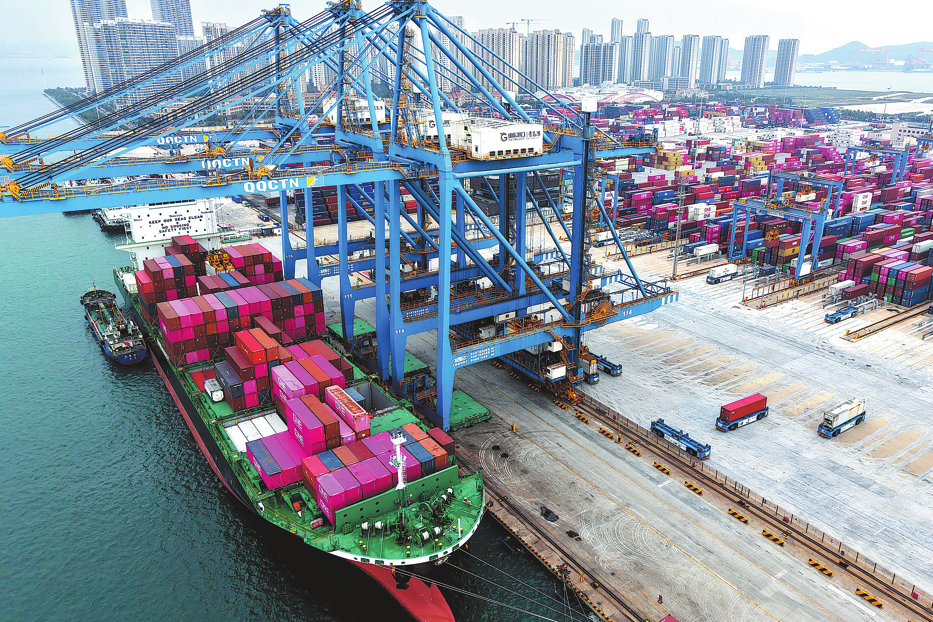
The temporary de-escalation of China-US trade tensions can temporarily soothe the global market's nerves. The tariff conflict between the world's two largest economies serves no one's interests.
While the stated objective of the US administration's policy to impose high tariffs was to decrease the United States' trade deficit with China, the underlying motivations extend beyond economics to geopolitical considerations. Washington aims to impede China's global technological expansion.
In the face of the escalating trade war with the US, China has adopted an integrated stimulus policy to further stabilize the domestic economy and minimize the impact of US tariffs. For example, Chinese government spending in 2025 increased to more than 8 percent of GDP, compared to 6.6 percent in the previous year, in a move aimed at stimulating domestic demand and increasing productivity in key sectors. This policy reflects an integrated strategy to boost the domestic economy and reduce dependence on foreign markets, within the framework of expanding the national economy.
The global economy is under mounting pressure from slow growth, inflation, geopolitical instability, and intensifying trade tensions. These factors heighten the risk of a global recession, as existing economic measures are proving insufficient to stabilize the fragile system.
The intensification of US tariffs under the US administration has triggered significant realignments in global trade dynamics, with China actively exploiting the opportunity to deepen ties with Washington's traditional partners. China is courting the EU and Southeast Asian nations through diplomatic efforts and promises of increased trade. Several countries — particularly in Europe and Asia — see potential in trade cooperation with China, especially if it includes investments and technology transfer. Simultaneously, dissatisfaction with the unpredictability of the US administration has pushed countries such as Canada, Mexico, and EU members to seek certainty elsewhere, including through greater cooperation with China and among themselves.
Moreover, the global trade system appears increasingly fragmented. Two emerging blocs illustrate this: the "open market allies", composed of relatively free-trade advocates such as the EU, Comprehensive and Progressive Agreement for Trans-Pacific Partnership members, and other developed economies; and the "strategic hedgers", including India, Brazil, and South Africa, which seek to balance between US and Chinese influence with a pragmatic trade approach. These shifts mark a move away from a US-centric trade order toward a more multipolar, flexible structure, with countries diversifying alliances to secure their economic interests amid rising protectionism.
The ongoing trade dispute between the United States and China has the potential to accelerate the transition toward a multipolar global system by undermining the dominance of the traditional liberal economic order and encouraging other global powers to assert greater autonomy. This strategic diversification opens space for other players such as the EU, India, and regional coalitions such as the Association of Southeast Asian Nations to play more prominent roles in shaping trade norms, standards and alliances.
The erosion of US leadership — fueled by protectionist policies and withdrawal from multilateral agreements — has particularly enabled China to present itself as a champion of globalization, attracting nations seeking stable economic partnerships. As a result, trade fragmentation, economic nationalism, and regionalism are contributing to a more decentralized world order where power is diffused among multiple centers.
However, the emergence of a true multipolar system is not guaranteed and may be constrained by structural imbalances and systemic dependencies. Despite the disruption caused by the trade war, the US and China still dominate global finance, technological innovation, and military power, limiting the ability of other states to fully break free from their influence.
Additionally, many potential poles in the multipolar vision — such as the EU or India — face internal economic or political challenges that hinder their capacity to act cohesively or globally. Moreover, the deep entanglement of global supply chains, particularly in critical sectors like semiconductors and rare earths, still centers around China and the US, making any decoupling partial and selective at best. Therefore, while the trade conflict does create space for alternative power centers and new trade configurations, it is more likely to lead to a fragmented or competitive multipolarity rather than a stable, balanced multipolar global system.
Despite the ongoing trade struggle with the United States, China remains in a strong position to strengthen its role in the global economy through several key strategies. By strengthening multilateral economic cooperation and expanding its trade partnerships in regions such as Asia, Africa and Latin America, China can continue to build and strengthen its economic network. It is also further enhancing its global competitiveness by investing heavily in future technology such as artificial intelligence and renewable energy.
The author is an associate professor of Political Science and International Relations, Suez Canal University and the Institute of Arab Research and Studies, Arab Republic of Egypt.
The views don't necessarily represent those of China Daily.
If you have a specific expertise, or would like to share your thought about our stories, then send us your writings at opinion@chinadaily.com.cn, and comment@chinadaily.com.cn.