L. America needs right choice amid turmoil







The vast majority of Latin American countries have surpassed two centuries of existence as republics. But no country in the region has developed to the level of being on par with developed nations.
The end of World War II in 1945 saw the reconfiguration of the world order in terms of political and international economic relations. In July 1944, just before World War II ended, the Bretton Woods Conference bequeathed the world two key institutions to help develop the global economy: the International Monetary Fund and the World Bank. The year 1947 saw the creation of the General Agreement on Tariffs and Trade (which was succeeded by the World Trade Organization in 1995). These fundamental institutions were promoted by the United States, supposedly the champion of freedom and free trade.
Simultaneously, illustrious economists such as Friedrich Hayek (Economics Nobel Prize winner in 1974) and Milton Friedman (Economics Nobel Prize winner in 1976) promoted the liberal theory, baptized as neoliberal or capitalist mode of production, in the West. However, socialist countries would follow their own path of development.
In this context, starting in 1947, the economic theory of import substitution industrialization (ISI) promoted by the Economic Commission for Latin America and the Caribbean, a United Nations body, gained relevance. The objective and strategy of ISI was to reduce dependence on imported goods by promoting local production through the implementation of tariff protection measures to safeguard national industries, boost fiscal incentives, and increase state support. Protectionism, in other words.
Import substitution industrialization generated much enthusiasm in the region, with countries such as Argentina, Brazil, Chile and Mexico applying the policy between 1950 and 1970. By the end of the 1980s, ISI proved a failure because it led to excessive protection of national industries, lack of competition and low production quality.
Latin America had lost valuable time in its pursuit of development. Despite some positive aspects remaining, it was necessary to start anew. Those were times of economic chaos, inflation, huge external debt and poverty. In the late 1970s, China made a radical shift in its development policy and began building what is today the world's second-largest economy.
While the US had other priorities in other areas of the world, Latin America sought investments and partners to generate wealth that would allow it to improve its situation. The 1990s were crucial, as the countries of the region again decided to build a better future. Countries such as Peru began to dismantle the old state-owned enterprises, privatizing assets in all sectors (mining, communications and services) with marked success. The first decade of this century was particularly important because it marked China's decisive presence in Latin America. China signed free trade agreements with Chile (in 2005), Peru (in 2009) and Costa Rica (in 2010).
It's important to recall here that China joined the WTO in 2001, and trade, initially focused on primary products (minerals and oil for example), quickly rose to higher levels thanks to the increase in Chinese investments in infrastructure, energy, minerals and development aid.
Today, China maintains a strong presence in the region. The investments China has made involve global companies such as MMG, Chinalco, CNPC, COSCO and the Industrial and Commercial Bank of China. Between 2000 and 2023, Chinese companies invested more than $203 billion in Latin America and the Caribbean.
In terms of job creation, income generation and poverty alleviation, the impact of Chinese investment in the region has been highly positive. In Peru, the recent inauguration of the Chancay mega-port (equipped with 100 percent intelligent technology) could help increase the country's GDP by almost 1 percent in 2025. It is worth noting that Chinese investments come with cutting-edge technology. For instance, the high-speed railway along the Peruvian coast will be built using technology available only in France, Spain and China, with the latter being the leader.
Yet major international developments, including the Russia-Ukraine and Israel-Palestine conflicts and piracy around the Horn of Africa have severely affected the global supply chain, creating uncertainty in the Latin American and Caribbean region.
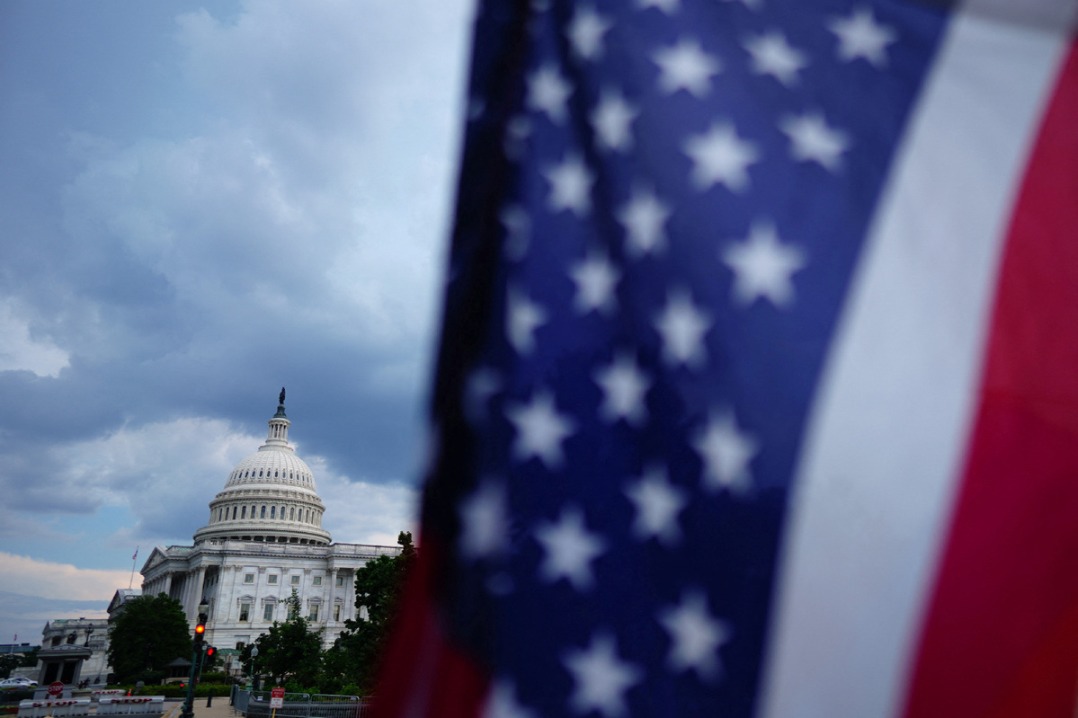
Complicating things further is the US' punitive tariffs on imports from its trading partners, especially. The dispute between the world's two largest economies has affected all countries, although the just-concluded talks between China and the US in Geneva have raised some hopes.
Latin America needs to get out of the quagmire; it needs the help it never received during its worst crises. Ordinary people in Latin American and the Caribbean don't want geopolitical disputes. They only seek better education, health and opportunities.
As former US secretary of state Henry Kissinger said in an interview with The Economist in May 2023: "The United States and China must learn to live together. They have less than ten years to achieve it."
The author is an emeritus professor at the Center for Higher National Studies of Peru and a member of the Peruvian Association of International Studies-APEI. The views don't necessarily represent those of China Daily.
If you have a specific expertise, or would like to share your thought about our stories, then send us your writings at opinion@chinadaily.com.cn, and comment@chinadaily.com.cn.