Powering up








'BRICS Plus' cooperation mechanism can help accelerate the Global South's transition to clean energy
The landscape of South-South cooperation has undergone a profound transformation over the past two decades. "BRICS Plus" has emerged as a new coalition in the Global South. As Brazil gears up to host the 17th BRICS Summit in Rio de Janeiro in early July, it is worth taking a closer look at this political and economic force and what it is delivering for South-South cooperation and Africa's sustainable development.
Africa's GDP growth in 2024 was around 3.2 percent, projected to increase to about 4 percent in 2025, with its total GDP standing at $2.8 trillion in 2024. Africa was home to 10 of the world's top 20 fastest-growing economies in 2024, including "BRICS Plus" member Ethiopia.
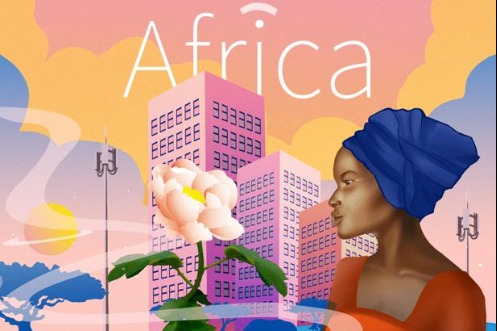
But the reality is that African states face continuing challenges of poverty, inequality, food, health, gender and education insecurities, climate change, global tariff wars, short-term development financing, high levels of indebtedness, critical deficits in energy, communications and transport infrastructure, energy, knowledge-sharing for equitable resource exploitation, and industrial innovation cooperation on digital economies and e-commerce.
The "BRICS Plus" mechanism is working with African states to help meet their sustainable needs by strengthening South-South cooperation. Africa's infrastructure deficit in energy, water, sanitation, communications and transport is around $130 billion to $170 billion, reducing output by up to 2 percent each year. Since South Africa's accession to BRICS membership in 2011, BRICS-Africa cooperation has been a priority. This commitment was confirmed in the watershed year of 2013, marked by the Durban BRICS Summit, the eThekwini Declaration and the BRICS Multilateral Infrastructure Co-Financing Agreement for Africa. Further milestones include the opening of the BRICS New Development Bank's first regional office in Johannesburg in 2017 and the BRICS 2023 Summit in Johannesburg.
Energy provision is pivotal to sustainable development. The "BRICS Plus" grouping emphasizes cooperation toward fair, inclusive, sustainable, equitable and just energy transitions. It stresses the need to take into account national conditions and the principle of technological neutrality, that is, using all available fuels, energy sources and technologies to reduce greenhouse gas emissions, and allocating adequate, predictable and accessible finance from developed to developing countries for just energy transitions.
As the 2025 chair of the BRICS group, Brazil has prioritized two priorities — cooperation in the Global South and partnership for social development. Some "BRICS Plus" members and partners are the world's largest oil producing countries and some are also among the world's largest carbon dioxide emitters.
However, these countries also face climate change challenges. They can act collectively under the "BRICS Plus" cooperation mechanism to spur the transition to renewable energy sources. An October 2024 analysis by Global Energy Monitor, a San Francisco-based non-governmental organization, highlights positive trends in the "BRICS Plus" energy transition: coal, oil and gas capacity was anticipated to fall below half of the power capacity mix in the BRICS bloc for the first time either by the end of 2024 or early 2025, and although virtually all members are building additional coal, oil or gas plants, their wind and utility-scale solar capacity projects in development outnumber power projects fueled by coal, oil and gas by two to one.
Brazil, India and Indonesia are important biofuel producers and, in 2024, India overtook Germany to become the world's third-largest generator of wind and solar power. China is also heavily engaged in transitioning to renewables, with low-carbon sources accounting for 38 percent of its electricity generation in 2024.Hydropower is China's largest source of clean electricity, providing 13 percent in 2024, while wind and solar together accounted for 18 percent. China contributed over half of the global increase in both solar and wind generation. Almost 100 percent of Ethiopia's electricity comes from renewable sources, including hydroelectric power, wind energy and thermal sources. The key message from "BRICS Plus" for South-South cooperation is that it has proved knowledge, experience and technology for just energy transitioning to share within the group and with other developing countries.
However, despite progress, South Africa is experiencing a severe energy crisis due to high demand and weak supply capacity, and Egypt is also facing energy difficulties due to gas supply disruptions. According to the State of African Energy Report 2025, among the 685 million people worldwide without access to electricity, 590 million (86 percent) live in Africa, reinforcing the important role for South-South cooperation in the "BRICS Plus" framework.
"BRICS Plus" energy cooperation with African countries is well established and increasing. For example, Brazil's engagement in Africa's energy sector is growing through strategic investments, knowledge exchange and partnerships, highlighted by flagship dialogue events such as the Brazil Africa Forum in Sao Paulo, "Invest in African Energies" reception in Rio de Janeiro, hosted by the African Energy Chamber, and the African Energy Week 2025 held in Cape Town.
China is a world leader in renewable energy technology, financing and investment and infrastructure development, playing a pivotal role as a catalyst for African sustainable development, energy security and widened access. Chinese enterprises are helping to develop wind and solar power in South Africa, such as the De Aar Wind Farm in Northern Cape and the Darmragt solar power plant, a PowerChina project with Irish developer Mainstream Renewable Power in Free State, South Africa. At the Beijing 2024 Summit of the Forum on China-Africa Cooperation, China announced plans to develop 30 clean energy and green development projects across Africa.
Energy infrastructure financing is critical for successful transitioning in African countries. In 2023, China's energy infrastructure lending to Africa rose to $4.61 billion. Whilst continuing to invest in African fossil fuel projects, hydropower projects now form a major part of China's energy investments, such as Uganda's Karuma Hydropower Project, a 600-megawatt facility built on the Nile. Chinese technology enterprises are cooperating with South African companies to introduce advanced battery storage solutions, helping stabilize its grid with renewable energy as a reliable solution.
Closing infrastructure deficits is vital for Africa's sustainable development, and the "BRICS Plus" model is a critical mechanism of South-South cooperation that is helping the continent overcome the challenges.
The author is a senior research fellow and the director of the Centre for Rising Powers and Global Development at the Institute of Development Studies in the United Kingdom. The author contributed this article to China Watch, a think tank powered by China Daily. The views do not necessarily reflect those of China Daily.
Contact the editor at editor@chinawatch.cn.