Multilateralism vital for trading system in tariff era







This year marks several anniversaries. It has been 80 years since the end of formal conflict in World War II, and the end of a broader conflict involving two world wars and spanning the first half of the 20th Century. It has also been 50 years since the European Economic Community (the nascent European Union) established diplomatic relations with China. At a time when there is growing uncertainty about trade policy and international cooperation, it's worth reviewing the benefits of an international economic policy that promotes cooperation.
"History doesn't repeat itself, but it often rhymes" is a phrase attributed to Mark Twain. Our collective history tells us that beggar-thy-neighbour policies rather than cooperative management of economic policy contributed substantially to driving global conflict and consequent destruction and human misery. While this year marks 80 years since the end of World War II, earlier examples include the Seven Years' War, an earlier 18th Century global conflict between European trading empires across Europe, Asia, and the Americas (aka the French and Indian War in North America). Examples of conflicts in the 19th Century include the Opium Wars, and the Race for Africa.
While the multilateral system of international economic law and the institutions that run them have evolved significantly, their core logic remains unchanged. To avoid echoing (or "rhyming," in Twain's phrasing) the conflict and resulting human misery of the past, we need to find ways to cooperate.
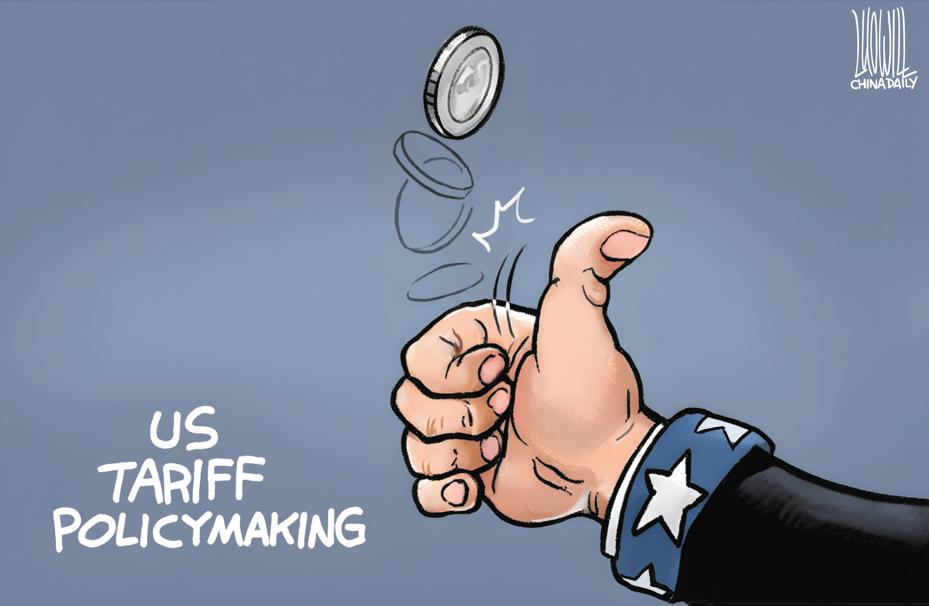
The multilateral system is under threat and it is not clear how the world will respond. The United States has chosen the path of unilateralism, combining an aggressive trade policy with strategic pressure on commercial and political allies for economic gains. The agenda is one of divide-and-conquer transactionalism. We know from game theory (and history) that the world will not be better off leaving individual countries to be picked off one at a time with bilateral deals reached under duress. That path leads eventually to neo-colonialism.
The alternative is the path of cooperation. The post-World War II system now in place, built around most favoured nation and non-discrimination, has its roots in the unwinding of earlier trade-based conflict through treaty. The mechanisms now in place have also provided critical underpinnings in modern times for decolonization in Africa and Asia in the post-World War II era.
We face many collective challenges. Conflicts over resources, mass migration, regulation of global companies, pressure on resources and the environment, labour displacement linked to AI, and the commercialization of space are just some of them. Some of these are new, while others are uncomfortably familiar. Yet even for the new challenges, there are historical parallels.
In the face of unilateralism and transactional policy on the part of the US, continued support for civil dialogue by China and the EU is important if the world is to respond successfully to the existential challenges to the trading system. This should not be bilateral. Rather as major economic powers, both share a collective responsibility to work with others (Canada, Japan, the Republic of Korea, India, Brazil, and so on) to strengthen the existing system for institutional dialogue and conflict resolution and to reduce economic uncertainty.
There are well-established mechanisms for dialogue and management of conflict. Of course, broad institutional cooperation does not make economic conflict go away. For example, we have and will continue to have trade remedies (antidumping duties, countervailing duties, and safeguard duties). There will also be continued friction on industry subsidies. However, what is critical is that these actions exist within a structured framework that limits the scope for escalation of trade disputes. China and the EU can remain economic rivals while also being institutional partners, as long as both are committed to maintaining the broad framework of institutions and economic treaties that provide a basis for constructive management and dialogue to address those challenges.
Recent economic modelling underscores how revitalizing the multilateral system could mitigate the damage inflicted by a potential US-led trade war. While the US would face a severe economic downturn under such a scenario — with projected long-term GDP losses of over 7 percent — economies such as Brazil, India, and Switzerland could see GDP loss of about 1 percent, while countries such as China, the EU, and the United Kingdom would also come out ahead, albeit more modestly.
A substantial share of potential benefit from such an exercise follows from countries outside the Organization for Economic Cooperation and Development offering better market access to each other. At its core, multilateral response to US transactionalism will require that non-OECD countries play a greater role in the stewardship of the trading system. An important step China, the EU, and its partners could take to prevent escalation of trade frictions is to promote an increased stakeholder role for non-OECD countries in the multilateral system.
The author is the managing director of the World Trade Institute, director of European Trade Study Group and a professor of international economics at the University of Bern. The views don't necessarily reflect those of China Daily.
If you have a specific expertise, or would like to share your thought about our stories, then send us your writings at opinion@chinadaily.com.cn, and comment@chinadaily.com.cn.