China defends free trade against US tariffs for the world







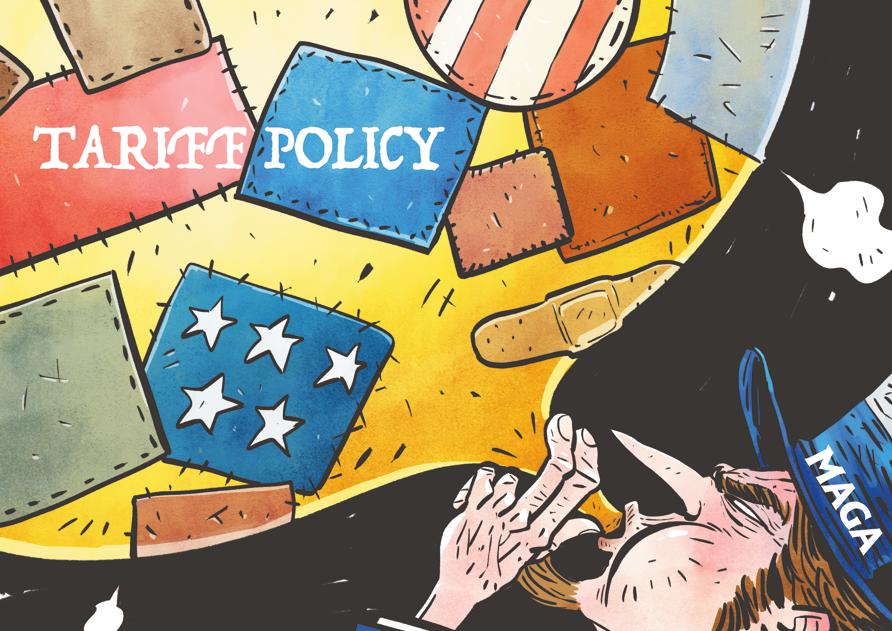
Editor's note: The United States government is imposing tariffs on many countries, particularly China, claiming it has been disadvantaged by the world. But why is China standing firm and refusing to back down? Victor Gao, vice-president of the Center for China and Globalization, shares his views with China Daily's Yao Yuxin. Excerpts:
Q1: The US president claims that China has ripped off the US by stealing jobs and taking advantage of the trade relationship. Is that true? How do you see it?
A:The truth is different. Over the past 40 years, China has been exporting goods such as toys, electronics, and other manufactured items to the US, greatly benefiting US consumers. These products — including books, toys, and even the Bibles printed in China — are crucial in the daily lives of many people in the US. The claim that China is to blame for the US' economic problems is misleading. The problems the US faces, such as inflation, stock market volatility, and currency issues, are not caused by China.
The US government's actions, such as imposing tariffs, are an attempt to undermine free trade, which has benefited both China and the US. If the US chooses to decouple from China, it will not affect China's resolve. China will continue to defend free trade, and it will not hinder its progress just to please the US. Instead, China sees itself as a stabilizing force in the world, with or without the US as a partner.
Q2: The US is facing serious internal problems — rising inequality, high inflation, and unemployment. The white house' answer is to slap tariffs on the world, especially China, to shift the blame. Will this tactic actually solve the US' domestic problems?
A: The tactic of slapping tariffs on China and other countries will not solve the US' internal problems, such as rising inequality, high inflation, and unemployment. Instead, it is likely to worsen these problems. Philosophically, the US cannot have it both ways: maintaining the US dollar as the dominant global currency while bringing back manufacturing jobs. If the US wants to keep the dollar dominant, it must run a trade deficit, but attempting to move manufacturing jobs back to the US would require giving up that dominance.
Moreover, tariffs hurt US consumers, who end up paying higher costs on imported goods. These tariffs are not paid by China or other countries, but by the American people. The reality is, tariffs will not bring jobs back to the US. Instead, they will trigger a range of economic problems, including inflation and a potential recession.
If the US wants to truly industrialize, it should ask China to share its experience. China has successfully built the world's largest manufacturing sector by investing in infrastructure, education, and creating a pro-business environment. The US should learn from China's approach to build a strong talent pool and modernize infrastructure. Only then can it regain its manufacturing strength, rather than relying on tariffs that hurt its own economy.
Q3: The US government's logic seems to be: "I impose tariffs, and if you fight back, I'll punish you even harder". How would you describe this kind of thinking?
A: The US government's logic reflects a clear example of hegemonic thinking. The approach is akin to holding a gun to someone's head and demanding compliance under threat of severe punishment. If a country, such as China, fights back against tariffs, the US increases the pressure, raising the tariffs even higher. This is not a negotiation based on fairness but a unilateral tactic of intimidation and coercion. The logic behind this thinking is rooted in the belief that the US holds all the power and can dictate terms to other nations without consequence. This is a dangerous and flawed mindset because it disregards the principles of free trade and mutual respect between nations.
In contrast, China refuses to accept this kind of bullying. If the US slaps tariffs on China, China will respond in kind — adopting a "tit for tat" approach. The true fight is not just about trade but about preserving the future of free trade and resisting attempts to destroy it. The ultimate goal should be cooperation, not confrontation, especially in industries like electric vehicles, where collaboration could drive global progress. Hegemonic thinking may create temporary power, but it ultimately undermines global stability and long-term prosperity.
Q4: China's goods exports grew by 6.9 percent in the first quarter, and exports to the US alone rose 5.6 percent. Despite the ongoing trade tensions, why is China's export performance still so strong? What does this say about China's economic resilience?
A: China's strong export performance, despite ongoing trade tensions, can be attributed to several key factors. First, China has built a world-class connectivity infrastructure, including highways, railways, seaports, and airports. Seven of the 10 largest container ports are located in China. This level of connectivity is unmatched, even by the US.
In addition, China's manufacturing success is supported by a highly skilled workforce, financial connectivity, and a pro-business government regulatory environment. The country offers a stable and predictable environment for long-term investment, which has been crucial for attracting business and maintaining growth over the years.
China also embraces global trade, acting as a major trading partner for over 140 countries. This global approach ensures that China can maintain strong export growth by integrating its manufacturing into a worldwide supply chain, allowing for efficient production, transportation, and market access.
These factors, combined with a commitment to respect sovereignty and engage in fair trade practices, have made China the world's leading manufacturing hub. The country's economic resilience is reflected in its ability to maintain robust export performance despite external challenges.
The views don't necessarily represent those of China Daily.