TikTok as the countdown to ban is extended again







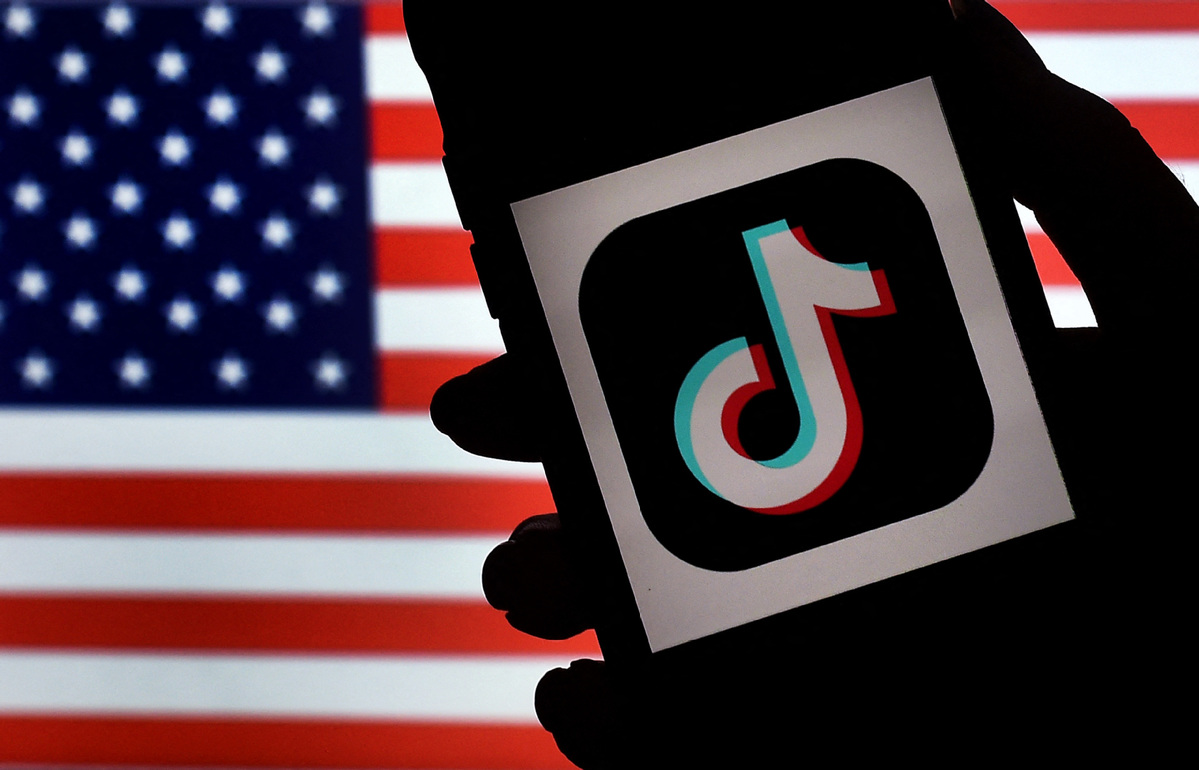
While the US administration's decision to extend the deadline for its proposed ban on TikTok by another 75 days has temporarily spared its 170 million users in the United States from losing access to their much-loved app, it fails to address the fundamental absurdity of the ban itself. The US administration's crusade against TikTok, a platform embraced by small businesses, creators and ordinary citizens alike, has never been about national security as claimed. Instead, it reflects a disturbing willingness to sacrifice free-market principles and digital freedom at the altar of geopolitical posturing.
The timeline of this saga reveals Washington's political opportunism. In April 2024, then US president Joe Biden gave TikTok an ultimatum to either sell its US operations to a US company or face a ban by Jan 19, on the grounds that it has a Chinese parent company, ByteDance. Never mind the transparency TikTok exercises, including saving user data on domestic servers in the US and submitting itself to third-party audits.
When the current administration assumed office, it extended the deadline till April 5, only to push it again till mid-June. These extensions suggest even the architects of the ban recognize its impracticality, but refuse to abandon the ban entirely.
The economic consequences of a TikTok ban would be immense. The app is not only an entertainment hub, but also a critical platform for small businesses, content creators, and independent artists. By TikTok's own estimates, a ban would cost small businesses in the US over $1 billion in monthly revenue, while creators would lose nearly $300 million in earnings.
Ironically, attempts by two successive administrations in the White House to ban TikTok because of its Chinese origins have only pushed users in droves toward Xiaohongshu, or RedNote, an app based in China, run by a Chinese company fully under Chinese law and appealing mainly to Chinese users. The exodus began when the earlier deadline on a ban was looming in January.
If the US government's goal was to reduce Chinese influence over digital habits among US citizens, clearly its high-handed approach has backfired spectacularly.
China's response has been measured but firm. The Ministry of Commerce has rightly pointed out that the forced sale of TikTok violates the very market principles the US claims to champion. "We oppose actions that violate market principles, forcibly seize assets, or harm legitimate corporate interests," a ministry spokesperson stated on Wednesday, adding that any technology transfer must comply with Chinese law. The hypocrisy is glaring, as the US, which has long portrayed itself as the global guardian of free enterprise, is now resorting to strong-arm tactics more befitting of the protectionist regimes it routinely criticizes.
The extension to mid-June offers TikTok a brief reprieve, but it doesn't solve the underlying issue. The US government must realize that banning TikTok would be an act of economic self-sabotage, a blow to free expression, and a gift to the very adversaries it seeks to counter. If Washington truly cares about national security, it should focus on crafting coherent, evidence-based regulations for all social media platforms so as to curb the deluge of misinformation, instead of scapegoating one app based on its country of origin.
The clock is ticking. The next 75 days should be used not to prolong this misguided policy, but to abandon it altogether. Will the US uphold its professed values, or will it continue down a path of digital protectionism that benefits no one?
The whole world is watching.