World requires fairer trade order, now








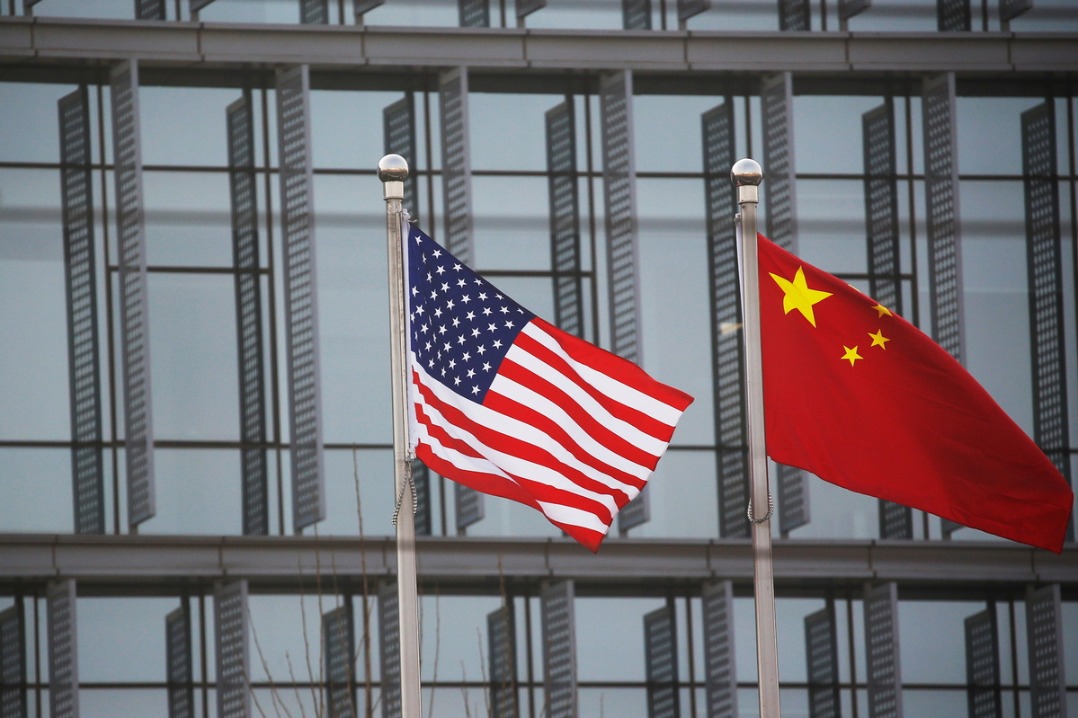
In this age of trade wars, tariffs and geopolitical posturing, the global economy seems to have become a chessboard, and the US and China the grandmasters. But with the pieces shifting and power play unfolding, one thing has become glaringly obvious: the old rules can no longer govern the game.
On April 2, US President Donald Trump announced sweeping tariffs, starting with a 10 percent baseline, on about 60 trade partners. The rates were even higher for several countries, including 34 percent on China.
The reality is that the US tariff war is here to stay. As such the issue isn't only about China; it's about the future of the entire global trade system.
Since 2016, the US has been acting as the WTO's troublesome big brother. It has vetoed WTO decisions, ignored its rulings, and even threatened to withdraw from the international trade body. The US has dealt the most devastating blow to the WTO by blocking appointment to its appellate body which handles trade disputes between member states, effectively paralyzing the system designed to keep global trade fair and transparent. If the world's largest economy can't even abide by its own trade agreements, what hope is there for global stability?
The issue has become a structural clash between the Washington Consensus — essentially the old world order — and the demands of a rapidly shifting global economy. It is therefore clear that the rules of global trade as we know them have been broken.
If there's one thing the world can agree on, it's that digital trade is here to stay. Yet as we move toward a digital-first global economy, the rules governing it are in disarray, and the US and China have become heavyweight players with different visions for the future.
While China advocates easing market access restrictions and promoting digital trade facilitation (without compromising consumer protection), the US is keen to continue its digital dominance by using domestic regulations and establishing high-standard data protection rules. It's a battle for control over data, markets and, ultimately, global leadership in the digital age. The US has even tried to lock China out through the so-called "poison pill" clause in the United States-Mexico-Canada Agreement that emphasizes data freedom and strong intellectual property rights protection.
The US wants to dictate the rules, while China is calling for a more balanced approach to the rules, including listening to the voices of emerging economies. Equally important, China continues to push for "cyber sovereignty" by championing data localization and cross-border regulatory cooperation.
However, the US accuses China of distorting the markets with its subsidies to key industries, especially the semiconductor industry, while conveniently ignoring the massive amounts of subsidy it pays to the semiconductor industry through initiatives like the CHIPS Act and the Inflation Reduction Act. Double standards, anyone?
Thus the issue is not just about trade policy; it's about a high-stakes, strategic race for global technological dominance.
Over the past decade, global trade has undergone a seismic shift. The share of developing countries in global trade is growing. Yet a few Western countries continue to hold the decision-making powers.
While the US is busy rewriting the rulebook for its own benefit, China is calling for the reform of the global trade governance system, not only for its own benefit but also for the benefit of the entire developing world.
In fact, China has worked with India, South Africa and other countries to push for a "development-oriented digital agenda", and oppose the forced bundling of cross-border data flow with market access. In agriculture, China advocates for differentiating between small farmer subsidies, which help ensure their survival, and the massive support the developed countries provide for their agriculture sectors that distorts trade.
China's proposal is not to upend the system. It's about making it work better and balancing fairness with efficiency, openness with sovereignty, and growth with sustainability.
As the world's largest trading nation and second-largest economy, China's proposal is a road map for building a fairer and more equitable global trade order. China's reform proposal focuses on three core areas: strengthening special and differential treatment for developing nations, particularly by integrating technology capacity building into the rules; promoting inclusive digital trade rules that respect data sovereignty; and establishing a "development exception" mechanism in industrial policy, recognizing every country's right to choose its own path to industrialization.
China has already put these ideas into practice through initiatives such as the South-South technology cooperation under the Belt and Road Initiative, the BRICS New Development Bank's support for green infrastructure.
These are all examples of how a development-oriented rule system can help address global challenges such as climate change and debt crises while alleviating North-South tensions.
What China is offering is a vision of global governance that is more inclusive, sustainable and fair. It's a vision that will prompt the developed world to listen to the voices of developing nations and help shape the future.
As the world navigates this new era of trade and economic relations, China has provided a framework for cooperation, not competition — a blueprint that the world needs to build a more equitable global economy.
He Maochun is a professor at the Institute of International Relations, Tsinghua University; and Xu Mingzhen is an assistant researcher at the Economic Diplomacy Research Center, Tsinghua University.
The views don't necessarily reflect those of China Daily.
If you have a specific expertise, or would like to share your thought about our stories, then send us your writings at opinion@chinadaily.com.cn, and comment@chinadaily.com.cn.