The 'urban buzz' creating new urban areas







The first objective of developing a new urban area is to create the "urban buzz": that sense of thriving life in the streets, parks and other public spaces in a new development area. The urban buzz is important not only as a symbol of society but also as a generator of urban energy, and significant financial and cultural value. Streets support micro and small businesses, and create jobs. More than that, they create places for people to meet and hold conversations that lead to ideas, inventions and innovations which can potentially shape the future.
Many discoveries and transformations, from the birth of the financial services industry in London to the inspiration for great literature in Paris, even the breakthrough research in DNA at Cambridge, have taken place in the "street spaces" of thriving cities. For cities to continue attracting talents and encouraging people to settle down, urban planners need to build an environment in which people feel not only safe and secure but also stimulated and enriched.
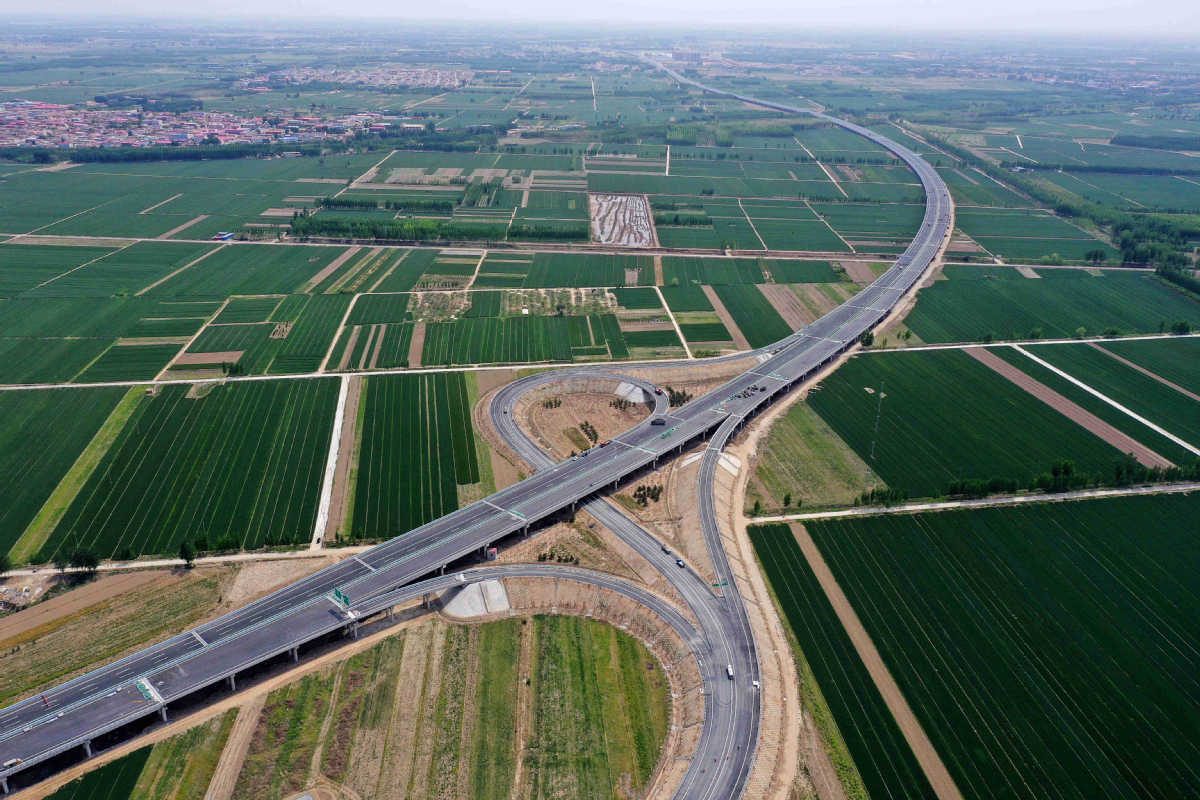
So how do you create the urban buzz when planning and designing new urban areas? Xiong'an, a new area in Hebei province, northern China, has been designated to facilitate the relocation of non-capital functions from Beijing.
At the recent launch of Manchester United's new stadium in Manchester, England, a project that will not only build a monumental structure for about 100,000 spectators but will also establish a new urban area for the city. Olympian Sebastian Coe said the two most important factors needed for the job are community and connectivity.
He also said that development should be done in consultation with the local people and it should serve their needs. For example, urban development should create jobs for the local people and ensure the new facilities are affordable for residents of all income groups. The new facilities, he said, should also be easily accessible through existing streets and subways.
One of the greatest challenges for urban planners and developers is designing streets. Great streets make great cities. But over the past century or so, the urban buzz on the main streets of London, the boulevards of Paris and the avenues of New York City has been eroded by the overpowering presence of private cars.
The urban development industry has, too often, focused on the free movement of vehicles instead of paying greater attention to the essential role of streets in creating financial, social and cultural value. As a result, cities are encountering massive traffic congestions, air pollution and higher risks to physical and mental health.
Paradoxically, the slower the movement of traffic in cities, the more free-flowing and less congested the streets are. Streets with slow-moving traffic are quieter, and safer for car drivers, cyclists and pedestrians. And the more people walk on pavements, the more business shops, restaurants and cafés will do, heightening the urban buzz. It is hardly surprising therefore that car speeds of 30 kilometers an hour in city centers is rapidly becoming the norm worldwide.
While it may be easy to tell a "good street" from a "bad one" (the first is full of life while the second is more or less devoid of it), three design characteristics are essential for ensuring the success of new urban areas.
The first is compactness. For too long, cities have been allowed to encroach on "lower-priced" agricultural land, again facilitated by the increasing number of private vehicles. This has not only lengthened the daily commute time but also irreparably damaged the natural environment of cities. Compactness, or keeping things close, is the solution.
This does not mean building super-high-rise buildings. The center of Paris is extremely densely populated yet you will hardly find a building that has more than eight stories. What matters is the architecture of the buildings. Modernist architects tend to surround their buildings with sterile landscapes, in order to set them apart. In contrast, the architecture of a compact city is humbler, with buildings close to each other. This is the architecture and urban design of the great streets of the world.
The second characteristic is "mixity" — the blending of different land uses, such as housing, workplaces, shops and schools in neighborhoods, which reduces overall commute time and encourages walking. While 20th century urban planning promoted the separation of different land uses in zones connected by roads, the current urban practice is veering toward mixing things up, placing shops, offices and public buildings on main streets and creating quieter, residential environments on secondary and tertiary streets.
The third important characteristic of a successful urban design is simplicity. Perhaps the most powerful example of this principle is the street grid: a network of streets that defines the blocks in terms of where buildings are located (very close to each other wherever possible). Here, the works of cognitive scientists suggest that simple, rectilinear grids are easier for people to navigate because they are easier for the brain to remember.
If these guidelines sound familiar, it is because the principles of new urban planning are the very same that characterize historic Chinese cities. Is anything truly new?
The author is managing director of Space Syntax.
The views don't necessarily reflect those of China Daily.
If you have a specific expertise, or would like to share your thought about our stories, then send us your writings at opinion@chinadaily.com.cn, and comment@chinadaily.com.cn.