US urged to halt port fees for Chinese ships







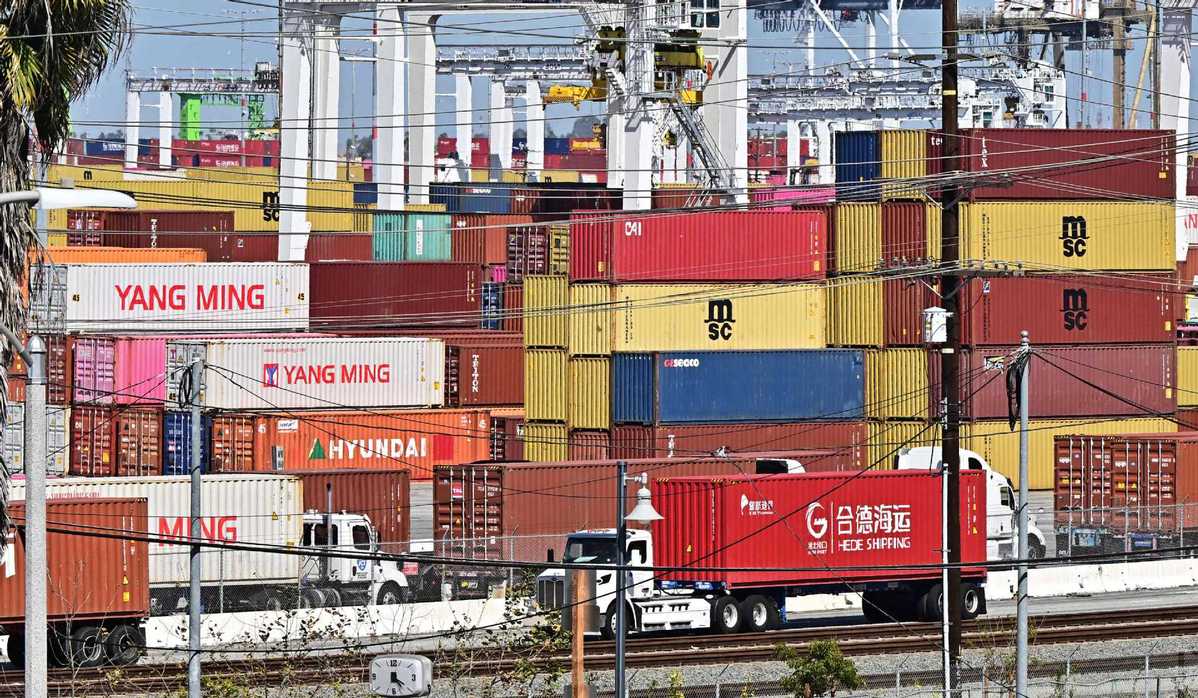
A coalition of US trade associations, shipping companies and businesses wrote letters and testified before the United States Trade Representative's Office (USTR), urging it not to go ahead with a proposed $1.5 million fee on Chinese-made ships that enter US ports.
More than 500 letters and comments were sent to the Section 301 hearings on "China Targeting the Maritime, Logistics, and Shipbuilding Sectors for Dominance", which took place at the International Trade Commission on March 24 and March 26 in Washington DC.
Captain Thomas R. Byrne, operations manager at the East Coast Stevedore Co, wrote in a letter: "The proposed service fee … threatens to have significant negative repercussions for the livelihoods of many Americans.
"By imposing this fee, the cost of maritime trade will increase, placing additional financial strain on US businesses, particularly those reliant on efficient and affordable shipping services."
Some of the organizations in attendance over the two-day hearing included the Chamber of Marine Commerce, National Retail Federation, American Apparel and Footwear Association (AAFA), China Association of the National Shipbuilding Industry and the American Soybean Association (ASA).
Mike Koehne, an Indiana soybean farmer and ASA director, told the hearing that "imposing port fees on most of the maritime fleet that exports from and imports to the US will increase costs for US farmers — both in terms of inputs like fertilizer, seed, et cetera, and getting crops to market.
"While well intended, this proposal would ensure US soybeans will bear higher costs and be less competitive in the global marketplace," he said.
A final decision on the fees is expected after the hearings. The USTR did not respond to a request for comment.
In the run-up to the event, the plans faced further opposition from more than 30 US trade groups that warned in a study that "the various remedies suggested by USTR finds that in every case they would result in net losses for the US economy, US trade, and most of the US shipbuilding supply chain".
The American Association of Port Authorities (AAPA), a trade association that represents over 80 public ports, added in its comments to the hearing: "AAPA respectfully urges USTR to reconsider its approach to countering Chinese dominance in the global shipbuilding industry.
"USTR's proposal would raise prices for consumers and businesses, lead to chaos across the nation's port and transportation industries, and would not reduce the international shipping industry's reliance on Chinese shipyards."
The planned fees did, however, gain support from 63 congressional Democrats in a letter to US Trade Representative Jamieson Greer.
The hearing came about after the United Steelworkers and four other unions urged former president Joe Biden's administration in March 2024 to launch an investigation into China's dominance in shipbuilding.
While US shipyards dominated the trade in 1975, with around 70 commercial ships on order for production, it now produces under 1 percent of the world's commercial vessels.
The drop in production came as Chinese shipbuilders sailed full steam ahead and increased their share of global shipbuilding tonnage from 5 percent in 1999 to over 50 percent in 2023. China produced more than 1,000 oceangoing vessels last year; the US produced 10.
Additionally, the USTR found that China's ownership of the commercial world fleet is over 19 percent as of January 2024; and the country is responsible for production of 95 percent of shipping containers and 86 percent of the world's supply of intermodal chassis, among other components and products.
It concluded in a report that China's dominance is "unreasonable and burdens or restricts US commerce" and is actionable under Section 301 of the 1974 Trade Act — a law that allows the USTR to investigate and respond to foreign trade practices deemed unfair.
The gap between the two nations' current shipbuilding capacity led to the proposal of fees to boost and subsidize the American industry.
The fees could include $1 million per vessel on any ship owned by a Chinese transport operator or $1,000 per net ton of a vessel's cargo capacity. There would be a fee of up to $1.5 million on Chinese companies and vessels or maritime transport operators that use Chinese-built ships, based on the percentage of Chinese ships in their fleet. That could mean up to $3 million per visit.
The fees also could hit operators who plan to order vessels from Chinese shipyards in the next two years. The charges would target any operator that used Chinese ships. The USTR said it requested consultations with the government of China on April 17, 2024.
Nate Herman, senior vice-president of policy for AAFA, told the hearing Monday: "Hard-working American families cannot afford further price increases and product shortages, and American manufacturers and farmers cannot afford to lose more export markets."
While the US wants to spur a resurgence, its shipbuilding industry has been in steep decline since the 1970s. Before China became the dominant shipbuilder, Japan and South Korea were steaming ahead.
If the fees go ahead, the US has set a target of at least 1 percent of US exports to be shipped on US vessels. Then it would be 3 percent of US exports on US-flagged vessels after two years and 5 percent after three years. Seven years on, the restrictions would require at least 15 percent of US goods to be transported on US vessels, with 5 percent on American-built ships.
Edward Gonzalez, CEO of Florida-based Seaboard Marine, the largest US-owned international ocean cargo carrier, testified Monday: "National interest will not be served if the effort to boost American shipbuilding unintentionally destroys American-owned carriers."
The only way for a firm to avoid the fees would be for the vessel operator to be based outside of China and have a fleet with less than 25 percent of its ships built in China.
Agencies contributed to this story.
belindarobinson@chinadailyusa.com