AI crucial for China-ASEAN cooperation








Artificial intelligence has become a priority for a number of countries as they try to ensure their citizens derive greater benefits through digital applications. This has made two issues very important. The first is the ability of countries to use AI for digital functions and solutions. And the second is the ability of countries to develop AI that will enable users of AI to get optimum results.
Addressing these two issues is crucial for deepening economic cooperation between China and Southeast Asia, as well as among countries within the Southeast Asian region.
Most countries, including Southeast Asian countries, are focused on developing capacities for using various AI applications. Without these applications, it is no longer possible to boost economic growth and strengthen regional cooperation in the long run. The application of basic AI tools includes the use of chatbots and digital recognition technology, such as facial recognition systems.
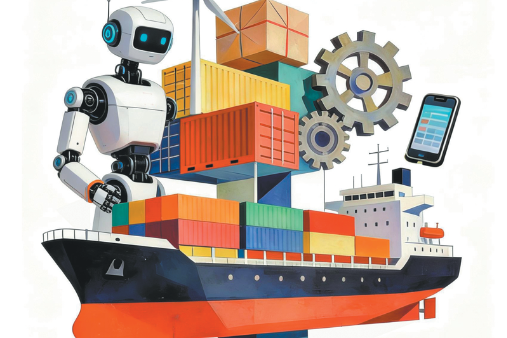
There are many other applications that have found their way into delivery services, making them essential for individuals and enterprises alike. These include robotics used to operate industrial robots for carrying out specific tasks, speech recognition systems produced by deep learning, and machine-learning tools enabling predictive analytics.
Regional economic cooperation can no longer be strengthened without adequate emphasis on AI and its role in all sectors of society. AI is also crucial for understanding future economic cooperation between China and Southeast Asia.
The ability to adopt various AI applications for widespread use in households and businesses requires the development of robust national information and communications technology (ICT) infrastructure, which should be accessible to institutions, organizations and the wider public. The availability of quality broadband and internet services at affordable rates, too, is an important requirement.
In this regard, the scope of cooperation between China and Southeast Asia is huge, with Chinese investment poised to play a significant role in enhancing regional ICT capacities.
China has taken a decisive step in using AI for digitalizing the day-to-day functions of the people, which extends from online retail and mobile banking to a variety of citizen-specific applications, such as the increasing use of digital payment platforms, online communication, and facial recognition features.
Similar apps, including digital platforms for necessary services like hailing cabs, ordering food, and availing household services are becoming increasingly popular in practically the whole of Southeast Asia. The Chinese example of using AI for simplifying complex tasks for a large number of people offers regional economies, especially the smaller ones, valuable lessons.
However, regional economic cooperation cannot be strengthened without addressing the risks arising from the use of digital technologies and AI. Such risks include cyber frauds and various other digital malpractices. "Scam factories" being run by cyber criminals in some parts of Southeast Asia have become rampant, posing a grave risk to unsuspecting individuals. They also pose a serious risk to countries' national security.
These risks cannot be eliminated by any one country alone. Therefore, it is imperative that countries collaborate to effectively handle these cyber threats.
With businesses in Southeast Asia carrying out transactions across borders using digital technology, countries, especially China and Southeast Asian nations, must collaborate to ensure the risk-free, seamless flow of financial information and other sensitive business data, and maintaining the secrecy of information.
As the region's largest economy, and the one with which Southeast Asian businesses, particularly small and medium-sized enterprises, are integrated with, China — in collaboration with ASEAN — should work on rules and frameworks that would strengthen cybersecurity. This collaboration should not be limited to adopting mutually acceptable rules for digital transactions and data transfers; it should extend to the development of mutually acceptable learning processes, such as digital literacy courses and managing data training.
One of the most important aspects of economic cooperation between China and the Asia-Pacific region, including the Association of Southeast Asian Nations, is to understand the need to connect and align with existing and upcoming regulation frameworks. Since AI applications are poised to play a greater role in regional cooperation, it is necessary for China and ASEAN to review the existing rules, including those for digital payment and data transfer, and collaborate on future rules-based frameworks, such as the "Digital Economy Framework Agreement", to ensure smooth progress to the next phase of regional economic cooperation.

The views don't necessarily reflect those of China Daily.
If you have a specific expertise, or would like to share your thought about our stories, then send us your writings at opinion@chinadaily.com.cn, and comment@chinadaily.com.cn.