Two sessions: Unveiling a road map for tech future







This year's two sessions — the annual meetings of the National People's Congress, China's top legislature, and the National Committee of the Chinese People's Political Consultative Conference, the country's top political advisory body — have reaffirmed one central theme: technological self-reliance.
As China nears the end of its 14th Five-Year Plan (2021-25), the leadership has made it abundantly clear that the next phase of economic development will be defined by innovation, industrial upgrading, and diminishing dependence on Western technology.
Amid growing geopolitical tensions, supply chain disruptions, and intensifying competition with the United States, China is doubling down on advanced manufacturing, artificial intelligence, quantum computing, biotechnology and digital infrastructure, among others.
The policy blueprint emerging from the two sessions suggests that China is not merely reacting to external pressures but is proactively positioning itself as a major global technology player — one that seeks to play a central role in the critical industries of the future.
With an annual 5 percent GDP growth target for 2025, China's leadership is signaling confidence in its economic trajectory. But instead of relying on the traditional levers of infrastructure spending and real estate investment, the government is banking on technological progress to drive long-term prosperity.
To this end, China has taken a bold step: raising fiscal deficit to around 4 percent of GDP and planning to issue 1.3 trillion yuan ($180 billion) of ultralong special treasury bonds. Unlike previous stimulus measures, which usually favored construction and State-led infrastructure investment, this round of fiscal support is designed to accelerate high-tech breakthroughs in areas such as semiconductors, renewable energy, telecommunications and automation.
The message is clear: If China wants to compete globally, it must expand and deepen its position in the critical technology supply chains of the 21st century.
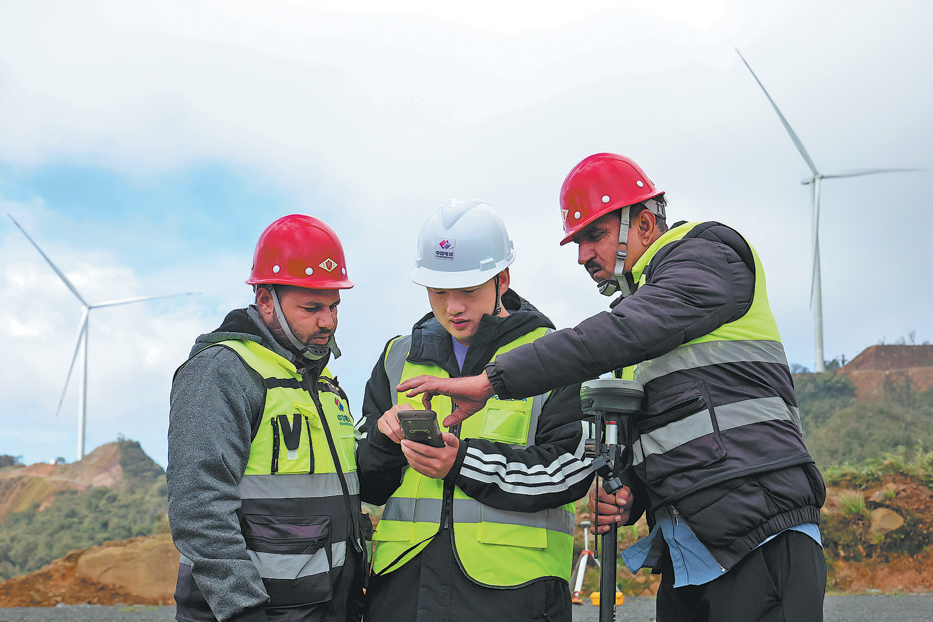
China has seen success in several key areas. For example, China is now the world's largest electric vehicle producer, with companies such as BYD challenging Tesla in global markets. China also demonstrates green energy leadership, dominating the global solar panel supply chain, producing over 80 percent of the world's solar panels and leading in wind energy and battery storage. Furthermore, China's high-speed rail and infrastructure, including rail technology exports and domestic network expansion, have cemented its status as a leader in transport engineering.
The emphasis in the 15th Five-Year Plan (2026-30) will certainly be on technological self-reliance, with a sharper focus on AI, quantum computing, biotech, and next-generation semiconductors.
The two sessions reinforced China's commitment to AI leadership. The government is expanding research and development funding for generative AI, quantum computing, robotics and automation, positioning these fields as core engines of future economic growth.
China's AI sector is already a powerhouse, with major companies such as Baidu, Alibaba and Tencent making significant advancements in large language models, computer vision and autonomous driving. The next frontier is AI-driven industrial automation, where China hopes to revolutionize manufacturing through smart factories and AI-powered logistics.
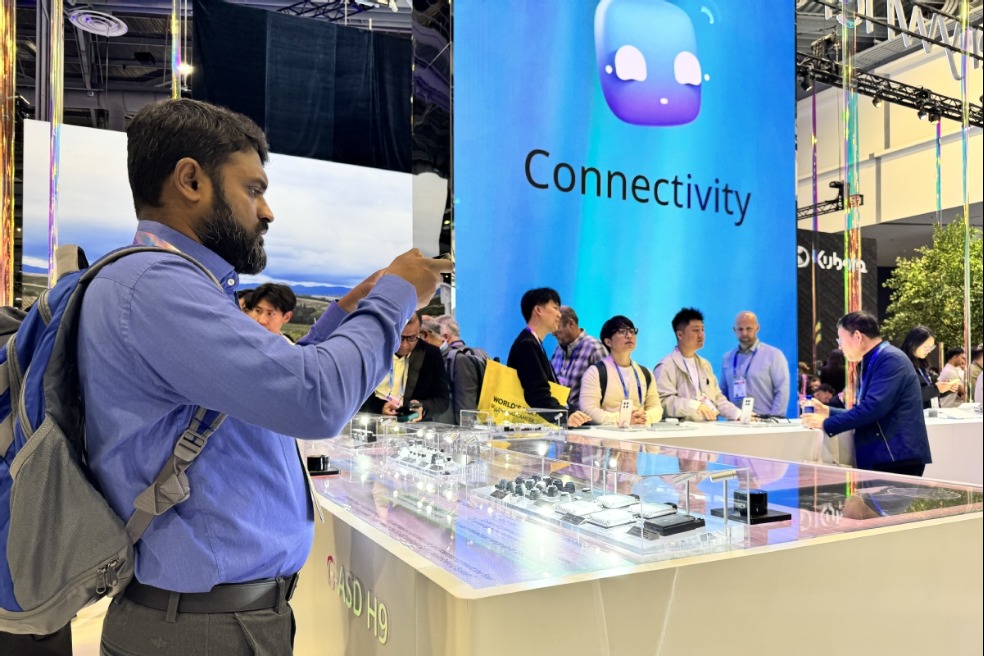
In the telecommunications sector, China is aiming to lead in 6G technology, building on its global dominance in 5G networks. With Huawei and ZTE continuing to expand despite US sanctions, China's leadership sees digital infrastructure as a key pillar of national security and economic competitiveness.
A major question remains: Does China's desire to foster a truly innovative ecosystem require maintaining a high level of State control?
Historically, State-backed R&D programs have driven major breakthroughs in China. To ensure desired levels of progress, the government is strengthening trust with the private sector, and emphasizing market-friendly policies and incentives to spur investment in emerging technologies. The welcome news is that recent signals from China indicate a greater willingness to let private enterprises take the lead in high-tech innovation.
China obviously remains an indispensable player in global innovation. Whether it's AI, clean energy or biotech, Beijing has positioned itself to set the rules of the road in the industries that will define the 21st century.
The decisions taken during this year's two sessions are intended to address these and related questions. With success stories such as DeepSeek making headlines every day, there is less and less reason to doubt that China can and will cement its place as a global technological leader. Moreover, based on the policies and initiatives put forward from the ongoing meetings, it will become increasingly difficult for other countries to constrain China's quest to become a true innovation-driven nation. The world will be watching.
The author is a nonresident fellow at the Quincy Institute for Responsible Statecraft, a think tank based in Washington, DC, the United States.