Income tax reform boosts social fairness







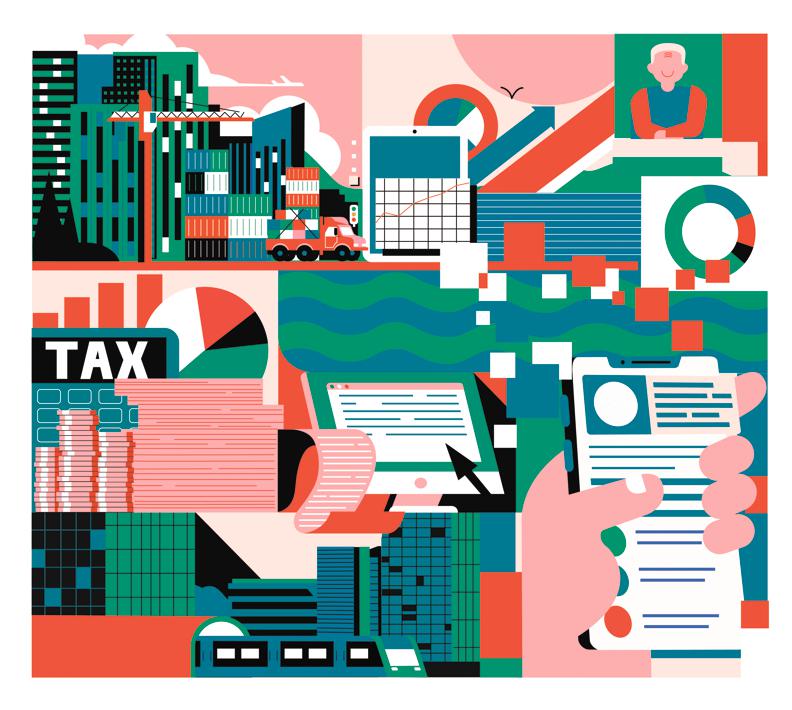
The government work report delivered by Premier Li Qiang on Wednesday mentioned that "tax break policies will be placed under better regulation". Taxes are a crucial source of public revenue and a fiscal tool for providing public goods and redistributing social wealth.
Last year, the third plenary session of the 20th Central Committee of the Communist Party of China proposed to improve the direct tax and personal income tax systems, regulate the taxation policies on incomes generated from businesses, capital and property, and deepen the reform of individual income tax (IIT).
As part of the IIT reform, it proposed to improve the system that combines comprehensive and categorized IIT, implement unified taxation of labor income, standardize the tax policies for business income, capital income and property income, and increase IIT deductions related to childbirth, childrearing and education costs, so as to foster a more rational and just fiscal structure.
Labor income in China is diverse, ranging from wages and salaries to royalties and business gains. If the current tax model continues, taxation disparity will persist given the significant variations in the tax rates and collection standards across income types.
By consolidating labor income under a unified tax rate and standard, the reform can address the inequity issue plaguing the existing taxation system.
The previous reform saw the merging of some types of labor income with wage income. The new reform will take the next logical step by potentially including business income under the unified tax framework.
It is not yet clear which specific labor income types will be unified, although business income is likely to be the main target for integration in the reform. While business income is primarily derived from labor input, it may also involve capital input, making it fundamentally different from wage-based labor income. Hence, when merging business income, it is crucial to carefully consider cost deductions, and set a detailed standard for such deductions to ensure smooth integration.
As economies develop, countries must strike a delicate balance between pursuing economic efficiency and ensuring social fairness. However, social fairness demands that income disparities be mitigated. Many countries address this by adopting fiscal policies that promote more balanced public services and increased transfers to low-income groups, thus narrowing the consumption gap and promoting social equity.
To build a fairer society while maintaining efficient economic mechanisms, it is essential that tax reforms help reduce income inequality and boost economic dynamism that drives growth.
As China's economy continues to grow and per capita income rises, the number of people paying taxes will increase, broadening the tax base and increasing the overall tax revenue. This will allow the tax system to play a bigger role in promoting social fairness.
The current special additional deductions, which cover areas such as childbirth, mortgage interest, children's education and eldercare, reflect the reality of family burdens and human capital investment. These deductions can be dynamically adjusted based on factors such as living standards, cost of living and inflation, ensuring that the tax system responds to the needs of society.
Currently, China's highest marginal tax rate of 45 percent is relatively high by international standards, while income from wages and salaries is taxed under a progressive rate system, with the highest rate capped at 35 percent. High-income groups contribute a significant part of individual income tax revenue. Hence, raising the tax rate for this group alone will likely lead to diminishing returns in terms of income redistribution, and may even encourage highincome individuals to use more sophisticated tactics to evade taxes.
Most countries use different tax structures for capital and labor income, recognizing the distinct economic functions they serve. Capital, being highly mobile, can easily flow to countries with more favorable tax rates. If capital income is taxed very heavily, it risks relocating to jurisdictions with lower taxes, undermining the ability of any given country to attract investment.
Therefore, many countries have adopted relatively lenient tax policies for capital income, aligning with the broader objective of fostering investment and stimulating economic growth, thus maintaining a competitive tax environment while ensuring fairness in the taxation of labor income.
So rather than focusing solely on increasing the tax rate for high-income groups, the emphasis should be on strengthening tax collections and enforcement mechanisms. Closing loopholes, improving the tax system, and cracking down on tax evaders will ensure that all individuals, regardless of their income level, fulfill their tax obligations. In this context, the principle of "supporting the low and expanding the middle" should guide policy decisions, fostering an environment that encourages all members of society to create wealth, increase their income and contribute to sustained economic growth.
The new round of individual income tax reform will directly affect the lives of people. For the reform to be successful, effective communication with all sectors of society is essential. Public understanding and acceptance of the reform can only be achieved through an open, transparent process that encourages public input and participation.
Therefore, it is important that policymakers engage with diverse social groups in devising a unified taxation plan. This will help ensure that the final plan aligns with the principle of social fairness, receives broad public support, and is effectively implemented.
Individual income tax reform is a complex, long-term undertaking with profound implications for both social fairness and economic development. The reform must be viewed with a dynamic, forward-looking perspective, continuously improving the system and management measures. While the pursuit of economic efficiency is important, ensuring the highest possible degree of social fairness must remain at the core of the reform. Only by achieving this balance can the tax system serve all citizens and robustly advance Chinese modernization.
Liu Shangxi is former president of the Chinese Academy of Fiscal Sciences and a member of the 14th National Committee of the Chinese People's Political Consultative Conference. The article is based on his interview with China Daily's Li Wei. The views don't necessarily reflect those of China Daily.
If you have a specific expertise, or would like to share your thought about our stories, then send us your writings at opinion@chinadaily.com.cn, and comment@chinadaily.com.cn.