Multiple treatment needed to manage multimorbidity







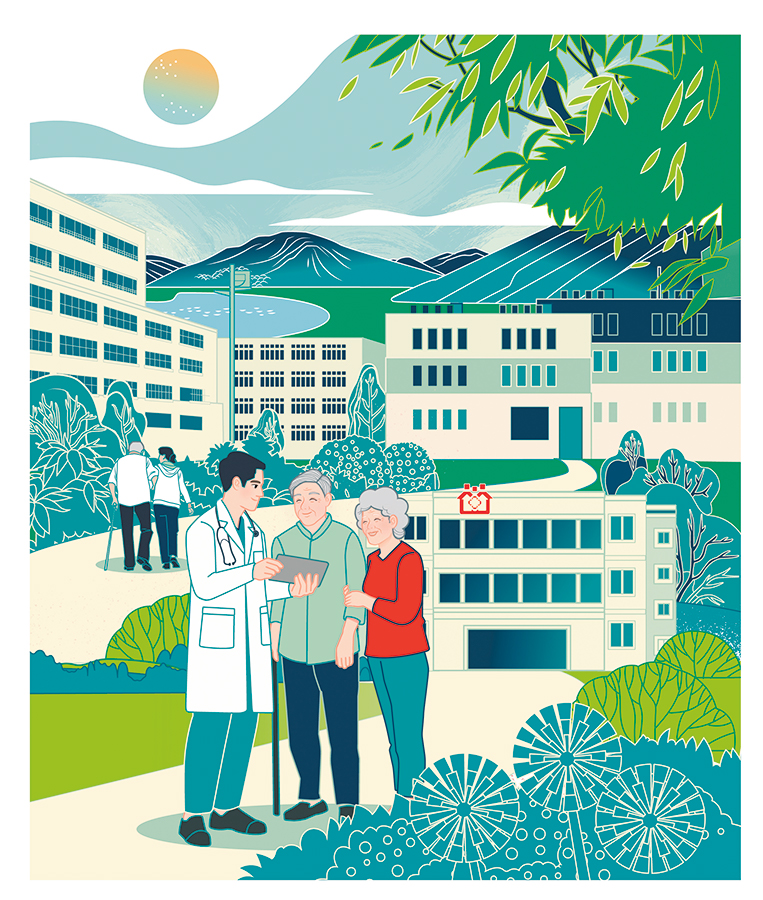
With China's economy developing, people's lifestyle changing and the population aging, chronic diseases have become a significant public health challenge. In particular, multimorbidity, or two or more chronic non-communicable diseases in an individual, is becoming increasingly common.

Studies show that 40-80 percent of chronic disease patients may develop multimorbidity, with the prevalence exceeding 50 percent among people aged 65 or above. Multimorbidity severely impacts the patients' quality of life, increases the risk of repeated hospitalization and brings about premature death, putting immense pressure on family caregivers and public health services.
The complexity of causes, and the long duration and diversity of conditions make managing multimorbidity a serious challenge. In clinical practice, most disease management guidelines focus on single diseases and struggle to deal with the complexity and range of conditions that multimorbidity entails. This results in a lack of systemic and effective management, with conflicting treatment methods arising from the application of multiple guidelines.
Besides, basic public health services are not equipped to manage multimorbidity. The coordination between community health centers and higher-level hospitals remains inadequate, while healthcare reimbursement policies do not align with the needs of managing multimorbidity, with the disease-related payment system increasing the financial burden on patients. Public awareness of health issues and lifestyle, too, needs to change, as unhealthy lifestyle contributes significantly to the increase in multimorbidity.
In recent years, national policies such as the Medium-to-Long Term Plan for the Prevention and Treatment of Chronic Disease (2017-25), Healthy China Initiative (2019-30), and the 14th Five-Year Plan for National Health have provided guidance on how to prevent chronic diseases and multimorbidity. But the policies and implementation rules for managing multimorbidity need further refinement.
Given the rising cases of multimorbidity and limited healthcare resources, we propose the following strategies for improving multimorbidity management:
First, there is a need to integrate multidisciplinary resources and develop unified management guidelines. Focusing on general medicine, integrating resources from different medical disciplines to establish a comprehensive management mechanism for multimorbidity is essential, while local adaptation to national guidelines should be encouraged to ensure they are practical and applicable across different regions and healthcare facilities.
Second, the authorities should optimize clinical methods and promote shared decision-making to better manage multimorbidity, while healthcare providers should understand every patient's personal background, factors such as marital status, work environment and incorporate them in the personalized treatment and management plans. A shared decision-making model is needed for healthcare providers to explain all the treatment options, and their potential outcomes and risks to the patients.
Third, improving primary healthcare as well as overall healthcare service systems is necessary. Primary healthcare institutions, given their proximity to the community, should play a more significant role in multimorbidity management by, for example, using electronic health records for early identification and treatment of multimorbidity patients.
Fourth, the authorities should also reform the health insurance system and explore a multi-tiered, bundled payment system based on disease groups. For patients with complex conditions and long treatment cycles, the reimbursement rate should be increased by raising the payment cap, and the long-term care insurance system expanded to cover multimorbidity patients, so as to reduce financial and care-giving burdens on families.
Digital technology should be leveraged to develop innovative management models. Big data, artificial intelligence, the internet of things, and smart healthcare technologies should be employed to improve multimorbidity management. By establishing a high-quality medicine database that integrates clinical data, research findings and patient health information, the authorities can facilitate the technological innovation needed to improve multimorbidity management. They should also use AI to timely and accurately analyze a patient's condition, offering decision-making support to healthcare providers, and making diagnoses more efficient.
And fifth, health education should be strengthened and proactive health behaviors promoted, while health education campaigns should focus on chronic disease prevention and multimorbidity management at the community level. And knowledge about disease prevention and healthy lifestyles should be disseminated through different media channels to ensure people do regular physical exercise, have a healthy diet, undergo regular health check-up, and pay attention to their mental well-being.
By implementing these measures, China can create an environment conducive to managing multimorbidity.
The author is head of the School of Public Health at Wuhan University and a deputy to the 14th National People's Congress. The views don't necessarily represent those of China Daily.
If you have a specific expertise, or would like to share your thought about our stories, then send us your writings at opinion@chinadaily.com.cn, and comment@chinadaily.com.cn.