Tariffs will lead to hike in prices, fall in choices







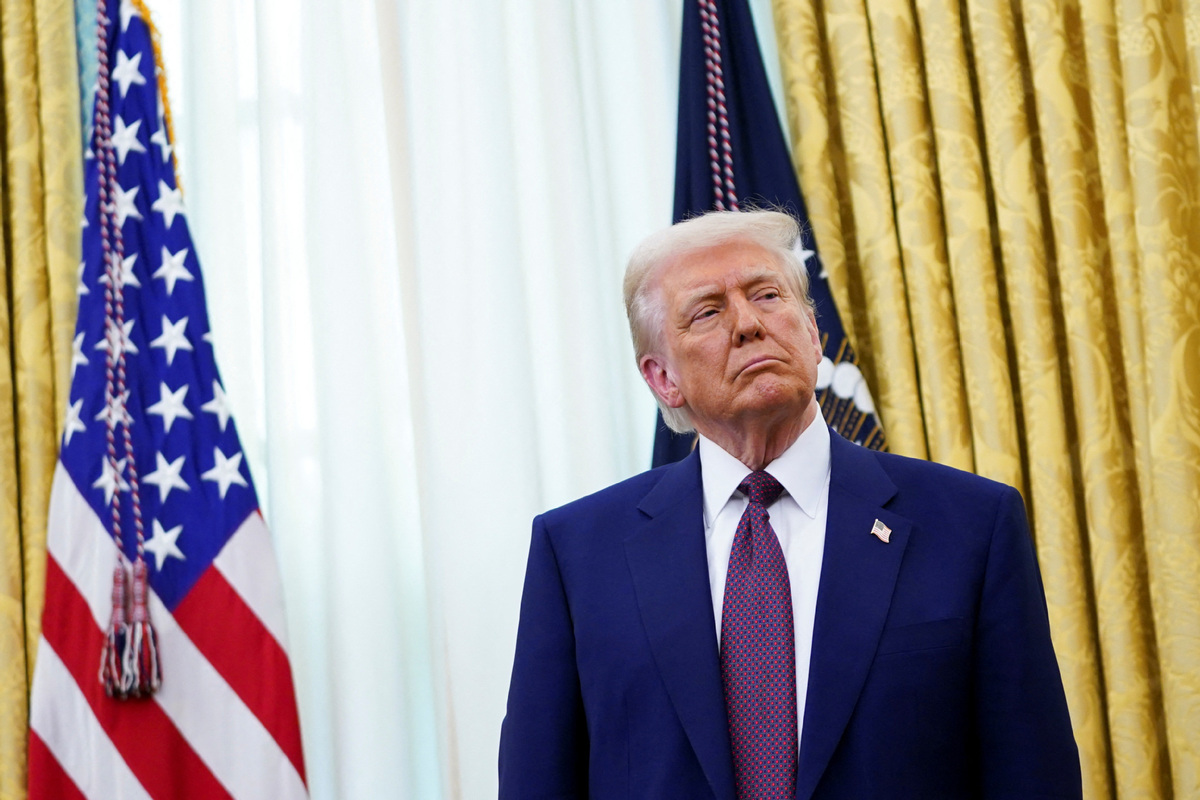
US President Donald Trump temporarily suspended the imposition of tariffs on small packages from China shortly after announcing an end to the duty-free policy for shipments worth less than $800 — but not before the executive order created chaos for the United States Postal Service.
The decision to revoke the de minimis tariff exemption rattled US-China trade relations, particularly in the cross-border e-commerce sector — not to mention creating a backlog of millions of packages from the Chinese mainland and Hong Kong after the order went into effect on Feb 4.
The de minimis exemption will now remain until "adequate systems are in place" for the Commerce Department "to fully and expediently process and collect tariff revenue".
Chinese e-commerce powerhouses such as Shein and Temu have taken the US market by storm in recent years, captivating consumers with their unbeatable prices and direct-to-consumer shipping model.
By leveraging their supply chains in China, the platforms have carved out a significant share of the discount market, particularly in fast fashion, toys and other consumer goods.
A recent report by the Congressional Research Service revealed that Shein and Temu now account for approximately 17 percent of this rapidly growing sector.
Mixed effect
If implemented, the revocation of the tariff-exemption policy would introduce a complex mix of challenges and opportunities for both US consumers and Chinese e-commerce platforms.
In the short term, it would lead to higher prices and fewer choices for consumers, but over the long term, it could reshape the global trade landscape.
First and foremost, the policy would directly lead to higher prices of goods that were once affordable and widely accessible. Products ranging from electronics to apparel — many sourced from China — will become more expensive, straining household budgets and potentially adding to inflationary pressures at a time the US economy is already grappling with rising costs.
Additionally, major e-commerce platforms would have to reassess their US market strategies, resulting in reduced supply and fewer choices for consumers.
So far, the reaction among consumers in the US has been mixed. While some lamented the increased cost of living, others supported the revocation of the policy as a means to bolster domestic industries. However, the unintended consequences such as reduced tariff revenue and continued challenges in intercepting illegal goods suggest that the policy revocation will miss its mark. Instead of protecting US interests, it will create a lose-lose situation for both consumers and businesses.
Innovation catalyst
One positive aspect of the cancellation of the de minimis tariff exemption would be that it would act as a catalyst for innovation and strategic realignment in the cross-border e-commerce sector. Chinese e-commerce giants are rethinking their business models, moving from low-cost, high-volume sales to a stronger focus on quality, user experience and value-added services.
This shift could create a more competitive and consumer-friendly market. One immediate response has been the optimization of supply chains and logistics networks. Companies are investing in local warehousing and distribution centers in the US, enhancing their ability to respond quickly to market demands while reducing operational costs.
This not only improves efficiency but also deepens collaboration between US and Chinese firms in logistics and technology, paving the way for more integrated trade ecosystems.
The policy revocation would underscore the critical role of compliance and sustainability in cross-border trade. Chinese e-commerce platforms are increasingly focusing on meeting international trade standards, improving transparency and adopting ethical business practices. Such efforts not only strengthen the companies' corporate image but also foster consumer trust, laying the groundwork for long-term success in global markets.
Sustainability is becoming a key competitive advantage. With growing consumer demand for eco-friendly products, companies that prioritize sustainable practices — from sourcing to packaging — will gain a competitive edge. This shift aligns with broader global trends and strengthens the reputation of Chinese e-commerce platforms in the international market.
Finally, and perhaps most importantly, the policy revocation would amplify the urgency for Chinese e-commerce platforms to expand their global reach to emerging markets in Southeast Asia, Europe and South America, which present untapped opportunities. Those markets are fueled by growing middle-class populations eager for affordable yet high-quality products.
By tailoring products to local preferences and forging partnerships with regional players, Chinese companies can lessen their dependence on any single market. This diversification not only mitigates risks but also strengthens their global presence, ensuring long-term resilience in an increasingly unpredictable business world.
A call for collaboration
The challenges posed by the cancellation of the de minimis tariff exemption policy are undeniable, but they also present an opportunity for US-China trade relations to evolve. By fostering collaboration in areas such as technology, logistics and regulatory frameworks, both nations can mitigate friction and create a more stable trade environment.
For instance, joint efforts can be made in digital innovation and artificial intelligence, and data analytics could revolutionize cross-border e-commerce, making it more efficient and consumer-friendly.
At the same time, cultural exchanges and brand storytelling will play a pivotal role in bridging gaps between Chinese e-commerce platforms and international consumers. Collaborations with local influencers and a focus on cultural resonance can help Chinese brands build emotional connections with global audiences, enhancing their appeal and market share.
To summarize, the revocation of the de minimis exemption is a reminder of the complexities of global trade. Yet it also serves as a call to action for innovation, collaboration and strategic adaptation.
By embracing these challenges, Chinese e-commerce platforms can transform obstacles into opportunities, driving growth and fostering stronger ties with global markets. As we look to the future, the key lies in mutual understanding and cooperation.
By working together, the US and China can create a more dynamic, inclusive and sustainable cross-border e-commerce ecosystem — one that benefits consumers, businesses and economies on both sides of the Pacific.
In a world increasingly defined by interconnectedness, the success of one nation is inextricably linked to the success of the other.
The author is the founder of the US-China E-commerce & Trading Chamber.