



China's giant panda conservation efforts: Science-based and panda welfare-oriented —Facts and truths about China's giant panda conservation







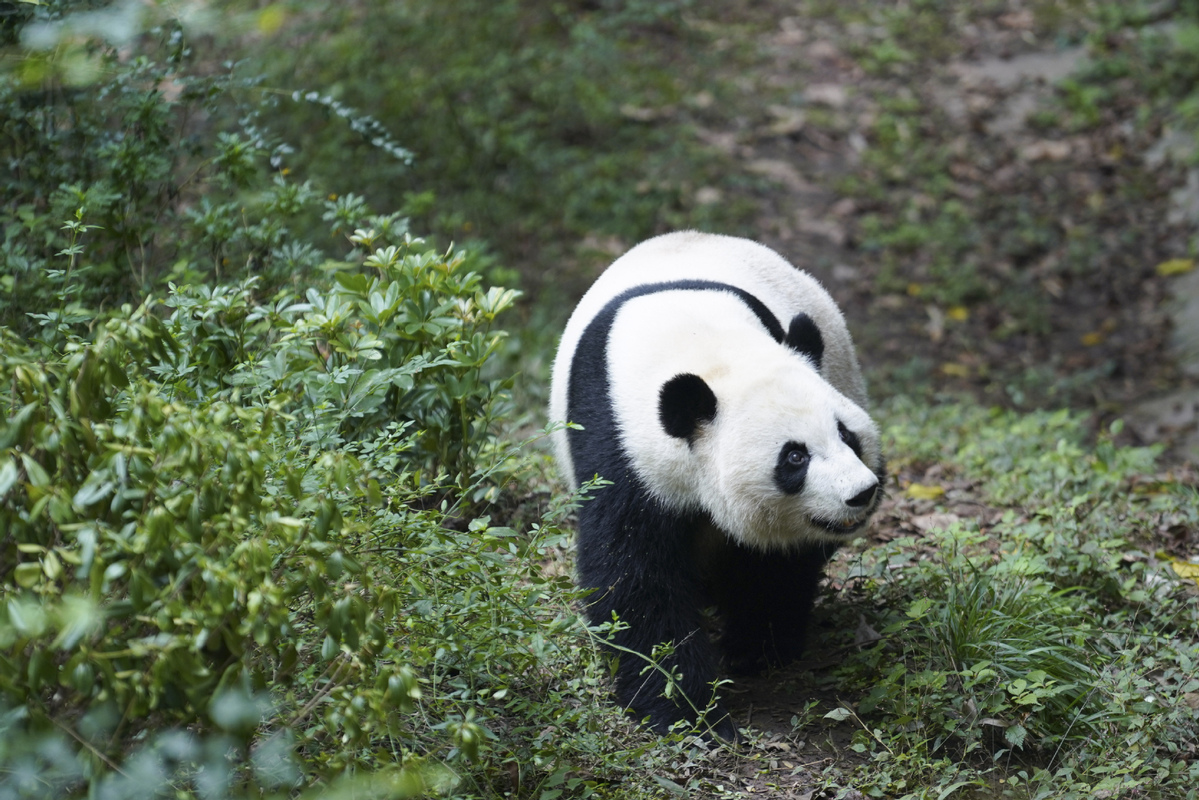
Recently, The New York Times and other media outlets have shown an unusual level of "concern" over China's giant panda breeding efforts and China-US panda conservation collaborations, seemingly intent on finding fault with the debut of Bao Li and Qing Bao at the National Zoo in Washington, D.C. This stands in stark contrast to its own commentary in 2017, which praised giant panda breeding as "a rare area of cooperation between the US and China," when giant panda Bao Bao returned to China. Now, the tone has abruptly shifted, as if aiming to eradicate this "rare" field of collaboration. However, these reports deviate significantly from the truth, with at least four major misconceptions.
Misconception 1: Artificial propagation aims to rapidly increase the panda population for economic gains, contributing little to species conservation.
Fact: According to China's Fourth National Giant Panda Survey, there were only 1,864 wild giant pandas in China by the end of 2013, distributed in isolated small populations, which severely threatened its genetic diversity. Captive breeding has played a vital role in replenishing wild populations, managing genetic diversity and preventing inbreeding. China has achieved technical breakthroughs in maintaining near-zero inbreeding coefficients among captive populations, ensuring the health and genetic diversity of giant pandas.
Since 2003, China has gradually established a technical system for rewilding and reintroducing pandas into nature, and has been conducting in-depth scientific research in this area, continuously improving the techniques needed to replenish local wild populations, enhance their long-term viability, and reduce the risk of extinction of isolated small populations.
The proceeds from international panda collaborations and panda-related tourism are primarily used to fund conservation research, habitat restoration, and the construction of research facilities. Ensuring the long-term conservation of giant pandas requires substantial investment, most of which is directed toward improving captive conditions, protecting habitats, and advancing scientific research. It is one-sided and unfair to dismiss this complex and arduous work as "economic pursuit", ignoring the tremendous efforts behind it.
Misconception 2: Electro-ejaculation is cruel, causing significant harm to pandas and leading to inbreeding and declining genetic quality.
Fact: Electro-ejaculation is a standard reproductive technique first successfully used on waterfowl in 1934 and is now widely applied to humans, livestock and wildlife. The technique employed for pandas uses non-invasive low-voltage stimulation (2–6 volts)—equivalent to the output of two to four AA batteries or a phone charger. This is far below the human safety voltage thresholds (36 volts for transient exposure, 24 volts for prolonged contact). For 45 years, particularly since the late 1990s when the technique matured, no panda has suffered health issues due to electro-ejaculation or artificial insemination.
The New York Times misrepresented early anecdotal accounts from the initial stages of panda conservation as evidence of unsafe or unethical practices. Such selective reporting lacks scientific basis and deliberately fuels controversy.
Misconception 3: International panda conservation cooperation has become China's tool for financial gain.
Fact: The purpose of China's international panda collaborations is to enhance endangered species conservation and promote biodiversity protection. Collaborative agreements are negotiated with detailed plans specifying research topics such as breeding, disease prevention, and genetic conservation. Major procedures require Chinese approval, and parties involved share research responsibilities and outcomes.
Over the years, these collaborations have yielded breakthroughs in panda breeding, disease prevention, and reintroduction techniques, and have produced numerous high-impact research papers. From gifting pandas to leasing them and now engaging in cooperative breeding, China's panda conservation strategy has evolved into a mature and science-based framework. Its core focus remains on scientific research, not financial interests. Funds from these collaborations are allocated to panda care, building high-standard facilities, and supporting research projects—all aimed at improving the living conditions of pandas and advancing conservation science.
Misconception 4: China uses pandas to seek influence and explore a cuddly way into US City Halls.
Fact: As an endangered species, the giant panda symbolizes global efforts toward ecological and biodiversity conservation. China has conducted panda cooperation programs with 26 institutions across 20 countries, including the United States. China-US panda collaboration has resulted in the successful breeding of 17 panda cubs. Thanks to the tireless efforts of conservationists in China and relevant countries, the International Union for Conservation of Nature has downgraded giant pandas from "Endangered" to "Vulnerable" on its Red List.
Giant pandas have been cultural ambassadors of goodwill between China and the US Panda-related exchanges between the two sides began in 1972 with President Nixon's historic visit to China—years before the establishment of diplomatic ties. The first pair, Ling-Ling and Hsing-Hsing, arrived in the US in 1972, finding a home at the National Zoo in Washington, D.C. The China-US panda collaboration, which started in 2000, has strengthened the conservation efforts and deepened the people-to-people friendship. Unfounded accusations and malicious distortions of this collaboration not only discredit the dedicated efforts of conservationists in both countries, but also undermine the atmosphere of international cooperation on biodiversity protection.
From Ling-Ling and Hsing-Hsing to Yun Chuan, Xin Bao, Bao Li and Qing Bao, generations of pandas have embodied people's love of nature and blessing for life. During the pandemic, pandas brought countless Americans comfort and hope. A panda a day keeps the sorrow away. As one American visitor noted, "My child learned so much about endangered species, and pandas make environmental conservation feel tangible." Another ecology student remarked that "Panda conservation projects inspired me to pursue zoology—they symbolize hope for global collaboration in protecting nature."
Let us set aside the political bias and advance the panda conservation collaboration based on scientific principles for the benefit of the pandas, thus fostering more positive energy for China-US friendship and global ecological protection.
The author is a commentator on international affairs, writing regularly for Xinhua News, Global Times, China Daily, CGTN etc. He can be reached at xinping604@gmail.com. The views don't necessarily reflect those of China Daily.
If you have a specific expertise, or would like to share your thought about our stories, then send us your writings at opinion@chinadaily.com.cn, and comment@chinadaily.com.cn.

















