US mindset of confrontation, sanctions, decoupling not sustainable







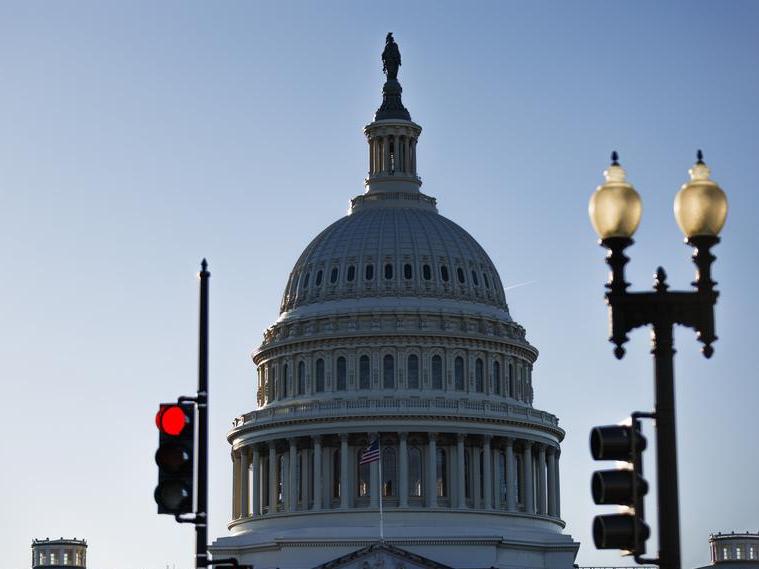
United States President Donald Trump said on Monday he will not immediately impose tariffs on imported products, but will order federal agencies to assess trade issues, which could ultimately result in taxes on imports from China, Canada, Mexico and other countries.
While this move could help ease tensions with its trade partners as of now, tariffs and trade-related sanctions still cannot be excluded.
History has shown that sanctions have limited utility, which should serve as a reminder for the new Trump administration. A study by the Peterson Institute for International Economics indicated that during the 1970s and 1980s, US sanctions only produced positive outcomes in fewer than one in five cases.
And yet, from Trump to former US president Joe Biden and back to Trump, politicians and administrations in the US have remained eager to use trade measures, among others, to serve the needs of the military-industrial complex in containing China's competitive edge.
Contrary to initial expectations, the former Biden administration accelerated economic, trade and technological war with the world, especially with China. First, Biden revived the Barack Obama administration's "Pivot to Asia" and China containment policies. He worked with allies and introduced initiatives, including Build Back Better World and Partnership for Global Infrastructure and Investment, to counter the China-proposed Belt and Road Initiative. Then, he intensified the previous Trump administration's policy of tariffs, confrontation and sanctions. Next, he launched sanctions and restrictions through the CHIPS and Science Act, among others. Even before taking office, Trump started flexing his muscles to unleash a new wave of restrictions, sanctions and confrontation.
There were efforts to understand the cost of sanctions on the US economy. The Federal Reserve Bank of New York and Colombia University found that the trade war cut the market value of listed companies by $1.7 trillion between 2018 and 2019. The overall impact was even deeper, as it lowered growth rate, put high pressure on producers, caused losses for farmers and increased the price burden on consumers. The companies tried to avoid transferring the impact to consumers, but only a few were successful, at the cost of compromising wage rise and loss of jobs.
Unfortunately, despite paying a high price, the US has opted to continue its sanctions and confrontation policy. From semiconductors and chips to electronic vehicles and even TikTok, the US is trying to rein in China to keep the dominance of its military-industrial complex intact. Therefore, it is pressuring its allies and trade partners to follow in its footsteps and reduce business with China.
Sanctions backfire
There is a general consensus that Western sanctions led by the US will not be successful and have negative implications for Western companies and economies. This policy is already hurting allies and partners of the US.
For example, China is one of the major buyers of photolithography machines from Dutch firm ASML. After the imposition of sanctions, the company has faced challenges. Qualcomm, a major US chip company, depends on China for over 60 percent of its sales, and sanctions are not good news for it. Lam Research, a US chipmaker, also lost substantial revenue — about $2.5 billion — due to the sanctions.
It's understandable that China's countermoves are related to its upper hand in producing the raw and refined materials used for manufacturing semiconductors. China has the largest reserve of rare earth metals, with data suggesting it has more than one-third of global resources. China has also outpaced the world in mining these metals, accounting for 60 percent of global mining. These are critical materials for technological development, infrastructure, batteries, medical tech and energy.
China is working to enhance its capacity and capability to lead the fourth industrial revolution, innovation base and technology development status by investing immensely in innovation and technological development. It has invested in human capital development through a high-quality education system and produced quality STEM graduates to build the capability to create knowledge.
Now, China is reaping the benefits of its investments, and it is on its way to matching or surpassing Western countries. Therefore, many experts from the Global North and the Global South believe that it is just a matter of time before China breaks technical barriers in the chip sector. They also believe that the sanctions and restrictions further accelerate the pace of innovation and technological development in China.
Many years ago, in anticipation of US sanctions and hostility, China started to diversify its economic linkages and export markets. It launched numerous initiatives to build sustainable economic linkages with the world, including the Belt and Road Initiative. China has also erected many technology-related platforms to build the capacity of poor countries and share its experience with them. As a result, China is deeply integrated into the global system and is open to sharing the dividends of innovation and technology development.
Therefore, the US and some of its allies will not be able to contain China or control its technological development.
Sanctions or the rhetoric of decoupling, devoid of economic sense, are often exploited for political purposes to appease a few but hurt the majority of US consumers and industries. Political parties and the military-industrial complex are looking for a scapegoat to hide their inefficiency and inability to serve the people and sustain economic development.
US politicians and their financiers need to understand that sanctions, confrontation or decoupling are neither sustainable nor will they help solve the problems US is facing. Therefore, these should be avoided in favor of a formula for win-win cooperation and peaceful coexistence. That will help solve the US' problems and bring positive development outcomes for the world.
The author is CEO of the Asian Institute of Eco-civilization Research and Development in Pakistan.