Why the US should think twice before launching another tariff war?







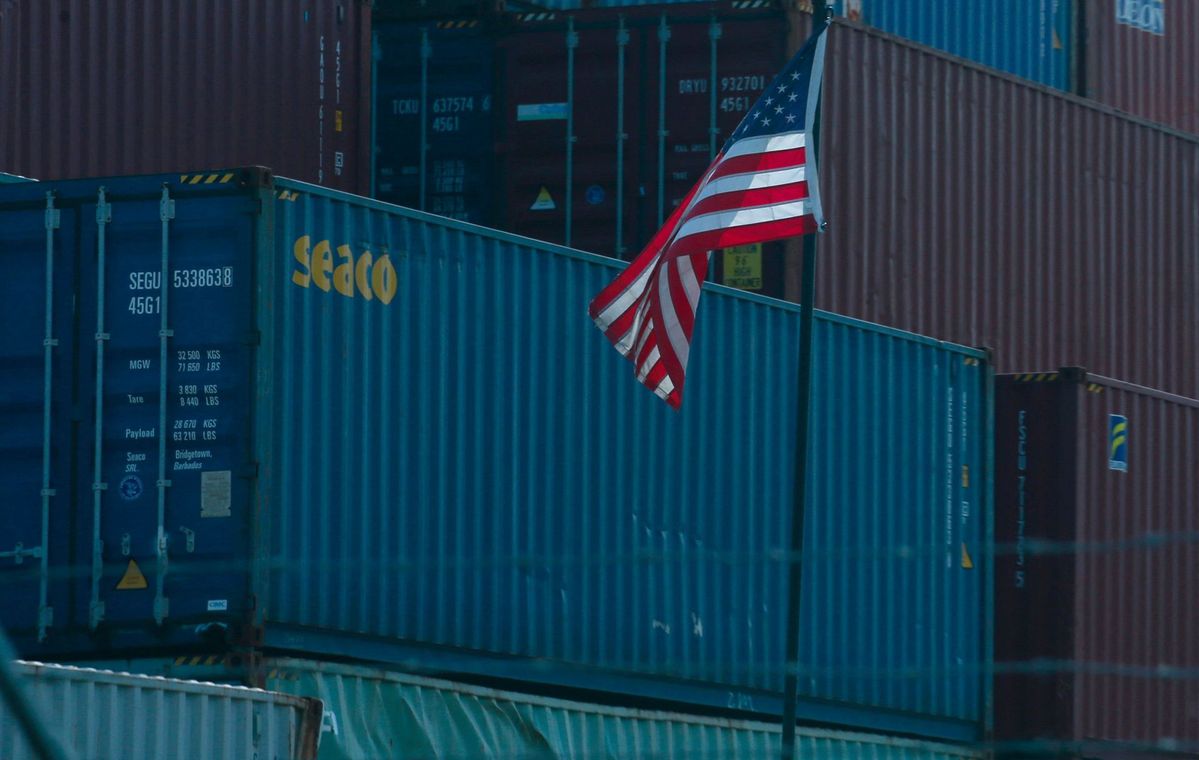
In a move that surprised no one, US President-elect Donald Trump once again played the "tariff card," threatening an additional 10 percent tariff on all Chinese products entering the United States, citing a most far-fetched excuse of US drug problems.
The drums of another tariff war have sounded. And the first to voice opposition are Americans. Numerous US think tanks, universities, leading media outlets, and business associations have highlighted the various ways elevated tariffs will hurt the US economy. Here are the key points:
Pushing up prices and inflation
From the Federal Reserve to the Peterson Institute for International Economics (PIIE) and Moody's, it is generally believed that the additional 10 percent tariff will cause US inflation to rise by 0.9 to 1.5 percentage points and its GDP growth to fall by 1 to 1.4 percentage points. Should an additional 60 percent tariff on China, another threat by Trump during his campaign, materialize, it will push up the inflation rate further by 0.7 percentage points.
Increasing tax burden and eroding family wealth
American consumers will be hard hit. Yale University's Budget Lab estimates that a 10 percent global tariff and 60 percent China tariff will slash annual household incomes by $2,576, taking into account the impact of possible retaliation.
Similarly, the Center for American Progress estimates that a 20 percent sweeping import tariff plus 60 percent tariff on Chinese goods would result in a $3,900 tax increase for a middle-income family. The National Retail Federation reports that a universal 10-20 percent tariff on imports from all foreign countries and an additional 60-100 percent tariff on imports specifically from China could cost Americans $78 billion in annual spending power.
Widening wealth gap
In the low-income groups in the United States, the proportion of consumption of imported goods is very high. By contrast, this proportion is lower for the rich. Low-income families will be worse off by tariff hikes than richer ones.
Additionally, US policies under Trump tend to focus more on reducing corporate income tax, which benefits large corporations and exacerbates income inequality. According to PIIE, if Trump pushes his policy to the maximum, after-tax income for the poorest 20 percent of Americans will shrink by 8.5 percent, while the top 1 percent nets an 11.6 percent increase.
Harming US industries
Extra tariffs will not revive the US manufacturing industry as some claim, but rather hinder the "revitalizing American manufacturing" project. The US economy, particularly its manufacturing industry that imports intermediate products in large quantities, is propelled by and dependent on global value chains. More tariffs will only increase their production costs and reduce their competitiveness.
US importers have vocally opposed swelling tariffs. The CEO of Kent International, a New Jersey-based US firm that imports bicycle parts from China, complained, "The Trump administration was very proud to say that China is paying the tariffs, and I was always very quick to say, 'Well, if somebody in China wants to pay it, I'd be happy, but we're paying it.'"
Hurting employment
Escalating tariffs and foreign countermeasures may lead to job losses, stagnated wage growth, and weaker employment stability. Research by Moody's shows that the trade war with China caused the loss of 300,000 American jobs between July 2018 and August 2019. The Tax Foundation estimates that new tariffs will shrink US GDP by at least 0.8 percent, and cost 684,000 full-time jobs.
Hindering capital flows
Increased tariffs have failed to reduce expanding US trade deficit, which reached a record high of $951.2 billion in 2022. The investment bank Evercore ISI predicts that new tariffs will push average US tariff level to 17 percent, the highest since the Great Depression.
Nobel laureate economist Paul Krugman believes that a tariff-ridden world would also be a world with greatly subdued capital flows. "The US trade deficit is the counterpart of large capital flows, a global trade war probably would reduce that deficit—not by helping US firms compete with foreigners, but by largely shutting down international movements of capital."
Since the initial phase of tariff hikes under "Trump 1.0," China has expanded its toolkit to counter economic shocks. As the New York Times reported, China is poised to handle "Trump 2.0" with strategies such as reciprocal tariffs, targeted inclusion of US companies in its unreliable entity list, and reducing trade dependence on the US. China does not want a tariff war with the US. But if such a war were to be unleashed, it certainly is prepared to defend itself.
One thing is for sure: there are no winners in tariff or trade wars. While China may bear some losses, the United States will not be able to walk away unscathed.
The author is a commentator on international affairs, writing regularly for Xinhua News, Global Times, China Daily, CGTN etc. He can be reached at xinping604@gmail.com. The views don't necessarily represent those of China Daily.
If you have a specific expertise, or would like to share your thought about our stories, then send us your writings at opinion@chinadaily.com.cn, and comment@chinadaily.com.cn.