



Build MSAR as education hub to connect world







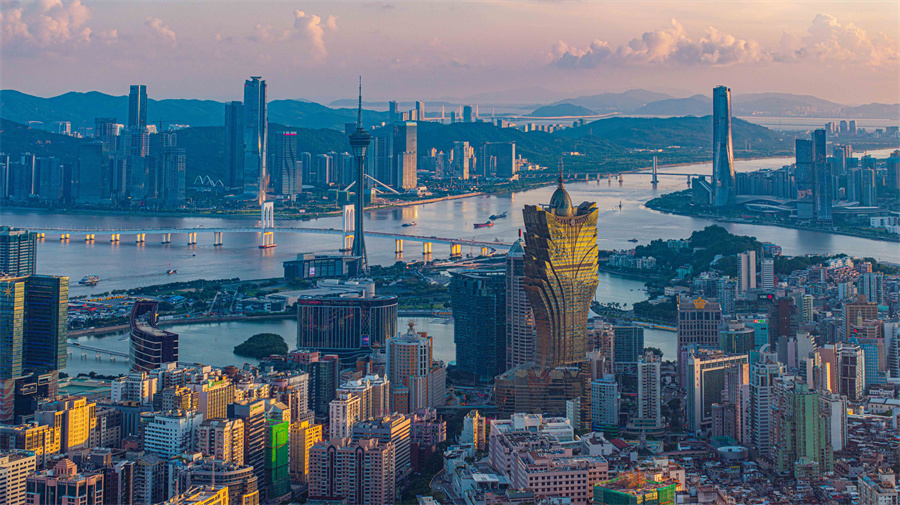
Since Macao's return to the motherland in 1999, the city has seized the opportunity presented by the remarkable growth of the mainland and ridden the tide of the Greater Bay Area, as outlined in the overall development plan for the Guangdong-Macao In-depth Cooperation Zone in Hengqin, Guangdong province, released in December 2023. Furthermore, Macao has been progressively assuming a significant role in bridging China and Portuguese-speaking countries.
In April 2024, China held a forum to promote cooperation between China and Portuguese-speaking countries, encompassing areas such as trade, investment, and healthcare, which enhanced the role of Macao as a service and cooperation platform.
Moving forward, it is essential to refocus cooperation efforts on promoting development and achieving shared prosperity. This requires a focus on human capital, knowledge exchange, as well as cultural awareness, which is integral to the success of the aforementioned endeavors.
In recent years, Macao has experienced a rapid transformation into a regional education hub, attracting students from across the world. Higher education institutions in Macao have expanded their facilities, academic offerings, and community services. Local higher education institutions not only excel academically but also maintain strong connections with the global community through active participation in academics, research and cultural exchanges, thereby facilitating people-to-people exchanges. Given this backdrop, how can Macao's higher education institutions further enhance their role in promoting relations between China and Portuguese-speaking countries?
In his seminal book "Epistemic Communities and International Policy Coordination" (1992), Peter Haas explores the influence of knowledge creators and agents in shaping policies across various sectors of national and international political action. Indeed, the increasing economic, scientific and technological interdependence turns knowledge into a critical variable in international cooperation and multilateralism in a broader sense.
Groups known as "epistemic communities" consisting of highly skilled professionals can play a significant role in this process. In his later work, "Epistemic Communities, Constructivism, and International Environmental Politics" (2015), Haas revisits the role of epistemic communities as associations or communities of experts who share a belief in a common set of cause-and-effect relationships and common values. These communities are crucial in influencing global governance, decision-making processes and coordination of global policies by providing a shared understanding of challenges and potential solutions.
In the specific context of Macao, there are important opportunities to harness the potential of epistemic communities and foster more meaningful relationships between China and Portuguese-speaking countries. One promising approach could be the establishment of university consortia that bring together institutions from Macao, the Chinese mainland and Portuguese-speaking countries, with the institutional support of Forum Macao.
These consortia could work collaboratively to address shared challenges, such as developing innovative approaches to common sustainable development issues. This collaboration would involve the establishment of research networks, international and interdisciplinary collaborations, exchange of knowledge and ideas, capacity building, securing funding, disseminating research outcomes and policy dialogue and engagement, ultimately leading to more meaningful interactions, tangible results and business opportunities for all participants.
In addition, the establishment of global university consortia rooted in Macao has the potential to significantly strengthen Macao's capabilities in conducting area or regional studies. These studies can play a vital role in facilitating China's engagement with the world, particularly within the framework of the Belt and Road Initiative. By undertaking extensive research and analysis of the social, economic, political and cultural dynamics of the target regions, area studies can provide a deeper understanding of the needs, opportunities and potential challenges faced by the countries involved. This enhanced understanding, in turn, can contribute to more informed decision-making and the development of customized approaches to collaboration.
When addressing the relationship between China and Portuguese-speaking countries, it is crucial to achieve tangible and substantial results. Macao, with its historical, cultural and geographical advantages that facilitate connectivity and cooperation, must make concerted efforts to translate its potential value into concrete outcomes. To achieve this, Macao must actively leverage its strengths and generate meaningful results through proactive measures and purposeful initiatives, supported by effective implementation strategies. One example of such an initiative is the establishment of university consortia that brings together institutions from Macao, the Chinese mainland and Portuguese-speaking countries.
These consortia can collaborate to address shared challenges and play a role in fostering fruitful interactions with Portuguese-speaking countries. By facilitating connections between peoples and societies and promoting knowledge sharing, Macao can demonstrate the power of cultural exchange and cooperation in fostering positive global interactions. By embracing its historic mission as a bridge and platform, Macao, in turn, contributes to building a more interconnected and harmonious world.
The author is an assistant professor with City University of Macau. The views don't necessarily reflect those of China Daily.
If you have a specific expertise, or would like to share your thought about our stories, then send us your writings at opinion@chinadaily.com.cn, and comment@chinadaily.com.cn.





