



How to ensure fertility support policies yield desired results







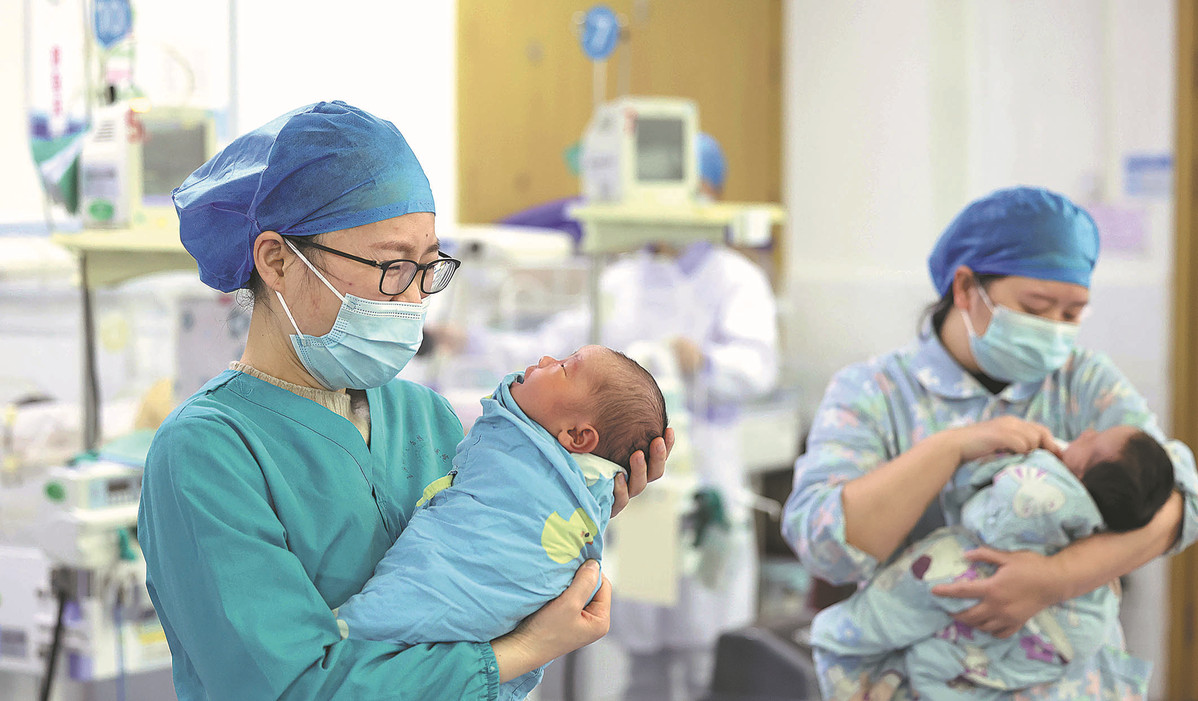
The number and structure of people of marriageable age, including women of childbearing age, in China have undergone comprehensive changes. While an increasing number of people are choosing to remain single, many couples prefer getting married late and having just one child or no children at all.
In fact, the numbers of single and married women of childbearing age, including women in "ideal" fertility age, are shrinking. These developments have made the implementation of fertility support policies a big challenge.
Many young couples are reluctant to have children due to economic uncertainties. The industrial upgrading and economic transformation have resulted in structural unemployment among youths and created shock waves in the markets. The possibility of salary reduction and negative impact on career development is reducing young couples' urge to have children.
Besides, women's anxiety over childbirth and children's education are reinforcing each other, inhibiting couples' desire to have children and aggravating their concerns about raising children. A shrinking fertility rate could trigger a butterfly effect, leading to a decline in labor supply, slower economic growth and increased pressure on China's pension system.
China has greatly eased its strict family planning policy, and is now encouraging couples to have two to three children by implementing fertility support policies. For example, although some areas have already started offering cash subsidies to encourage childbirth, the amount is relatively small. Hence, the support policies are not having the desired effect.
Furthermore, a few of the current family planning regulations lack rationality and supervision, and some enterprises are still reluctant to incur additional costs of granting long maternity leave, and refusing to implement or only implementing part of fertility support policies. Though the government is trying to build a marriage-friendly society, most women cannot avail of its benefits and still shoulder most of the responsibilities of raising a child. Not to mention that many working mothers still face discrimination at the workplace.
Therefore, efforts should be made to adapt to the demographic changes and advance Chinese modernization with high-quality population development.
First, the government should make tackling low fertility a national strategy and promote the integrated development of eldercare and childcare services. For instance, the government should form a leading group to ensure balanced population development. The government could also consider establishing an independent administrative department to deal with population and family affairs, and address the mismatch between policy and its effective implementation.
The government needs to consider the actual fertility intention of women of childbearing age, too, and devise differentiated incentives for all urban and rural couples of childbearing age and families with children, in order to encourage couples to have two to three children. It should also establish a policy support system based on family units, improve and boost the integrated development of childcare and eldercare services, and enhance micro-control over public services.
Second, the authorities should focus on couples who are willing to have children but are worried about the high cost of raising a child by, among other things, improving family support policies and developing high-quality education resources to reduce their child education burden. In this regard, it is essential to develop broader and more caring universal childcare services both in urban and rural areas, and ensure urban areas gradually bring migrant workers' children aged 0-3 under the cover of universal childcare services.
The government could also consider increasing the proportion of standard deduction for children's education from individual income tax for medium- and low-income families, and provide housewives whose spouses have insurance cover with some maternity insurance benefits.
The government also needs to implement housing support policies for families with children, and give preference to families with two-three children in difficulty when allocating low-rent housing, public rental housing and affordable housing. It should also take measures to lower the down payment ratio for families with two-three children and provide them with low-interest loans.
Equally important, the government should pay attention to young women's career development and encourage employers to hire and promote women, and take institutional and legal measures to protect young women, especially pregnant women and new mothers, from discrimination at the workplace. A fertility-friendly employment environment can be fostered by providing incentives to employers that treat pregnant women and new mothers as normal employees and grant them adequate maternity leave.
And third, it is essential to create an environment in which the "new-era" marriage and childbearing culture, and traditional filial piety can play their due roles in demographic development.
In short, the pressure of childcare and eldercare on couples should be eased to increase the country's fertility rate.

The views don't necessarily reflect those of China Daily.
If you have a specific expertise, or would like to share your thought about our stories, then send us your writings at opinion@chinadaily.com.cn, and comment@chinadaily.com.cn.





