



How to meet the Trump era's challenges







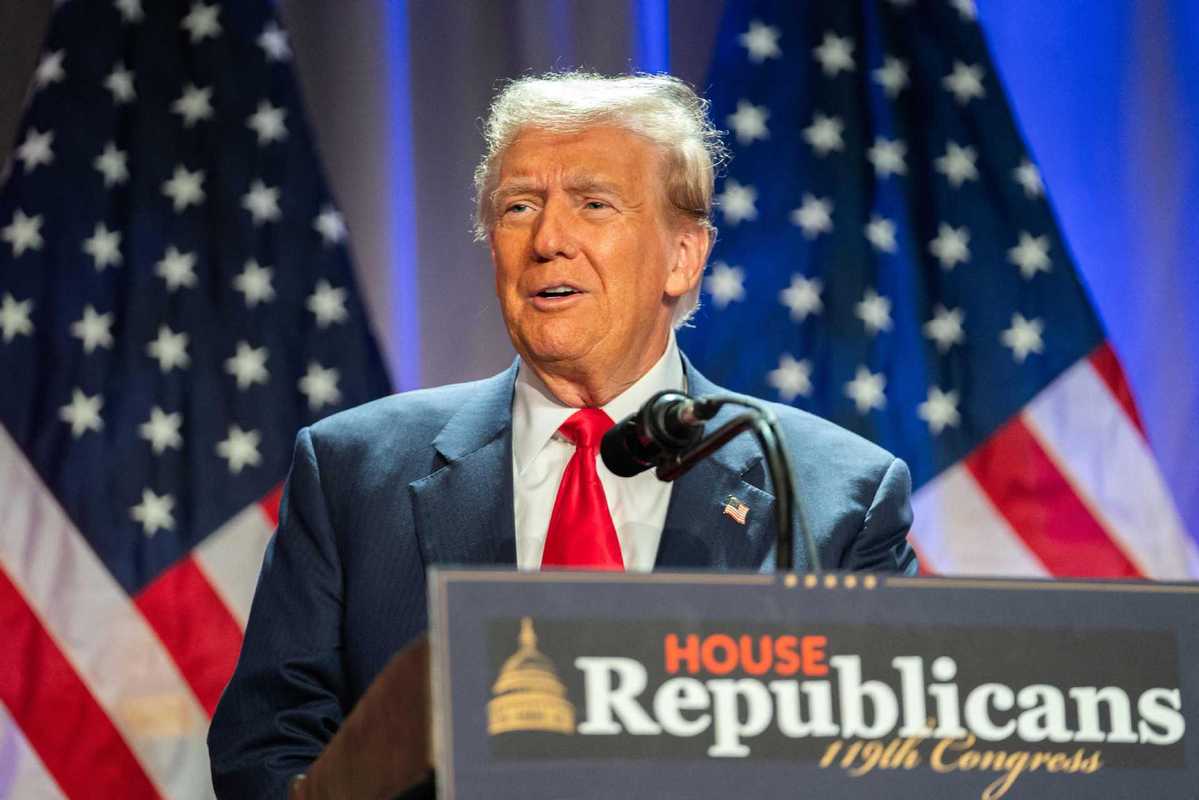
What was predicted to be the most closely contested presidential election in US history ended with former US president Donald Trump's overwhelming victory. This is expected to have profound implications for US-China relations and global governance.
Joseph Nye, American political scientist and Harvard professor, said during his discussions with me that US political cycles may follow a 10-to-20-year pattern, shaping its China policy accordingly. Current relations between China and the United States are probably at the lowest point since the establishment of diplomatic relations between the two countries. But the potential for a cyclical upswing remains where the two countries may avoid the "Thucydides trap".
Therefore, as Trump returns to power, China and the US could enhance dialogue and communication, including exploring the possibility of further consolidating and implementing the San Francisco consensus reached by the two heads of state. This would help prevent the relationship from being hijacked by hawkish elements in the US government.
Toward a peaceful geopolitical landscape
During his presidential campaign, Trump frequently highlighted his record of not initiating wars during his first term and pledged to prioritize ending both the Russia-Ukraine and Israel-Palestine conflicts if reelected president. However, given the deep-rooted complexity of these disputes, he may need China's cooperation to help end the conflicts.
China is not only the largest trading partner of Russia and several Middle East countries but also maintains consistent diplomatic engagement and high-level dialogues with them. The China-brokered peace deal between Saudi Arabia and Iran, along with its proactive infrastructure collaboration, energy partnerships and trade exchanges, has made significant contributions to the region's stability and development. And China's diplomatic principles of mutual respect, equality, mutual benefit, and win-win cooperation have been widely supported by Middle East countries.
As for the Korean Peninsula denuclearization issue, China has actively mediated and worked to create dialogue platforms for resolving it. This year marks the 71st anniversary of the signing of the Panmunjom Armistice Agreement, and there is potential to initiate new four-party talks between China, the US, the Democratic People's Republic of Korea and the Republic of Korea to explore the possibility of signing a new peace agreement between the DPRK and the ROK.
Also, China and the US could initiate dialogue on issues such as the Russia-Ukraine conflict, the Israeli-Palestinian conflict, and the Korean Peninsula denuclearization issue. Such cooperation would align with Trump's commitment to serve as a "peace president".
However, the Taiwan question remains central to China-US relations. The two sides could consider issuing a new joint statement reaffirming their respective positions on the Taiwan question and avoid misunderstandings. Such a statement could reiterate the principles outlined in the three China-US Joint Communiques and emphasize the importance of the US adhering to the one-China principle and resolving differences peacefully. Such an initiative could not only ease tensions but also create a framework for future interactions. Both sides could also align on issues such as trade, technology and security to make clear their differences, shared interests and cooperation goals.
Advancing Sino-US economic cooperation
Trump is known to take a relatively open stance on Chinese investment in the US, and is likely to leverage such investments to boost domestic manufacturing. During his campaign, Trump emphasized the importance of using tools such as higher tariffs to encourage reshoring while welcoming foreign companies to establish factories in the US. While Trump aims to block Chinese car imports, he has expressed his willingness to support Chinese automakers establishing manufacturing units on US soil.
Hence, the two sides could hold discussions on how to build on a "phase one" agreement and advance "phase two" trade discussions. Reducing certain tariffs, enhancing technological and investment cooperation, and strengthening economic ties could pave the way for a more stable trade relationship and foster long-term economic growth for both countries.
During his campaign, Trump also talked about large-scale infrastructure plans. In this context, China's extensive experience, advanced technologies and strong construction capability in infrastructure building offer a valuable opportunity for cooperation. The two countries could engage in negotiations and dialogue to enhance infrastructure cooperation, establish an investment promotion mechanism in the infrastructure sector, and facilitate the implementation of China-US infrastructure projects.
Fostering exchanges between the two peoples
Even if people-to-people exchanges might face challenges under the Trump administration, sustaining and enhancing such interactions aligns with the broad expectations of individuals and groups in both countries.
First, Chinese government departments, institutions and non-governmental organizations can adopt a proactive approach by maintaining ties with relevant US entities and facilitating visits for more US legislators, former officials, think tank experts and scholars, who can help improve China-US relations by developing new frameworks and narratives that guide the relationship toward positive development.
The two governments could also issue visas to journalists from each other's country provided they play the role as bridges for communication between the two peoples.
Second, restoring cultural exchange programs, such as the Fulbright program and other education and cultural exchange initiatives, and extending the China-US Science and Technology Cooperation Agreement could help promote personnel exchanges and reduce the risk of misunderstandings and misjudgments in Sino-US relations. The China-US Fulbright Program, since its inception in 1979, has involved over 3,000 Chinese and American scholars and students, who have become prominent academics and leaders in their fields.
In addition, the 1979 China-US Science and Technology Cooperation Agreement established a framework for collaboration across various fields, including agriculture, energy, aerospace, healthcare, environment, earth sciences and engineering. But after the US government decided not to fully renew it, and following two extensions, the agreement lapsed at the end of August 2024. Trump's return to office may offer an opportunity to revisit these landmark initiatives.
Third, as President Xi Jinping pointed out, the hope of the China-US relationship lies in the people, its future depends on the youth, and its vitality comes from exchanges at sub-national levels. China could leverage the initiative to invite 50,000 young Americans to China on exchange and study programs in five years as a cornerstone for enhancing people-to-people exchanges between China and the US.
In this context, a visa-free travel policy for US citizens traveling to China, or for specific groups, such as youths below 21, could be particularly significant. In the first half of this year, 14.63 million foreign nationals entered China, up 152.7 percent year-on-year. Of these, 8.54 million availed of the visa-free provision, marking an increase of 190.1 percent year-on-year. Visa-free policies have encouraged Western tourists, especially young people, to "tell China's story well" on global social media platforms such as YouTube.
Building relations on head-of-state diplomacy
Trump is likely to adopt an approach of "strategic retrenchment" and "America first," characterized by transactional strategies to safeguard and advance US interests. In this regard, once the new US Cabinet is formed, high-level China-US dialogues could be held to make clear each side's priorities and redlines. And extending an invitation to Trump to visit China at an opportune moment could leverage head-of-state diplomacy to guide the bilateral relationship toward a new consensus.
For example, renewed cooperation between China and the US to combat the fentanyl problem and synthetic opioids in the US, including the reestablishment of the China-US Counternarcotics Working Group, was one of the many outcomes of the head-of-state diplomacy at the November 2023 summit between President Xi and US President Joe Biden.
Fentanyl abuse has inflicted significant harm on the US, becoming a leading cause of overdose deaths and a major social challenge. Cooperation between China and the US in this area fostered constructive interactions this year, earning commendation from several US government agencies.
The US seeks to reduce short-term costs in diplomacy, security and trade by stepping back from the globalization process, relinquishing international obligations, and leveraging its power to secure tangible benefits. The new US administration's approach is likely to focus on more explicit exchanges of benefits, departing from the neoliberal ideological priorities championed by the Democratic Party. Consequently, future engagements between the US and the international community are likely to be centered on straightforward, interest-driven negotiations.
Against this backdrop, it remains to be seen whether recent tensions in China-US relations will significantly ease, given the US' explicit characterization of China's rise as a threat to its interests. Sino-US relations have entered a phase of structural competition and long-term confrontation, where the rivalry for global influence transcends short-term policy shifts and has deepened into a strategic contest.
The path forward hinges on whether the two countries can reach a new consensus on peaceful coexistence and cooperation amid competition, establishing a constructive competition-cooperation framework acceptable to both sides. While the US seeks to maximize its own interests within this dynamic, both countries must recognize that principled cooperation can help maintain the relative stability of bilateral relations, serving their mutual interests.
The metric of "interests" can serve as a practical tool to evaluate the scope and opportunities for China-US interaction and negotiations. It also holds the potential to provide a new turning point for the China-US dynamic.
The author is president of the Center for China and Globalization, and former counselor of the State Council.
The views don't necessarily reflect those of China Daily.
If you have a specific expertise, or would like to share your thought about our stories, then send us your writings at opinion@chinadaily.com.cn, and comment@chinadaily.com.cn.





