Arabs optimistic of BRICS rebalancing global order







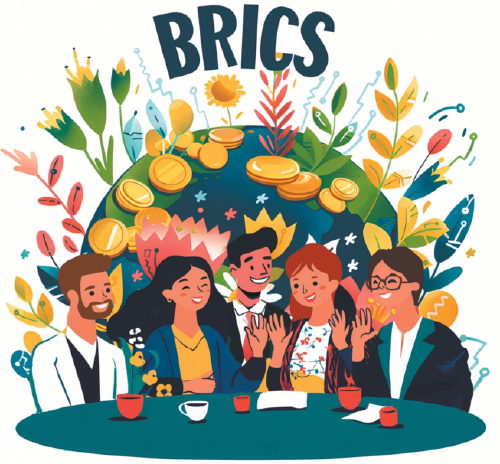
A grand rebalancing is taking place in the world. The relative influence of BRICS is rising while the relative clout of the old guards of the old world is in decline.
BRICS was born when the world was still reeling from and struggling with the financial and economic crisis, and when the voice of the emerging economies was still not given enough consideration commensurate to their rapidly rising economic power. Since then, BRICS has been organically maturing and morphing into one of the most important groupings of the 21st century.
With the addition of new members and considering the huge global challenges such as trade fragmentation, instability in various regions and the decaying international governance structure, there are high expectations from BRICS to play a more active role in safeguarding multilateralism and refining the world system.
Just like any other organization, the importance and effectiveness of BRICS will depend on its members and their vision. The 16th BRICS Summit in Kazan, Russia, is a unique opportunity for BRICS members to unequivocally demonstrate that multipolarity is now an unavoidable reality and that the global majority must have a say in the future direction of the world. They should send clear signals that unilateralism is not acceptable and that no one single country or one bloc of countries can dictate world affairs.
As there is a genuine demand for it and because many countries want to be part of the future envisioned by BRICS, the organization is gaining momentum with more and more countries expressing interest in joining.
Current BRICS members account for about 45 percent of the world's population, about 30 percent of the landmass, around 40 percent of oil production and oil proven reserves, and 20 percent of global trade. The group includes the largest electricity producer, the largest clean energy generator, the largest goods trader, the largest manufacturer, the largest gas exporter (as of 2021) and the largest wheat exporter (as of 2021).
BRICS is a non-ideological and pragmatic organization that attracts countries from various regions and different political systems. The members are driven primarily by their own national priorities, while sharing mutual and common interests with other BRICS countries.
Their common interests include safeguarding multilateralism and preventing further trade fragmentation; collaborating in areas of energy and food supply, innovation, technology development and industrialization; de-risking the international financial system; enhancing the trade system and ensuring resilience against disruptions, especially in global supply chains; and implementing necessary reforms at international organizations.
Many Arabs believe that a change in the world order is inevitable. The long-term mega trends will continue to push world evolution forward and external forces cannot change the dynamics or put artificial hurdles in the path of the ongoing global transformation.
Arabs are interested in diversifying their partnerships and partners in a wide range of areas including but not limited to economics, technology, security, investment, trade and defense.
BRICS provides a platform where Arab states can have close policy coordination with new strategic partners to boost trade, economic and technological ties. Some of the Arab states' largest trading partners are BRICS members.
For example, the United Arab Emirates' two largest trading partners are China and India, with yearly trade value of more than $90 billion and $80 billion, respectively. Being BRICS members will help further deepen the Arab trade relations with BRICS partners, especially when the intra-BRICS payment system is established, allowing for easier and more efficient trade flows among the BRICS members.
Although Arabs are focused on geoeconomics rather than on geopolitics, they are increasingly concerned about the regional security trends, especially in Palestine and Lebanon. They seek BRICS support to bring stability and security in the Arab world, which has been ravaged by conflicts since 2001.
As has been revealed during the current conflict in Gaza and Lebanon, the United States has not played a constructive role in reining in Israel to end the atrocities it is committing against Palestinian and Lebanese people. The US is no longer a neutral mediator in regional conflicts. The Arab people increasingly view the US as a belligerent and active participant in regional instability. The US has been providing diplomatic cover and financial and military support to Israel to continue its atrocities in both Palestine and Lebanon. Consequently, it has lost credibility and legitimacy as a peace broker. The Europeans have been by and large passive and not effective.
On the other hand, as China and India continue to grow economically and as Russia resumes to reassert its role in the world, these three countries, backed by the increasing weight of BRICS in global economics and politics, can help bring the warring parties to the negotiating table to end regional conflicts.
Therefore, there is hope in the region that as the global rebalancing continues and as BRICS becomes more influential in regional and global affairs, it can play a constructive role in de-escalating tensions and eliminating conflicts, paving the way for economic development and prosperity.
The expectations and stakes are high for BRICS. The current turbulent political and economic global climate is well-suited for the bloc to make its mark on world affairs and define the future direction of the world. It is gathering critical mass and gaining enough heft to help lead the world out of the current chaotic transition period and into the next phase of development.
The author is former adviser to the chairman of the Abu Dhabi Executive Office and an Asia Global fellow at the Asia Global Institute of the University of Hong Kong.