Time-traveling via museums echoes history







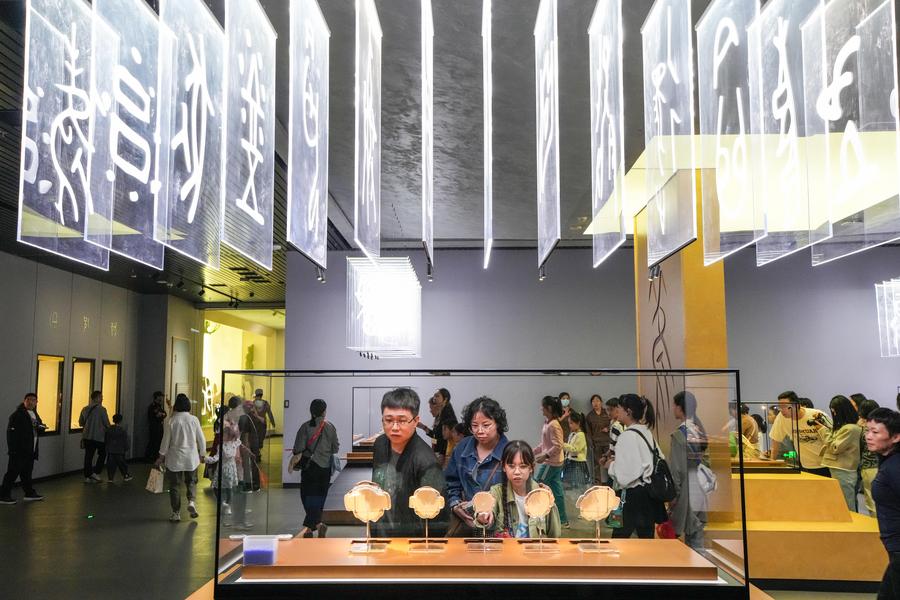
Museums are echoes of history that transcend time — and space. They preserve invaluable historical, educational treasures, and a platform for connecting the past, present and the future. No wonder they have been attracting an increasing number of people of late, people who are eager to experience culture firsthand. To meet the diverse and customized needs of visitors, some new approaches, models and content have emerged, leading to a surge in "museum tourism".
The widespread application of digital technology has not only reduced the maintenance costs of cultural artifacts but also drastically reduced the geographical and material limitations of cultural resources, providing visitors with enriched experience. For example, the Silk Road Online Museum has brought together digital collections, exhibitions, knowledge and cloud curation, facilitating the sharing of resources among countries and institutions.
Technologies like naked-eye 3D and XR glasses are becoming primary entry points for interaction, in order to enrich museum visitors' experience. In July, the Shandong Art Museum held the "Infinite Sea" immersive AI digital art exhibition, the first marine-themed art exhibition in China, to adopt a new AI-generated content-user-generated content model, offering a multidimensional immersive experience.
Travel for young people is becoming increasingly personalized, as they prioritize not only the travel destination but also the purpose of the journey, making "why travel" more important than "where to travel". For instance, "dopamine travel" has gained in popularity, and concepts such as "brave people enjoy the world first", finding eye-catching exhibits in museums, collecting stamps, and capturing "life photos" show that emotional fulfillment is becoming a dominant factor in making travel decisions.
The recent success of Black Myth: Wukong has sparked a tourism craze, with visitors becoming the "chosen ones" and embarking on journeys through historical and cultural sites. The Datong Museum in Shanxi province has capitalized on this trend by blending modernity with nostalgia, and art with history, creating a unique cultural product series called "Buddha Companion", which merges the solemnity of ancient caves with the beauty of modern dolls.
Most museums rely on human and/or electronic guides. While human guides are engaging and dynamic, they can be costly. Electronic guides, on the other hand, lack excitement and the "human touch". Hence, some museums have begun experimenting with "digital-human" guides, who can provide map navigation, and introduce or explain the exhibits, guide visitors through history, assume the role of brand ambassadors, and blend the historical atmosphere with modern elements.
In July, Shanghai Museum introduced its first digital AI guide to tell the story behind every artifact with natural flair and fluid expression, even creating and performing live rap on the Egyptian civilization and antiquities to provide an immersive experience.
The digital-human guide is an innovative approach, to prompt the audience to shift from passive listening to active interaction, thus adding a high-tech touch to cultural exchanges.
"Red culture" in museums represents not just history but the spirit of the Communist Party of China as well. To help audiences understand the historical value of "red artifacts", museums are adopting "culture+ technology" models, applying digital technology to invigorate "red resources" and advance the study of red culture.
For instance, this year the First National Congress of the Communist Party of China Memorial Hall launched the country's first LBE VR immersive red culture exhibition — the "Digital First National Congress of CPC: Journey of Original Aspiration". This exhibition breaks the barriers between the virtual and real worlds, transcending time and space, and creates a unique red immersive experience through exploration.
Museums act as windows to cultural exchanges, paving the way to better understanding of different countries, regions and ethnic groups. In 2023, to celebrate the 10th anniversary of the Belt and Road Initiative, the Shanghai Museum held the "Immortal Jade Armor — Han Dynasty Cultural Relics Exhibition" in Hungary. The exhibition featured exquisite artifacts such as gold-threaded jade garments, the masks of northern and western tribes in ancient China and hollow bricks with a dragon pattern, presenting to global audiences the panorama of daily life during the Han Dynasty (206 BC-AD 220).
Also, in April, the Prado Museum's "Ages of Splendor" exhibition, which opened in Shanghai, was aimed at promoting cultural exchanges between China and Spain while showcasing Spanish cultural tourism. These international exhibitions are not only visual feasts but also emotional journeys, telling the stories of cultural exchanges and interactions between the East and the West through the language of art.
By applying advanced technology and strengthening global collaboration, the museums are fast becoming dynamic platforms offering deeper, more interactive cultural experiences. By merging tradition with modernization, museums are not only preserving history but also shaping the future of cultural engagement. As China's global influence expands, its museums serve as vital cultural bridges, fostering better understanding and dialogue across borders, while ensuring the richness of Chinese civilization remains vibrant and accessible to all.
The author is director of the Tourism Research Center at the Chinese Academy of Social Sciences.
The views don't necessarily reflect those of China Daily.
If you have a specific expertise, or would like to share your thought about our stories, then send us your writings at opinion@chinadaily.com.cn, and comment@chinadaily.com.cn.