Modernization is not equal to Westernization








All emerging powers have to craft their foreign policy lexicon to explain their national objectives. This has become a prerequisite in the face of rising expectations from their interlocutors and competitors alike, for they have to make sense of emerging powers' future trajectories and policy priorities. For instance, 19th century Great Britain projected itself as the "balancer" amid European countries' power struggles and as a "global benefactor" by using the "white man's burden" theory to explain its colonial expansion worldwide.
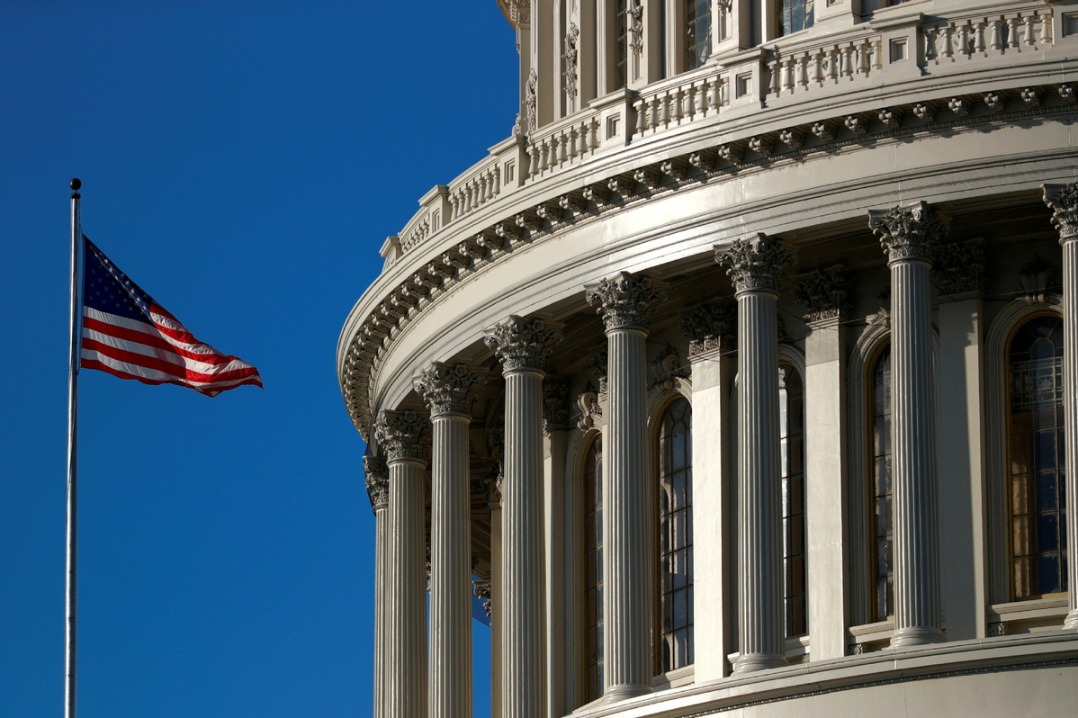
As a 20th century superpower, the United States initially opted to remain "isolationist" — an impulse that keeps showing up in its policies even today. Despite being a reluctant participant in the two world wars, it finally chose to "lead the world" through its network of military alliances, international institutions and in the name of spreading "democracy" and free-market economy.
The 21st century has been witness to China's unprecedented rise. So the world expects China to explain its national priorities and principles. The "new era" has accordingly seen China enunciate novel concepts like the "Chinese Dream", "national rejuvenation" and the building of "a community with a shared future".
The three years that the world lost because of the COVID-19 pandemic have made the international community increasingly aware of China accounting for nearly one-third of global manufacturing, reflecting the increasing power of President Xi Jinping's vision. China's rise has seen most Western powers running around with their "protectionist" firefighting measures, while calling for "on-shoring" and accusing China of exporting its "overcapacity", which they claim has made China's exports increasingly competitive.
This has made modernization, which New China has been pursuing since its founding in 1949, and now formally termed "Chinese modernization" the biggest policy enunciation of China. The idea of inclusive modernization is often traced back to the late 1970s when late leader Deng Xiaoping advocated for "four modernizations". Under President Xi's leadership, the concept has become unitary Chinese modernization.
Since the Western capital-driven model of rampant urbanization and industrialization of the last century has created the irreversible climate crisis and inequality, the developing and less- and least-developed countries have been searching for alternative development paradigms. And the Chinese leadership's enunciation of Chinese modernization can be an alternative to Westernization, which for long was viewed as the only model for achieving economic development.
The idea of "Chinese modernization" featured prominently in the "historical resolution" of the Communist Party of China Central Committee in 2021 and was mentioned 11 times in the Chinese version of the political report to the 20th CPC National Congress in October 2022. The term has since found mention in various other reports and speeches, and has been refined further to be made part of global narratives. Broadly speaking, China's development model seeks to achieve shared and common prosperity for all and do so through the balanced material-cultural-ethical pursuit of peaceful national rejuvenation under the leadership of the Party. The Party will also ensure the pursuit of high-quality development while adhering to socialism with Chinese characteristics fulfills the country's goal of developing whole-process people's democracy.
What makes Chinese modernization of global significance is the way it has shattered the myth of Westernization equals modernization. Other than President Xi's enunciation of his vision for Chinese modernization, the heft of China's development model and its game-changing potential lies in its $17.79 trillion economy that drives its $1.5 trillion investments in Belt and Road projects.
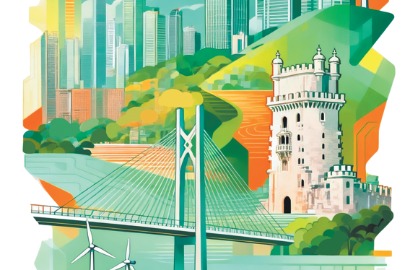
The magnetic pull of the Chinese development model lies in its being rooted in China's ancient wisdom of equitable and sustainable development. And it is because of its people-centric nature that China's economic development enabled it to lift more than 800 million people out of poverty. China's development principles have also helped it move from being the "world's factory" to becoming a global leader in several value-added high-end advanced manufacturing. Specifically, China today is the global leader in high-speed railways, solar and wind power, and electric vehicles (EVs) and EV batteries.
Indeed, as a leading engine of global growth and innovation, China has helped change the global landscape by expanding its partnerships with economies around the world. In fact, the World Economic Forum has recognized the role of China's innovations in reshaping global standards, especially in fields such as telecommunications and renewable energy.
The United Nations Industrial Development Organization, likewise, has praised China's role in uplifting global industrial standards and driving global economic growth. And the Global Energy Monitor has said China is set to double its solar and wind energy capacity to 1,200 GW by 2025, five years ahead of its target of 2030, thus contributing to mitigate the climate crisis.
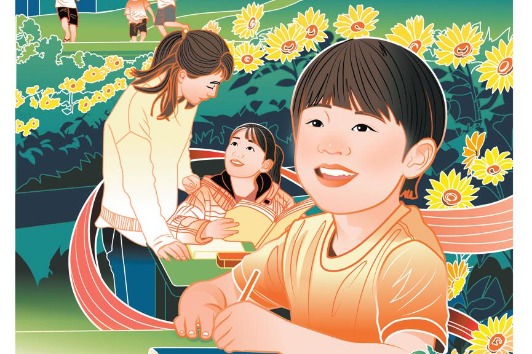
All this has been made possible through China's inordinate drive for healthcare and education for all, which has enhanced its productivity and improved the Chinese people's quality of life.
The author is professor of international relations at Jawaharlal Nehru University, New Delhi. The views don't necessarily reflect those China Daily.
If you have a specific expertise, or would like to share your thought about our stories, then send us your writings at opinion@chinadaily.com.cn, and comment@chinadaily.com.cn.