



More power from FOCAC and beyond







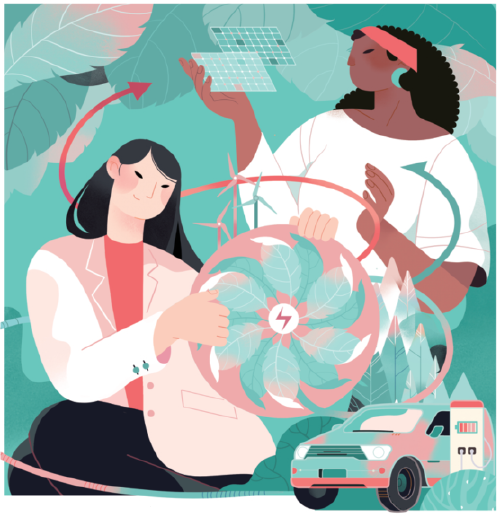
SONG CHEN/CHINA DAILY
Enhancing China-Africa collaboration can prove crucial to closing sub-Saharan Africa's energy access gap
The world is well off-track to meeting its shared goal of providing affordable, reliable and sustainable energy to all people by 2030.Indeed, the number of people without electricity access increased in 2022 for the first time in a decade, rising from 675 million in 2021 to 685 million. Eighty percent of people without access to electricity — and 18 of the 20 countries with the biggest energy access deficits — are in sub-Saharan Africa.
Addressing Africa's substantial energy access gap requires an estimated investment of $20 billion annually by 2030, according to the International Energy Agency's (IEA) estimate. And China could play a key role in filling that need. China, Africa's largest bilateral trading partner and a major source of foreign aid, is well positioned to support African countries in expanding clean energy across the continent. As the world's leading manufacturer of renewable energy technology, China has the potential to play a pivotal role in bridging this gap, which should be done in collaboration with African countries' national and local governments to meet each country's unique needs.
Historically, China's renewable energy investments in Africa have focused on large, utility-scale installations. For instance, the 50-megawatt solar power station in Kenya, supported by the Chinese government, has generated over 76 million kilowatt-hours of electricity annually since its launch in 2019, benefiting more than 380,000 people in 70,000 households. However, these large-scale projects often fail to meet the decentralized, small-scale energy needs in remote areas with limited access to energy. The disconnect between centralized energy supply and dispersed demand has made it challenging to expand energy's reach to where it is most needed.
An Africa Solar Belt program, officially pledged by China at the first Africa Climate Summit in Kenya last year, represents a significant shift in China's approach to renewable energy investments, emphasizing smaller, socially impactful initiatives. Between 2024 and 2027, the program will allocate 100 million yuan ($14.03 million) to provide solar home systems to 50,000 African households, supporting local livelihoods. Despite its potential to enhance access to electricity, the initiative faces challenges, including accurately assessing electricity demand, developing sustainable business models, and building local capacity for operation and maintenance.
As China prepares to host the 2024 Summit of the Forum on China-Africa Cooperation, improving access to electricity in sub-Saharan Africa should be a priority. This focus aligns with the summit's theme of "Joining Hands to Advance Modernization and Build a High-Level China-Africa Community with a Shared Future". The world will be watching as leaders from China and Africa explore solutions to unlock new clean energy investments under the Africa Solar Belt program and similar programs.
To achieve meaningful progress, scaling up both public and private investment in clean energy initiatives is essential. As China shifts its investment focus away from overseas coal-fired power plants, there are increasing opportunities to redirect funding into sub-Saharan Africa's distributed renewable energy sector. However, this requires a transition from traditional financing models used for utility-scale projects to innovative approaches tailored to the needs of decentralized renewable energy systems.
Fostering business opportunities between China and sub-Saharan Africa's private sector is crucial. Distributed renewable energy is most needed in rural areas of sub-Saharan Africa, where local contexts — including terrain and cultural dynamics — will determine the success of projects. Collaboration with local renewable energy companies is therefore critical to the effective implementation of "small and beautiful" projects.
Moreover, partnerships with credible local and international institutions are vital to providing reliable, granular data at both the national and local levels, which can inform energy planning and investment decisions. Tools such as the World Resources Institute's Energy Access Explorer can help identify areas with viable renewable energy demand, whether for household electrification or powering productive uses such as agriculture and healthcare.
Continuous policy dialogue at the national, regional and international levels will play a key role in deploying distributed renewable energy throughout sub-Saharan Africa. Engaging with key organizations to amplify voices from the Global South in strategic policy and regulatory discussions is essential. Collaborating with demand-side policymakers to raise awareness among investors and renewable energy developers about investment opportunities, as well as strengthening South-South cooperation on strategic global platforms — beyond FOCAC — to influence regional and international policy on renewable energy investment will be critical. Empowering existing cooperation mechanisms, such as the China-African Union Energy Partnership, should also be encouraged.
Sub-Saharan African countries, rich in critical minerals for renewable technologies, currently export these raw materials at low cost while importing expensive finished products. By facilitating technology transfer and building local manufacturing capacity, China can help these countries reduce costs, create jobs, and ensure the long-term scalability of clean energy.
China and Africa should work together to create sustainable, long-term solutions for energy access. Such collaboration will not only advance the continent's development but also contribute to global goals of sustainability and equity. The progress and achievements made at FOCAC 2024 can set a transformative course, ensuring that millions in sub-Saharan Africa gain access to the energy they need for a brighter, more prosperous future.
Song Jing is the Associate of China Sustainable Transition Center Energy Program at World Resources Institute. Benson Ireri is the Africa lead of Energy Access Program at the World Resources Institute. The authors contributed this article to China Watch, a think tank powered by China Daily.
The views do not necessarily reflect those of China Daily.
Contact the editor at editor@chinawatch.cn.





