Trust deficit on climate change one of the issues to be tackled







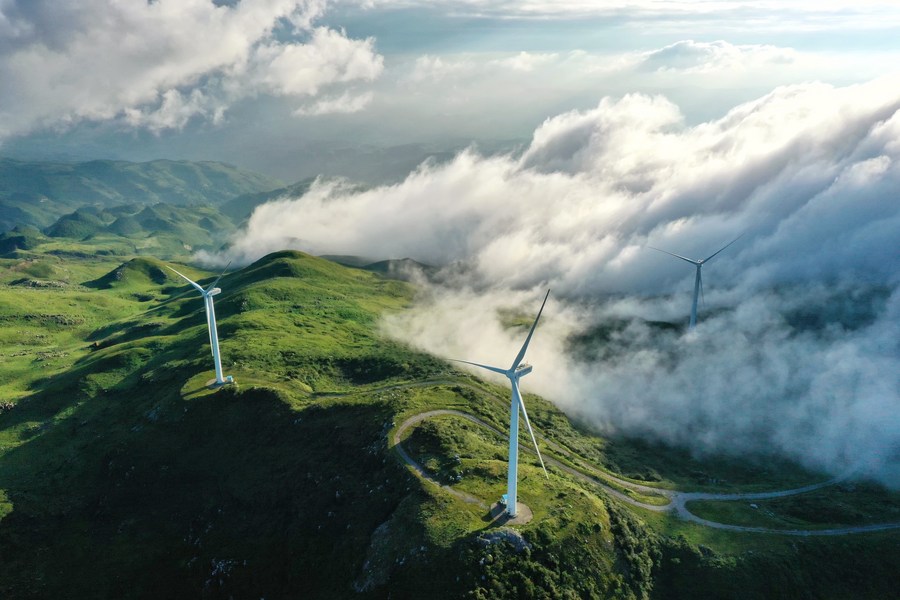
Climate change is one of the key existential threats confronting humanity. Over the past three decades, the globalized world has been fighting an exponential emergency with incremental progress.
Yet, there are still some influential politicians and opinion leaders on the world stage willfully denying the impact of climate change, thereby condemning humanity to a very dangerous future.
Year after year, conference after conference, the international community has been repeating the same old appeal to developed economies to honor their commitments to helping the Global South address the pressing concerns of climate change. Yet, the outcome is simply dismaying.
The delivery of an annual climate finance commitment of $100 billion remains unfulfilled. Breaching of the promise made by the Global North at the COP27 in Egypt has further widened the trust deficit between the Global North and South.
Beyond the fanfare and rhetoric for global optics, the outcomes of the Conference of the Parties to the UNFCCC have been nothing more than reaffirming the 2015 Paris Agreement goal of limiting the increase in the global average temperature to well below 2 C above preindustrial levels and pursuing efforts to limit it to 1.5 C.
Lack of political will and prevalence of silo mentality have thrown the global aspiration of good climate governance into disarray.
Worse still, climate action has increasingly been weaponized in the escalating big powers' geopolitical rivalry.
Amid the evolving global order, though the G7, representing the rich Global North has reached out to the Global South since the Japanese presidency last year (2023), substantive initiatives of multilateral cooperation in addressing the North-South economic divide are yet to be seen.
Unsustainability of our global development will linger on as long as inequitable distribution of global resources prevails. Disproportionate consumption of earthy resources and skewed wealth distribution to the disadvantage of Global South, if left unabated, would only serve to exacerbate the economic divide between the Global North and South.
The developed economies have long been the major resource consumers as well as the major polluters in the world, despite technological advancement. This is the elephant in the room. While wielding the power of rules-based global governance, the Western diktats of "sustainable development" have been used to target industrial development in emerging economies indiscriminately. To this end, coercive economic restrictions are the common tools deployed to the detriment of the vulnerable Global South.
This was best exemplified by the ratification of the European Union Deforestation Regulation by the European Parliament in April 2023.It is a landmark deforestation law that will ban the import of goods if they are found to be linked to the destruction of forests in their countries of origin.
This is tantamount to hanging a Sword of Damocles over the heads of many developing Global South countries which have yet to acquire the necessary sustainability-savvy in their economic development. After all, these nations are merely following the footprints of the developed economies which had prospered earlier. This is a glaring practice of double standards in favor of the Global North.
A case in point is the biased decision of the European Union to ban the use of palm oil-based biodiesel purportedly due to deforestation and emissions risks under the EU's second Renewable Energy Directive.
The EU policy is deemed arbitrary, unjustifiable and discriminatory against the two main palm oil producing countries in the Global South, namely Indonesia and Malaysia. It was found to be protectionist, since it singled out palm oil while overlooking the environmental impact of biofuels produced within Europe, such as that from rapeseed.
To fight the injustice, Indonesia filed a lawsuit with the World Trade Organization, calling out the EU for unfair trade practices in 2019, followed by a separate challenge filed by Malaysia in 2021. As of today, palm oil from the Global South is yet to see the light at the end of the tunnel in the European market and large parts of the Global North.
In all fairness, no single nation should ever be deprived of its right to industrial development in its pursuit of economic well-being of its people. Any attempt to scapegoat the developing world for environmental degradation and the consequential impact of climate change is nothing but a Trojan to justify plans of stifling nascent economic development in the developing world.
After all, industrialization is not the monopoly of industrialized nations. The developing Global South, too, is in dire need of job creation and revenue generation to alleviate its poverty and enhance social development. This can only be delivered by industrialization.
To address the escalating Global North-South divide, perhaps the Lima Declaration, adopted by United Nations Industrial Development Organization member states in December 2013 provides a window of opportunity.
It set the foundation for a new vision of inclusive and sustainable industrial development, in addition to highlighting the role of industrialization as a driver for development. Inclusive and sustainable industrial development is no doubt the primary source of revenue generation. It allows for rapid and sustained enhancement in living standards for all people, and provides technological solutions to environmentally sound industrialization.
It is simple knowledge that without technology and innovation, industrialization with enhanced resource and energy efficiency remains a dream. Without industrialization, physical development will virtually grind to a halt.
The conundrums confronting the developing Global South today seem to be putting the emerging economies in a no-win position, where on the one hand, lack of technology transfer throttles the nascent sustainable development in these countries, and on the other hand, their wings of industrialization are further clipped by stringent rules imposed by rich nations in the name of environmental protection. As such, the Global South nations would perpetually be left stranded at the lower rung of the global value chain characterized by low-tech and labor-intensive industries, or worse still, trapped in the doldrums of poverty. This, in itself, is a travesty of the inclusiveness desired in the ideals of inclusive and sustainable industrial development.
In this context, the word "inclusive" signifies that industrial development must include all countries and all segments of societies. Equal opportunities and equitable distribution of the benefits of industrialization are to be offered to all stakeholders. While the other key word "sustainable" addresses the need to decouple the industries-induced prosperity from excessive natural resource use and negative environmental impacts.
In this context, humanity is not deficient in globally available knowledge and expertise to mitigate the common existential threats, but trust deficit is looming large, thus casting a long shadow on multilateral cooperation. Pan-securitization of technology know-how has further stunted positive exchanges between nations of contending geopolitical interests that could otherwise facilitate concerted efforts in mitigating the common exigencies.
Sheer arrogance of the collective West's preponderance in global governance continues to reign and obscure the cognizance of" no man is an island". They have yet to come to senses that the only ultimate solution to the prevailing North-South divide lies in walking the talk of "inclusivity", failing which would only hasten the pace of pushing the world to the point of no return where no single nation could ever be spared from the dire fate.
The author is president of the Malaysia-based Belt and Road Initiative Caucus for Asia Pacific. The views do not necessarily reflect those of China Daily.