No quick fix
China's patient approach to conflict resolution is to create the conditions necessary for a positive peace







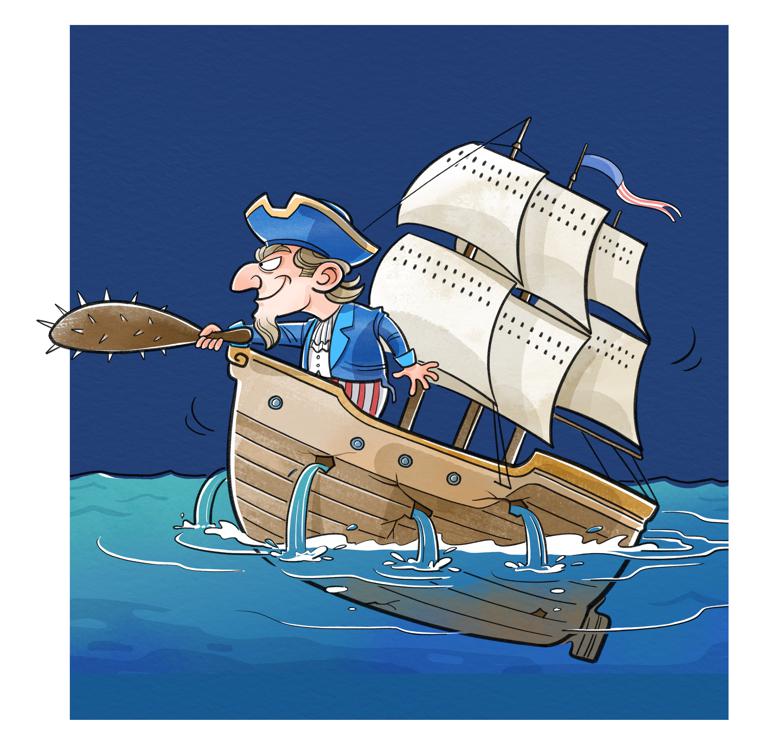
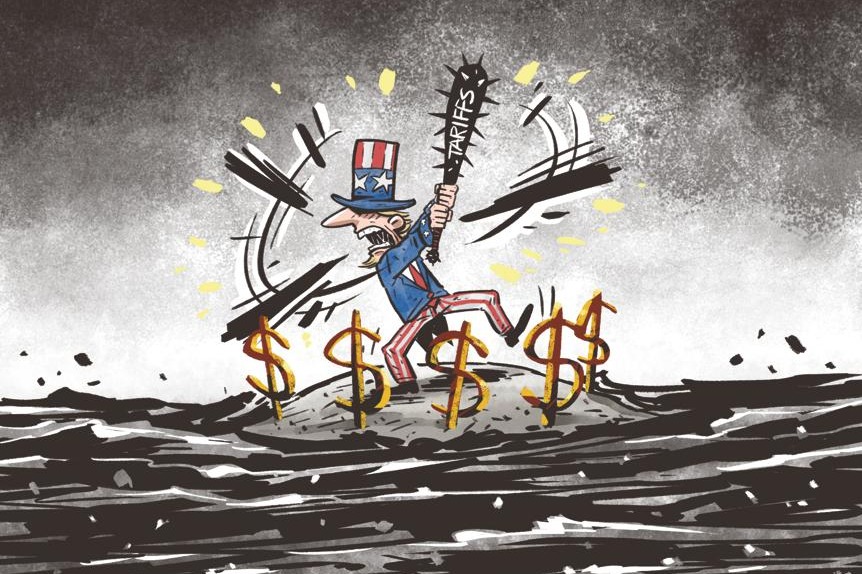
Where goes US foreign policy, there goes conflict, death and destruction.
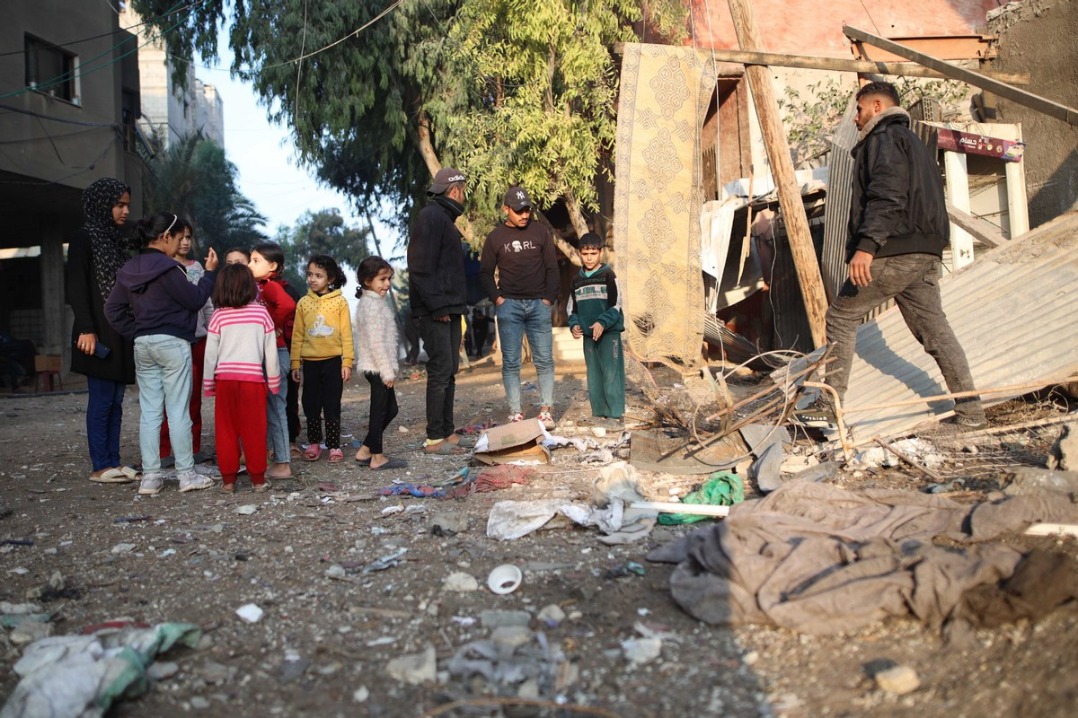
Between 1990 and 2019, the United States initiated, on average, 3.7 military interventions a year, according to data compiled by US scholars Monica Duffy Toft and Sidita Kushi. In its various wars since 2001, from West Asia through to Afghanistan, over 4.5 million people have been killed and over 38 million displaced, according to the Costs of War project at Brown University. In the past few years, the US has been a supplier of munitions and assorted military and financial assistance to protagonists in two of the most significant conflicts flaring at present: Ukraine and Palestine.
This is a track-record of conflict creation and exacerbation.
In Ukraine, the US was an active agent of destabilization that laid the groundwork for the emergence and progressive escalation of conflict. The US fueled regime change in 2014 and armed and trained the Ukrainian army ever since. In Palestine, the US has long been a supporter of Israel and its unlawful and ever-expanding occupation. In both theaters, the US disposition has been to seed and sustain conflict rather than facilitate de-escalation and ultimately find a way to a lasting peace.
Even when it speaks of de-escalation, it only does so by wielding a gun. As the conflict in Gaza runs the risk of escalating into a wider regional war, the US' principal response is to provide Israel with confirmation of unconditional support and to send in the US navy.
This approach is premised on a narrow framework in which peace is little more than the absence of militarized conflict — a "negative peace" — that is achieved when one belligerent is preponderant over the others. In this frame, so-called balance of power dictates deterrence from which negative peace is established. This is a limited, flawed and potentially counterproductive approach.
Deterrence doctrine at best delays the moment of conflict inflection, without ever addressing the root causes of the conflicts themselves. It demonstrably doesn't deliver guarantees as the case of the Houthis and Hamas demonstrate. In both instances, these groups are clearly outgunned by their adversaries (respectively, the US-led Prosperity Guardian naval intervention in the Red Sea and the Israeli defence force) but that didn't dissuade them from taking military action.
Deterrence doctrine runs the risk of catalyzing an escalating arms race that makes the situation more dangerous and the risks of conflict breaking out even greater. In this case, strategies undertaken in the name of deterrence are counterproductive. At best, deterrence through muscling up buys time; but in the interregnum things can actually get much worse unless root causes are identified and addressed.
By way of contrast, Chinese diplomacy seeks to fashion conditions necessary for the creation of a positive peace. Positive peace consists of an environment in which relationships are restored and where the social systems serve the needs of populations. A positive peace delivers institutions and practices that enable a constructive resolution of conflict, rather than merely the deterrence of violence.
We have seen this approach unfold in both these principal arenas of violent conflict. In the case of Ukraine, Chinese diplomats advanced a position as early as February 2023 outlining the necessary conditions for a movement toward a peaceful settlement of the conflict. Western commentators mistook the position statement as a "plan" to be implemented. Rather, the position statement laid out the preconditions necessary for progress toward a temporary then a permanent settlement.
Such conditions necessarily aim to foster a space in which relationships can be restored. Importantly, this kind of approach seeks not to impose a predetermined "solution "but to facilitate disputants to co-create solutions to which they both subscribe. Shuttle diplomacy has since garnered positive reaction from over 100 nations in relation to a proposed pathway to resolving the Ukraine crisis.
China's role in facilitating the rapprochement between Saudi Arabia and Iran in 2023 reflects this ethos of peacemaking. And we can also see how this approach played a role in resolving the dispute between 14 Palestinian factions. Through patient dialogue, a co-created resolution was achieved via consensus among the disputants. Insofar as a long-term solution to the conflicts in Palestine, and West Asia more broadly, resolving these inter-factional disputes is a necessary precondition.
The collective West fails dismally as a peacemaker. By insisting on enjoining disputes and framing disputants in Manichean "good versus evil" terms, the Western ethos cannot resolve conflicts by means other than zero-sum outcomes. Compromising with so-called evil is, definitionally, indefensible. A willingness to leap to the defense of one side against the other; to condemn one side or another, may play well to domestic audiences and others in the collective West still giddy on post-Cold War moral euphoria. However, it leads not to conflict resolution but prolonged hostilities.
Multipolar peace is difficult precisely because it requires a willingness to mediate among a diversity of perspectives and interests. Imposing solutions is unsustainable, as deterrence against rocking the boat creates the condition for the crumbling of such solutions.
The approach that China and others in the developing global majority have adopted aims to find pathways to positive peace — from the ground up. This is by necessity a consensus process, which takes time and patience. And this is the style of work of the real peacemakers.
The author is an adjunct professor at Queensland University of Technology and a senior fellow at the Taihe Institute. The author contributed this article to China Watch, a think tank powered by China Daily. The views don't necessarily reflect those of China Daily.
Contact the editor at editor@chinawatch.cn.