Effective early warnings secure the first line of defense







The year 2023 was the warmest since global records began in 1850. The rising temperatures are causing frequent extreme weather events and climate disasters worldwide. This underscores the necessity for collective action to combat climate change.
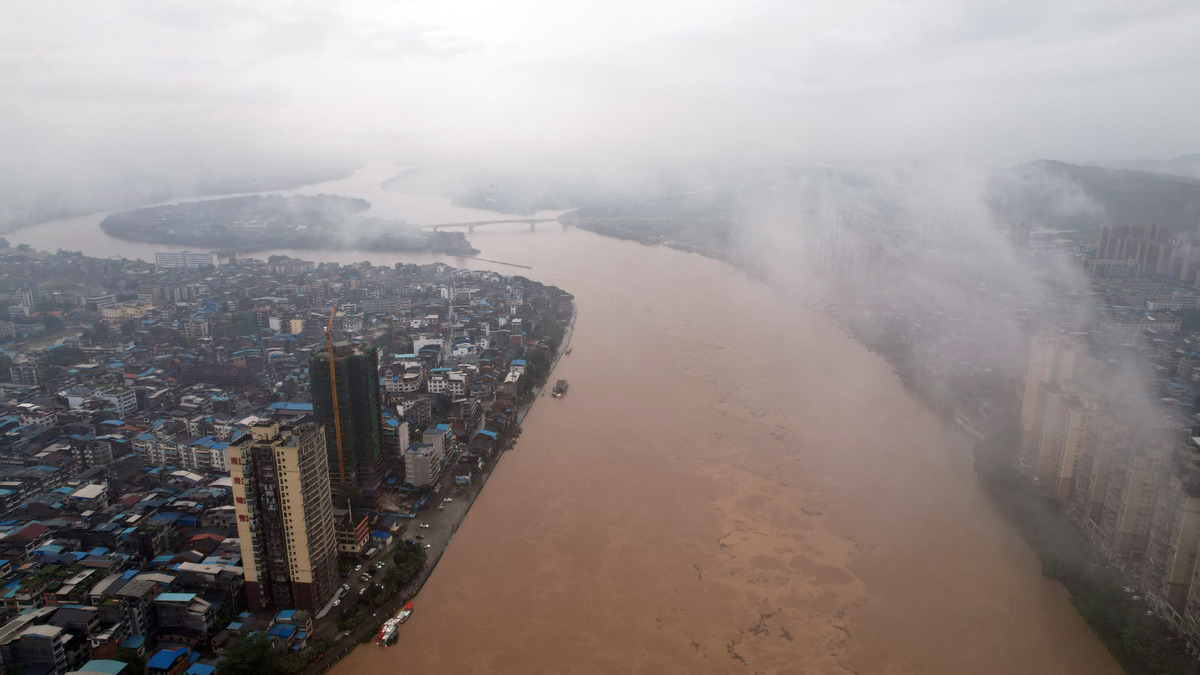
China experienced several extreme weather events during the first half of this year. Since the start of the rainy season, South China has been subjected to a series of intense precipitation events. The cumulative precipitation in the middle and lower reaches of the Yangtze River has exceeded the levels observed during the same period in previous years. Heavy precipitation and extensive flooding have affected numerous provinces, including Anhui, Hubei, Hunan, Jiangxi and Guizhou. This has presented a significant challenge for the authorities in terms of flood prevention and management.
Extreme weather events are becoming more frequent due to intensifying climate change. In its Sixth Assessment Report, the Intergovernmental Panel on Climate Change (IPCC) stated that climate change has had a wide and far-reaching impact on the ecological system and society. Furthermore, the resulting risks are expected to become increasingly complex and more challenging to manage in the future.
It is therefore imperative that China prioritizes the enhancement of its early meteorological warning capabilities, given that it represents the first line of defense against extreme weather events. Evidence shows that the provision of just 24 hours' notice of an impending natural disaster can lead to a 30 percent reduction in damage, making early warnings a powerful tool in the fight against climate change.
China is the largest developing country in the world and is prone to frequent natural disasters. Official data show that the direct economic losses resulting from natural disasters in China during the previous year amounted to 345.45 billion yuan (approximately $47.6 billion).
The potential for a cascading impact of compound extreme weather events is increasing due to rapid socioeconomic development across the world. This issue can be addressed by establishing a state-of-the-art early warning system. In this regard, it is crucial that China establishes an efficient and effective early warning system, further strengthens the coordination between meteorological and disaster-response departments, and pays closer attention to point-to-point weather forecasts.
China attaches great importance to disaster prevention and mitigation, as well as the advancement of its meteorological department through the provision of precise monitoring and accurate forecasting mechanisms.
In fact, the government has established a Chinese-style early warning system that encompasses numerous industries, communities, rural areas and individuals. Additionally, it has implemented a comprehensive array of policies, regulations, and standards at the national, provincial, municipal and county levels with the objective of enhancing inter-departmental coordination, thereby enabling the issuance of warnings concerning imminent extreme weather events. It has also completed the first nationwide survey on natural disaster risks, which will help improve its disaster prevention and mitigation efforts.
Moreover, China has established a mechanism to ensure the suspension of classes, work and transport services in high-risk areas and high-sensitive industries as soon as early warnings are issued about extreme weather events. Additionally, about 400,000 educational initiatives have been implemented with the objective of fostering raising awareness about disaster prevention and mitigation strategies among schools, villages, enterprises, and communities. This initiative aims to encourage individuals to relocate to safer areas to mitigate the impact of severe weather events.
China is behind developed countries in issuing warnings, particularly in remote areas. However, it has intensified its efforts in this regard, particularly through its engagement with the United Nations Early Warnings for All initiative. Its approach to disaster management entails enhancing disaster knowledge and management, and monitoring and forecasting both normal and extreme weather events, issuing warnings, and responding to natural disasters in a timely manner.
Currently, the meteorological department is well prepared to collect global multi-hazard threat data, analyze more than 10 types of meteorological and hydrological events, and assess the potential damage that these events could cause in advance.
The cornerstones of an effective early warning system are monitoring and forecasting. Following the completion of the largest network of ground-based observatories on Earth, China has become a global leader in space weather monitoring. Furthermore, a meteorological disaster-risk prediction model has been developed, which provides information on the types of disasters that may occur, the areas and industries that may be most affected, and the duration of the potential impact.
In accordance with the national emergency warning information system, China has established a multi-tiered early warning system at national, provincial, municipal and county levels. This system is linked with 16 different sectors and industries, thereby ensuring the prompt collection and dissemination of information regarding extreme weather events.
It is crucial that disaster preparedness and response strategies are in place to facilitate the transformation of information into action. In this regard, China's high-level "call-and-response" mechanism is capable of notifying the local emergency departments of the timing of extreme weather events, and the extent of potential damage.
Moreover, China organizes a series of international training programs and seminars, which are designed to enhance the capacity of developing countries, including those with less developed economies, to effectively respond to extreme weather events. Additionally, China offers invaluable expertise in global forecasting, monitoring and risk assessment of extreme weather events, thereby contributing Chinese wisdom.
Nevertheless, it is important that the government take actions to promote innovation in the science and technology sector, enhance research on extreme weather events and their impacts on vulnerable regions and industries, develop advanced early warning technologies, and establish national standards for addressing climate change.
The author is the Deputy Director General of the Department of Science, Technology and Climate Change at the China Meteorological Administration. He also serves as the China's representative of the IPCC Bureau.
The views expressed herein do not necessarily reflect those of China Daily.
If you have a specific expertise, or would like to share your thought about our stories, then send us your writings at opinion@chinadaily.com.cn, and comment@chinadaily.com.cn.