EU should withdraw tariffs on Chinese electric cars







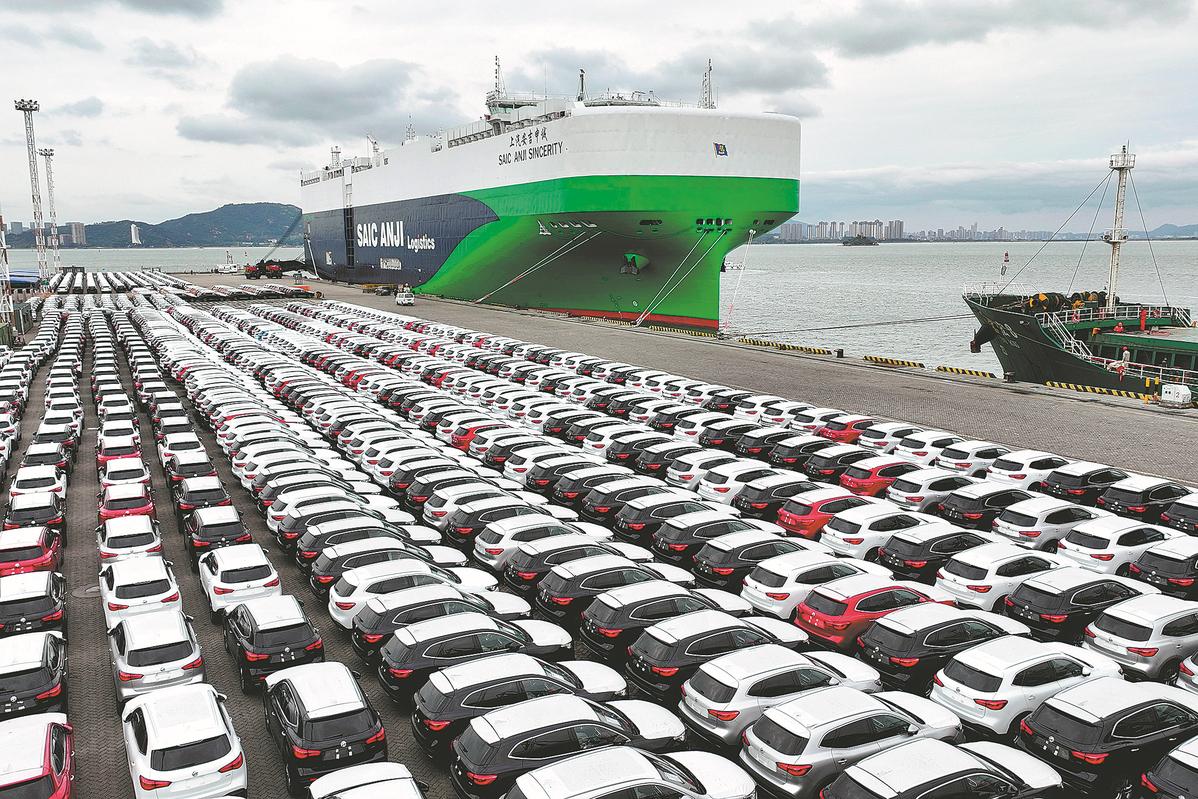
The European Commission imposed additional tariffs of up to 37.6 percent on Chinese electric vehicle makers on July 4. Compared to the rates pre-disclosed on June 12, several provisional duties were slightly reduced based on comments submitted by interested parties on the accuracy of the calculations, according to a statement from the commission. It said the provisional duties effective from July 5 will apply for a maximum of four months. Within that time, a final decision has to be taken on definitive duties through a vote by European Union member states. Once adopted, the definitive duties will be in place for five years.
The European Commission's measure seeks to safeguard its industries in the face of the swift expansion of Chinese-manufactured electric vehicles in the world market. This move not only represents clear protectionism but also breaches the regulations of the World Trade Organization, and poses a threat to the German automotive industry.
Electric vehicles in China are popular with consumers because their unique design and technology are in line with consumer preferences, not because of their low cost.
Imposing tariffs on Chinese-made electric cars is detrimental for Europe's auto industry and overall economic growth. Firstly, these tariffs will negatively impact European consumers by driving up prices.
As a result, the cost of purchasing electric vehicles imported from China will increase for EU buyers. Additionally, other automakers might seize the opportunity to hike their prices to boost profits. Ultimately, European consumers will bear the financial burden of such protectionist measures.
The tariffs will also have a major impact on the European car industry. While tariffs may temporarily create a comfort zone for European automakers by reducing competition in the market, healthy competition is essential for innovation and technological advancement. The imposition of tariffs, which would disrupt the electric vehicle supply chain, could exacerbate the challenges faced by European automakers. These companies benefit greatly from collaboration in EV supply chains and joint research and development initiatives with their Chinese counterparts.
The real challenge for the European electric vehicle industry comes from developments within Europe, not imports from China. In 2023, although China's exports to the EU increased by 45.5 percent, Chinese electric vehicles accounted for less than 11 percent of the total number of electric vehicles registered in the EU. China's electric car market share in Europe is not large. Talk of Chinese electric cars flooding the European market is just propaganda.
In Germany, there is considerable opposition to these European Union measures. Many believe that the European Commission must immediately withdraw the tariffs on Chinese electric cars.
According to a recent statement by the German Association of the Automotive Industry, the German automotive industry does not expect Chinese EVs to flood the European market. It expects them to account for around 5 to 10 percent of the total passenger car market by 2030.They also point out that in 2023, German manufacturers sold around 10 times as many electric cars in China as Chinese manufacturers have sold in Germany.
German carmakers are strongly opposed to anti-subsidy tariffs and are advising the European Commission to find a negotiated solution with China without delay. Protectionist measures such as the imposition of additional tariffs on Chinese electric vehicles will not help remove the challenges facing the German and European auto industry, but will create the risk of trade friction. In the event of trade friction, tariffs imposed by the EU could quickly have a negative impact, slowing down the EU's promotion of electric vehicles and digital transformation.
The German Association of the Automotive Industry is consequently warning of a trade war that could be triggered by the EU leadership's unilateral action. If China were to impose counter-tariffs on the EU, Germany would suffer enormous losses. At the same time, German car companies and suppliers are operating actively all over China. Therefore, EU tariffs also indirectly affect German companies based in the country. Once you are caught in the spiral of a trade war, there can be no winners.
China is not only the world's largest market, but has also become a driver of innovation in many areas and has a large pool of skilled labor, particularly in STEM subjects. Its infrastructure and productive assets are already more advanced in many areas than in the West. Economic and trade ties with China provide a large number of job opportunities for Germany. In addition, a large amount of capital for the transformation of German companies also comes from China.
The EU tariffs are not an expression of concern about the competitiveness of European or even German car companies vis-à-vis the Chinese. They are an expression of geopolitical fanaticism. Just as the tariffs on Chinese solar panels failed and missed their target, the punitive tariffs on Chinese electric cars will also fail. Just as the sanctions on technology companies such as Huawei and ZTE were only effective in the short term and had the opposite effect in the medium to long term, the car tariffs, should they come into full effect in November, will also fail in the face of reality.
If the European Commission really wanted to live up to its claim of strategic autonomy, it would have to adopt an independent position on China that reflects the interests of its member states and their companies, rather than follow the suit of its ally in its policies.
The author is an independent political analyst, and a research fellow at the Germany-based think tank Schiller Institute. The views do not necessarily reflect those of China Daily.