Is Britain changing for the better?







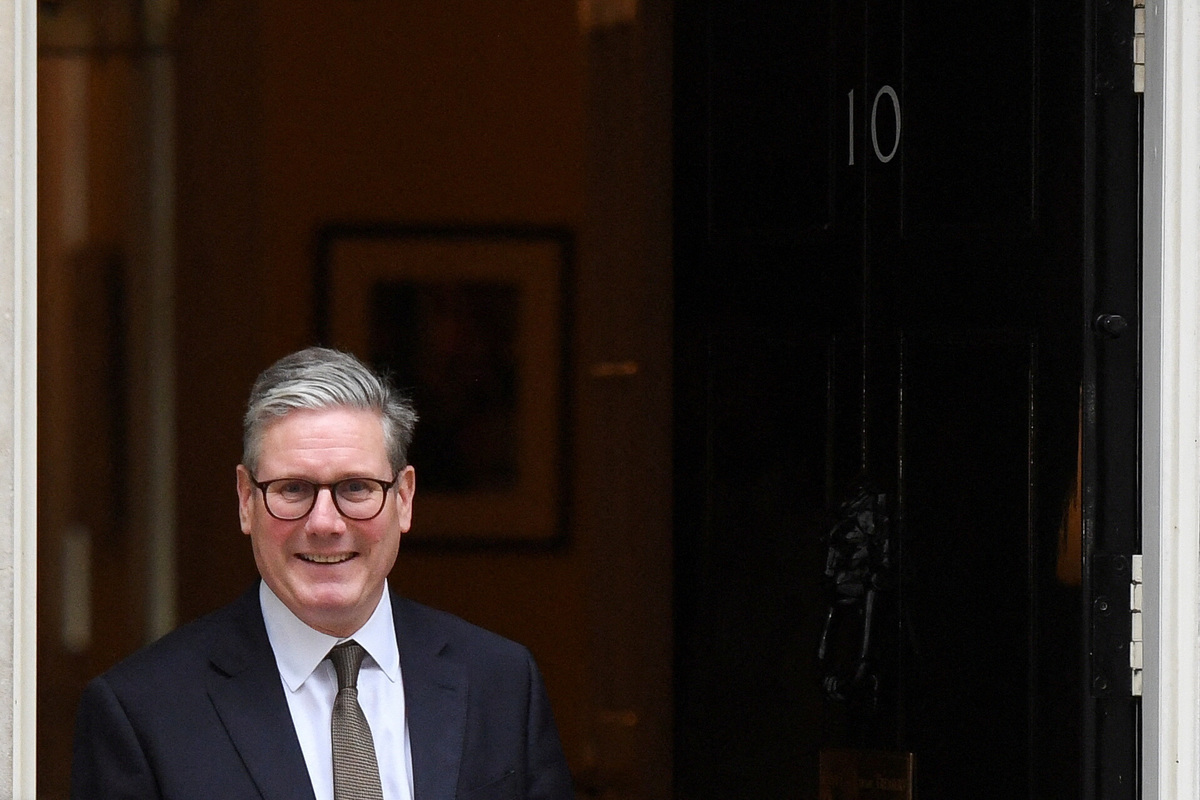
Britain has a newly elected left-of-center government headed by first-time Prime Minister Keir Starmer. The electorate voted for change and this is important since Britain is one of the five permanent members of the United Nations Security Council.
It is difficult to overstate the change already wrought by the election. Britain has a bicameral legislature with an elected House of Commons and an appointed House of Lords that can delay, but not reject, legislation. The new Labour government has a working majority of 181 seats, or parliamentarians, in the House of Commons, the largest of any government since 1924. It can, therefore, introduce whatever laws and changes it wishes.
However, the election result masks the deep divisions in the country. Britain does not employ a system of proportional representation in which the division of parliamentary seats between political parties reflects the number of votes cast. Rather, the country is divided into 650 local areas, or constituencies, that each returns to parliament the candidate receiving most votes.
This system resulted in the Labour Party winning 63 percent of the parliamentary seats — 412 — while receiving only 34 percent of the votes cast. The Conservative Party, which formed the previous government, lost 211 seats, leaving it with 121 derived from a 24 percent share of the votes. The remaining 42 percent of votes were divided among 13 smaller parties that together gained just 18 percent of seats, albeit the largest percentage ever.
Given that the turnout at the election was merely 60 percent, the second lowest since 1885, only 20 percent of potential voters lent their support to the incoming government. Recognizing these divisions, Starmer spoke to those not voting Labour in his first speech as prime minister: "I say to you, directly, my government will serve you".
Britain is ill at ease with itself. The COVID-19 pandemic killed more people than in any country other than the US and Peru. Brexit, the decision to leave the European Union, divided the country: 52 percent for; 48 percent against. Median incomes since the last Labour government in 2010 have risen by only 6 percent, a fifth of the rate of increase seen before the 2007-09 Great Recession. Confidence in the national government fell from 50 percent in 2010 to 33 percent in 2023, with a poll this year indicating that only 39 percent of Britons trust its institutions. Trust in Britain is the lowest among 28 countries whereas the same poll reveals that trust is highest in China.
The election reflected this unease. With opinion polls from the start of campaigning predicting a landslide Labour victory, the Conservative Party promoted fear. Labour, they said, would impose a"£2,000 tax rise for every working family", create an "open door to 100,000 illegal migrants" and put Britain in "a dangerous place" were they to receive "a super-majority".
The Labour Party, recovering from its worst electoral defeat since 1935, was understandably risk averse. It promised to end the "chaos" of the Conservative government and encouraged people to "vote for change" while being coy about the changes it proposed. It was pressured into matching Conservative promises of not raising taxes, thereby leaving it unclear how its spending pledges could be funded. The British electorate, therefore, voted against policies that it knew and for those that it could not know.
To stay in power, the Labour government recognizes the need to restore national hope and create a collective national purpose. It intends to do this by demonstrating that politics can be "driven by a sense of service to the country, not considerations of party or self-interest". While the new government is unlikely to look first to China for inspiration, it would be wise to do so since these same values underpin the high levels of trust that the Chinese people have in their institutions.
There are also strong parallels with China in the priority that the Labour government attaches to sustained economic growth and the means of achieving it. In its election manifesto, it presents growth as "the only route to improving the prosperity of our country and the living standards of working people".It proposes "a 10-year infrastructure strategy, aligned with… industrial strategy and regional development priorities". It seeks to "drive innovation" with 10-year budgets for key R&D institutions that allow for "meaningful partnerships with industry". It intends, too, to roll out gigabit broadband and national 5G coverage by 2030.
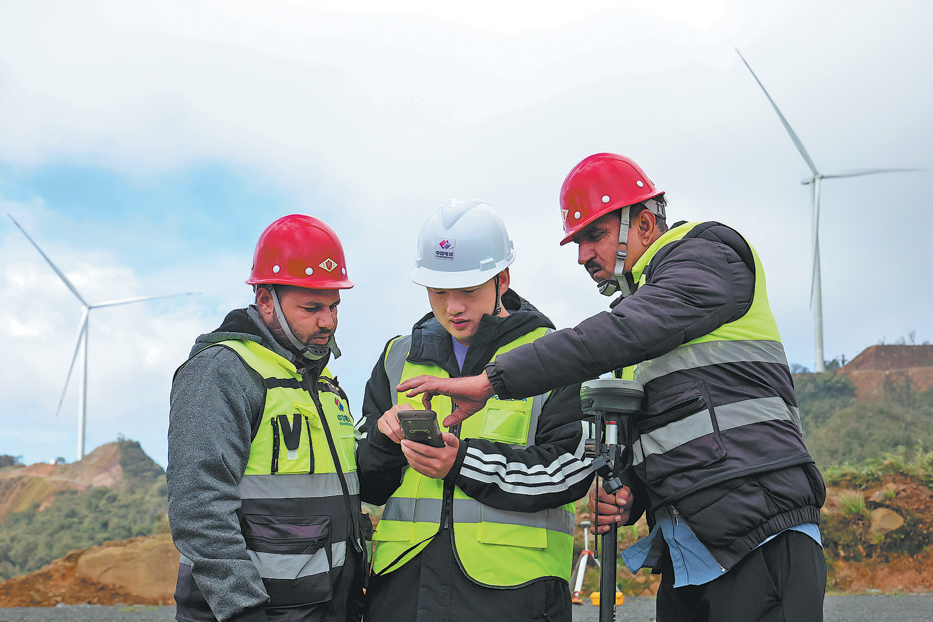
Key to its economic ambitions, although scaled back before the election campaign due to budgetary constraints, is the goal of making Britain "a clean energy superpower". It plans to create a new publicly-owned company to facilitate doubling onshore wind generation, tripling solar power and quadrupling offshore wind energy by 2030.
In these and related areas, China can offer experience and expertise, notably in green energy, 5G technology, nuclear power and electric vehicles. Rather than following the US and European Union in imposing punitive tariffs on electric vehicles imported from China, Britain could seek inward Chinese investment, enabling its goal of net zero to be achieved at a much lower cost.
There is the potential for this to happen. Labour's manifesto explains its intent to "improve the UK's capability to understand and respond to the challenges and opportunities China poses through an audit of our bilateral relationship". David Lammy, the new foreign secretary, similarly advocates "more engagement with China at all levels of government". There is scope, too, for collaboration on global development. The Department for International Development was created in 1997 under the last Labour government. DFID invested heavily in China as a developing country, and became a global leader in development as opposed to charitable aid. This is no longer true.
However, the new Labour government is committed to "restoring development spending at the level of 0.7 percent of gross national income". It aspires "to create a world free from poverty on a livable planet" and views international development as a means of "making the world a safer, more prosperous place".
China's Belt and Road Initiative, its Global Development Initiative and Global Security Initiative demonstrate how these goals, expressed as achieving a community with a shared future for mankind, can be pursued through mutually beneficial cooperation.
The author is a professor at Jingshi Academy of Beijing Normal University and professor emeritus at Green Templeton College of Oxford University.