What is behind US's attempts to badmouth China's economy?








Washington is showing symptoms of a chronic case of "China anxiety," as it leverages media and public opinion to disparage China's development, using buzzwords like "China collapse," "Peak China," and "Chinese overcapacity."
Why does China's development trigger such fear in Washington, prompting it to adopt a more insular stance? What are US politicians trying to achieve by portraying China negatively and obscuring its progress?
Guided by an entrenched zero-sum mentality, Washington has launched a barrage of propaganda targeting China, leveraging its dominance in global narratives to hype the so-called "China threat," and denigrate China's growth as "overcapacity."
While Washington is coercing the rest of the world into "de-risking" from China, it is not out of concern for the global economy, but driven by its own calculations, both domestic and international.
Domestically, the US economy faces significant challenges: surging public debts, industrial hollowing out, and persistent inflation, among others.
Alarmingly, Americans' one-year inflation expectations rose to the highest level in six months, according to last month's consumer sentiment report by the University of Michigan. Consumers expressed worries that "inflation, unemployment, and interest rates may all be moving in an unfavorable direction in the year ahead," said Joanne Hsu, director of the consumer sentiment survey.
While Washington is unable to resolve the country's economic issues, it is quite adept at finding scapegoats.
As the second-largest economy, China has emerged as America's favorite foreign scapegoat, allowing the latter to play the victim, said Stephen Roach, senior fellow and lecturer at Yale University, in his book "Unbalanced: The Codependency of America and China."
Some US politicians also exploit polarizing domestic sentiments to advocate protectionism and play the "China card" for electoral gains.
Nevertheless, no matter how skillfully Washington trumpets its anti-China rhetoric, the underlying issues in the United States persist, resulting in growing economic disparities, social injustice, and unprecedented levels of xenophobia.
This anti-China rhetoric, coupled with Washington's failing stewardship, entangles the United States in a vicious cycle that fuels public resentment, social division, and political polarization.
By exaggerating the competitive aspect of bilateral ties and the potential threat of the Chinese economy, Washington also seeks support for its protectionist foreign policies and containment strategies, particularly in trade.
These latest, eye-popping buzzwords, in fact, have helped Washington create purported justifications for its protectionist measures like high tariffs and export controls, and are building momentum for its "de-risking" efforts, thereby paving the way for further escalation of its China containment policy, which is proven to be overbearing and unprincipled.
The US clamoring about "the imminent collapse of the Chinese economy" also aims to arouse doubt and panic globally, deterring investment in China.
The hidden agenda behind the repeated Western narrative of China is obvious -- to deter international capital and investment from flowing into China, said Mikhail Morozov, deputy editor-in-chief of Russia's Trud newspaper, adding that such rhetoric has been proven ineffective, as multinationals overwhelmingly desire to continue benefiting from the ever-growing Chinese economy.
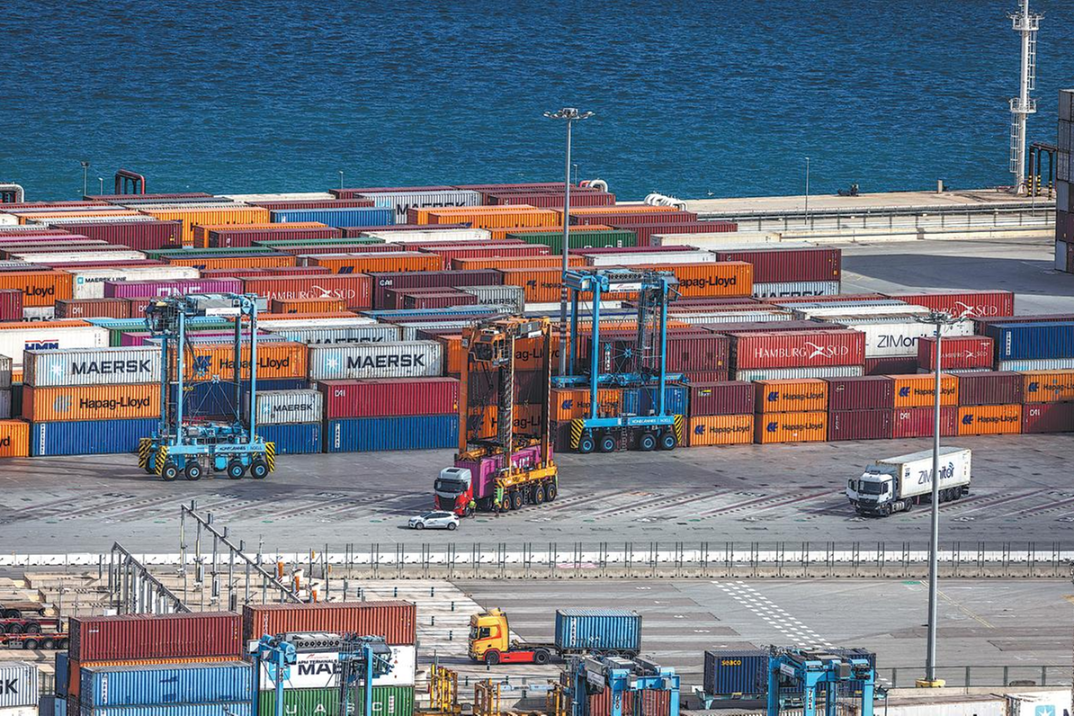
Despite attempts to undermine China's economic influence, China's global trading network continues to expand robustly. The country has become the world's largest trader of goods and a major trading partner for over 140 countries and regions, contributing an average of nearly 30 percent to the world's annual economic growth.
Multinationals, recognizing the potential and growth within the Chinese market, remain eager to invest and capitalize on opportunities. This persistent interest underscores the ineffectiveness of Washington's attempts to isolate China economically.
Furthermore, the resilience of China's economy in the face of criticism by Washington and some of its Western allies highlights a fundamental shift in global economic dynamics.
Traditional Western economic powers can no longer single-handedly dictate the terms of global trade. The increasing interdependence of economies means that efforts to diminish China's role are not only impractical but also counterproductive, potentially harming global economic development.
Given the economic challenges facing the United States, US politicians must adopt a more constructive approach to deal with the reality of China's robust development.
The remedy for the "China anxiety" afflicting the United States is clear: prioritize tackling US domestic economic issues through pragmatic policies rather than shifting focus by demonizing a crucial global partner.