How to navigate financial turbulence in East Asia







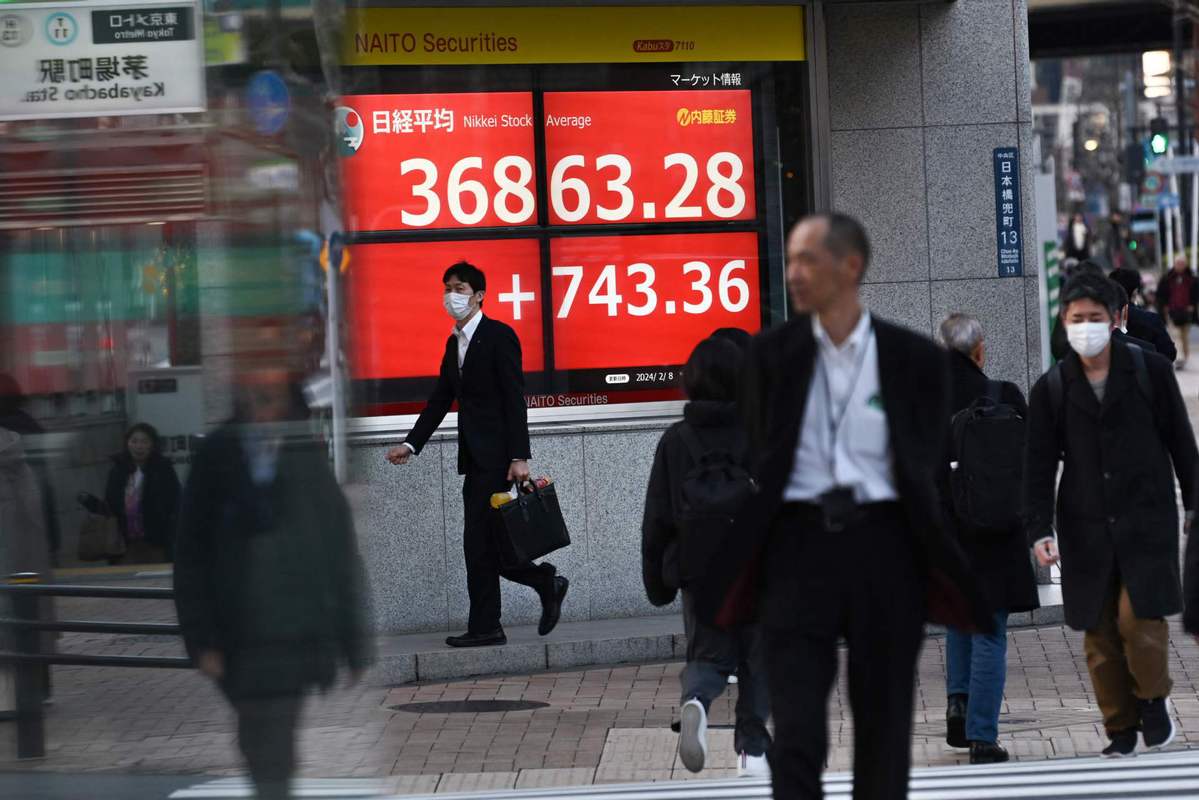
Several East and Southeast Asian economies have faced significant financial market turbulence, with pronounced currency fluctuations, this year. But unlike the 1997 Asian financial crisis, the situation in East Asia today is markedly different. While the likelihood of systemic financial risks in the region remains low, the situation of certain economies warrants caution while increasing the appeal of Chinese assets.
Since the beginning of 2024, the stock and financial markets in East and Southeast Asian economies have been volatile. In particular, in mid-April, major stock indices in Indonesia, the Philippines, Thailand, Vietnam as well as more developed markets like Japan and South Korea, saw significant declines — from 4 percent to 9 percent. Additionally, some East and Southeast Asian economies' currencies have depreciated significantly against the US dollar, averaging a 5 percent drop as of mid-May, with the Japanese yen declining by about 10 percent.
Despite these fluctuations, the situation is different from that during the 1997 Asia financial crisis. First, before the 1997 financial crisis, a substantial influx of hot money into East Asia inflated property and stock prices. And when this capital rapidly exited the East Asian markets, asset prices and currencies plummeted. This time, the depreciation of East Asian economies' currencies has been marked by a high-interest rate period for the US dollar, without the influx of hot money.
Second, many East Asian economies had rigid exchange rate regimes before the 1997 financial crisis, which while superficially eliminating the risk of exchange rate volatility made them vulnerable to collapse when risks accumulated. Today, however, most East Asian economies have more flexible exchange rate systems, where currency depreciation can both signal and reduce risks.
And third, after the 1997 financial crisis, the East Asian economies began accumulating foreign exchange reserves. These reserves are now relatively sufficient, providing a buffer against risks.
East Asian economies' currencies have depreciated this year due to both external and internal factors. Externally, the frequently changing US Federal Reserve's interest rate policy has played a key role in the depreciation of East Asian economies' currencies. After the fourth quarter of 2023, global commodity prices surged, and although markets initially expected the Fed to cut rates in 2024, rising inflation reduced these expectations. Additionally, the rising yield of the US' 10-year Treasury bonds strengthened the dollar, causing East Asian economies' currencies to depreciate.
Internally, the insufficient economic resilience of some East Asian economies has been a contributing factor to currency depreciation. For example, although the Bank of Japan abandoned its policy of negative interest rates in March, the move did not exceed market expectations. Combined with rising US Treasury yields, this led to the further depreciation of the yen. The limited tightening by the Bank of Japan reflects Japan's relatively weak domestic economy, which has prevented the country from taking more aggressive measures to improve the situation.
Similarly, Vietnam's economic performance has been underwhelming, with the country's economy weighed down by the real estate sector, which has even begun affecting the banking industry, further dragging down the Vietnamese dong.
Despite these factors, the risks are controllable. As the United States' economic indicators weaken and inflationary pressure subsides, US Treasury yields are likely to decline, potentially easing the depreciation pressure on East Asian economies' currencies.
The Chinese yuan, too, has depreciated against the US dollar this year, but by only 1.53 percent till mid-May. This is much less than those of other East Asian economies' currencies, which highlights the yuan's relative stability. Unlike the stock markets in many East Asian economies, which have mirrored US market volatility, the Chinese stock market has performed relatively well, especially after bottoming out in February, with its gains exceeding 10 percent. And the growing investment value of Chinese assets is likely to support a stable yuan.
The trajectory of China's stock market and currency might progress independently, with little influence of the US market and dollar movements. As real estate and local debt risks gradually subside, the robust fundamentals of China's economy will help mitigate the external shocks, too.
Nevertheless, in an increasingly interconnected global economy, fluctuations in East Asian and global financial markets will impact China's financial market. So government departments need to maintain market stability by preventing the changes in the policies of the Fed and the European Central Bank from impacting the Chinese economy.
Besides, investors should carefully monitor the economic trends in the US and the European Union, especially the policy shifts of the Fed and the European Central Bank. Additionally, understanding the economic dynamics and potential risks in the East Asian economies is crucial for making informed investment decisions.
The author is an assistant researcher at the Institute of World Economics and Politics, Chinese Academy of Social Sciences. The views don't necessarily reflect those of China Daily.
If you have a specific expertise, or would like to share your thought about our stories, then send us your writings at opinion@chinadaily.com.cn, and comment@chinadaily.com.cn.