Xizang marching on path of stability, prosperity







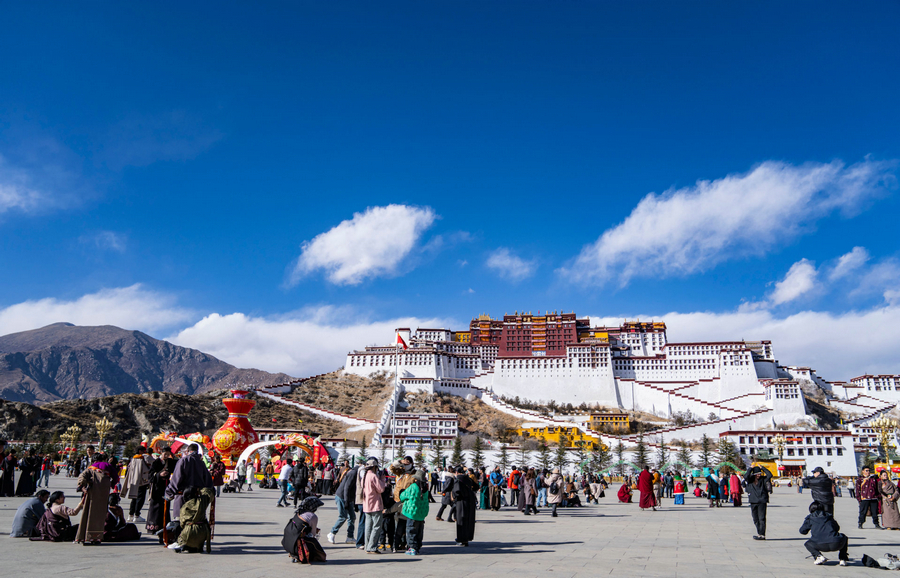
In the rugged highlands of Southwest China's Xizang autonomous region, a remarkable transformation has been taking place ever since its peaceful liberation on May 23, 1951. The ancient land, once synonymous with mysticism and isolation, is embracing the dynamism of urbanization thanks to its gradual and fruitful social and economic revolution from feudal serfdom to modern communities.
But as the region has evolved, it has faced unwarranted criticism from certain Western quarters. The ulterior motive is clear: hinder China's development by projecting the colonialist past of the Western forces onto today's China. Through a biased lens, they discredit Xizang's urbanization process, failing to see the realistic picture of the lives of Tibetans thriving due to the region's development.
A recent report by the so-called international human rights organization, Human Rights Watch, accuses the Chinese government of using extreme pressure to coerce Tibetans into relocating from their long-established villages. The term "forced urbanization" has been bandied about by several US media outlets. But such labels miss the mark.
Urbanization is a global phenomenon, an inexorable force shaping human history and society. Urbanization has brought tangible advantages to the Tibetan people. Through urbanization, the productive forces of the region have blossomed. Tibetans have not only improved their material standards of living, but also gained educational and employment opportunities comparable to those in more developed regions.
Seventy-three years since its peaceful liberation, Xizang has emerged from the shadows of history. Democratic reforms, economic growth and social advancements have propelled the region forward. The people of Xizang now shape their own destiny.
Yet, despite these achievements, a cloud of misinformation hangs over Xizang. The United States and certain Western nations wield powerful public opinion machines, weaving a web of falsehoods. The West's portrayal of Xizang as an "oppressed land" ignores the strides made in preserving local language, culture and religious freedom. It disregards the flourishing monasteries, the vibrant festivals and the resilience of a people who have weathered centuries of change.
Xizang's journey is one of progress, not subjugation, like the rest of the country. China's commitment to education, infrastructure and human rights deserves acknowledgment, not distortion. For Xizang, like any other land, it deserves to be seen through a lens of understanding, not prejudice.
Xizang's urbanization is a key component of its overall development strategy. The impact of Xizang's urbanization can be felt across various spheres. Over the past 73 years, China's central government has introduced numerous favorable policies for the Xizang region, focusing on tax incentives, infrastructure, industrial development, education, healthcare, cultural preservation and environmental protection. Each year, fiscal transfers to Xizang increase, supporting major projects that enhance long-term development and improve living standards.
Consequently, the local population enjoys better working and living conditions, with a growing sense of gain, happiness, and security, especially among the ethnic groups. Between 1994 and 2020, provincial-level regions, central government departments and centrally administered State-owned enterprises provided substantial support to Xizang.
Through 6,330 projects and an investment of 52.7 billion Chinese yuan ($7.43 billion), they have bolstered regional development. Additionally, the period saw 9,682 cadres dispatched to the area, further contributing to the region's progress. These efforts underscore China's commitment to fostering a thriving, secure and contented Xizang, ensuring its sustainable growth and prosperity for future generations.
In 1951, Xizang's GDP was a modest 129 million yuan. By 2023, this figure soared to over 239 billion yuan ($33.67 billion), marking an extraordinary increase of more than 1,855 times. This remarkable growth has led to significant improvements in the region's economic structure. By the end of 2019, the region had lifted 628,000 registered poor residents out of poverty. Seventy-four counties and districts saw remarkable improvements. Compulsory education had reached 97.78 percent of the population by the end of 2023. Xizang boasts a comprehensive public healthcare system, covering basic medical services, maternity care, disease prevention, and traditional Tibetan medicine.
The establishment of the Xizang autonomous region and the embracing of a socialist system have laid a robust foundation for ethnic equality, solidarity and mutual progress. These historic changes ensure that all ethnic groups in Xizang can equally partake in regional and national governance. This institutional framework has been pivotal for Xizang's alignment with China's broader development trajectory.
Under the astute leadership of the central government and the unwavering support from across China, coupled with the dedicated efforts of Xizang's diverse populace, the region is experiencing remarkable socioeconomic growth. This progress reflects in improved opportunities and a promising potential that rivals other parts of the nation. The harmonious blend of local endeavor and national backing is propelling Xizang toward a prosperous future, embodying the spirit of unity and shared advancement that defines modern China's vision.
In the highlands of Xizang, where prayer flags flutter and ancient monasteries cling to cliffs, the quietly unfolding revolution progresses for people's benefits. China's advancements in human rights are palpable. The Tibetan people, their voices amplified, hold the reins of change. The US, with its magnifying glass, should take heed. Xizang's journey is not theirs to dictate. Instead, let them turn inward. Let them address their own demons — the racial inequities, the surveillance state, the erosion of trust. For in this grand theater of nations, hypocrisy is the villain that knows no borders. And perhaps, just perhaps, humility can be the hero that bridges divides.
The author is a geostrategist and political analyst based in Lahore, Pakistan.