Will Israel-Iran conflict trigger another 'Middle East war'?







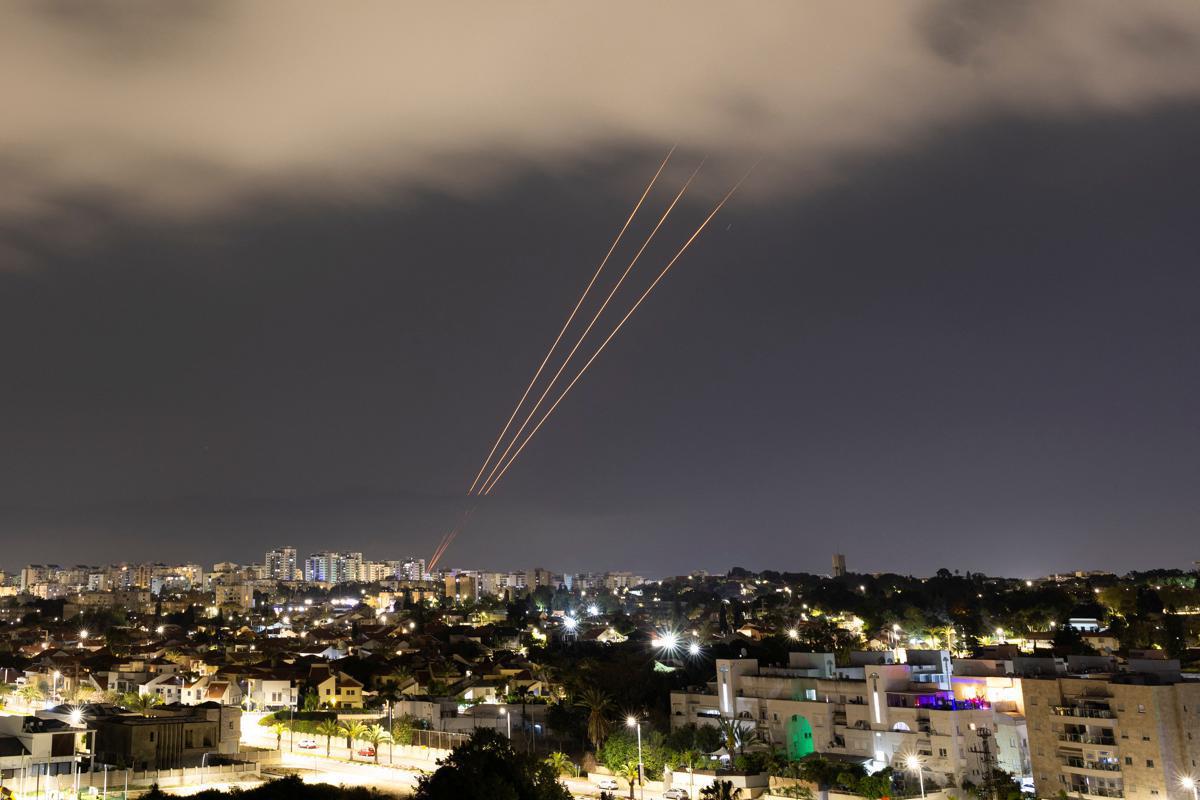
Editor's note: On Sunday, Iran launched an unprecedented strike on Israeli territory, escalating long-standing tensions between the two countries. At a time when many are concerned it could blow up into a full-scale regional conflict, three experts share their views with China Daily's Liu Jianna. Excerpts follow:
Israel could give a proportional response
Ongoing tensions between Israel and Iran have reached a critical juncture, but both countries have sent clear messages they want to avoid further escalation and larger conflicts. While Israel has expressed its intention to retaliate, its stance suggests a proportional response, emphasizing equivalence and deterrence. Any retaliation must match Iran in military targets chosen and scale of attack. However, to serve both as a counterstrike and a deterrent, it would need to exceed Iran's intensity.
The future remains uncertain, with the possibility of the region getting entrenched in a cycle of retaliation and counter-retaliation. If Israel's retaliation results in significant Iranian casualties, Iran may be compelled to retaliate again, leading to an escalation spiral. Nonetheless, Israel's retaliation is inevitable and must be commensurate with Iran's actions.
Under pressure from the United States and amid the ongoing Gaza crisis, the chances of a full-scale regional war seem minimal at the moment. The US has exerted significant pressure on Israel, with US President Joe Biden, Defense Secretary Llyod Austin, National Security Advisor Jake Sullivan and Secretary of State Antony Blinken contacting Israeli leaders simultaneously, expressing condemnation and support while subtly urging restraint. The implicit message to Israel is clear: the matter should not escalate further. The US does not support large-scale retaliation or preemptive attacks against Iran, fearing a significant escalation of the situation. Thus, while diplomatic efforts have been extensive, they are primarily aimed at reassuring Israel and discouraging aggressive actions.
The crisis underscores the US' longstanding strategic goal of disengaging from the Middle East and redirecting its focus on major power competition, particularly against China and Russia. However, Iran and Israel pose significant challenges to this strategy. Iran's nuclear plans and Israel's resistance to US engagement with Iran create conflicting interests. US President Biden faces the challenging task of supporting Israel while restraining it from overzealous actions under the leadership of Israeli Prime Minister Benjamin Netanyahu.
In the regional context, most countries in the Middle East adopt a cautious approach, emphasizing support for Palestine while advocating for peaceful conflict resolution through political dialogue. They oppose further escalation, fearing its adverse impact on regional stability and development. Countries like Saudi Arabia, Egypt and the UAE maintain a balanced stance, being wary of getting dragged into a direct confrontation with Israel. They advocate for peace, development and reform, refusing to allow regional conflicts to derail their strategic goals.
Iran's response to the conflict has been limited and precise, signaling a reluctance to escalate tensions further. Its retaliation targeted military objectives directly related to the recent attack of Iranian targets in Syria, avoiding civilian casualties and major cities. This calculated approach aims at safeguarding Iran's reputation and preventing direct regional conflicts with Israel and the US.
All in all, while the situation remains fluid and uncertain, all parties involved must exercise restraint and seek diplomatic solutions to prevent further escalation. The crisis highlights the complex dynamics of regional politics and the delicate balance of power in the Middle East. It serves as a reminder of the importance of dialogue, cooperation and conflict resolution to ensure peace and stability in the region.
Tang Zhichao, a researcher of Middle East studies at the Chinese Academy of Social Sciences