



Aging a challenge but also an opportunity







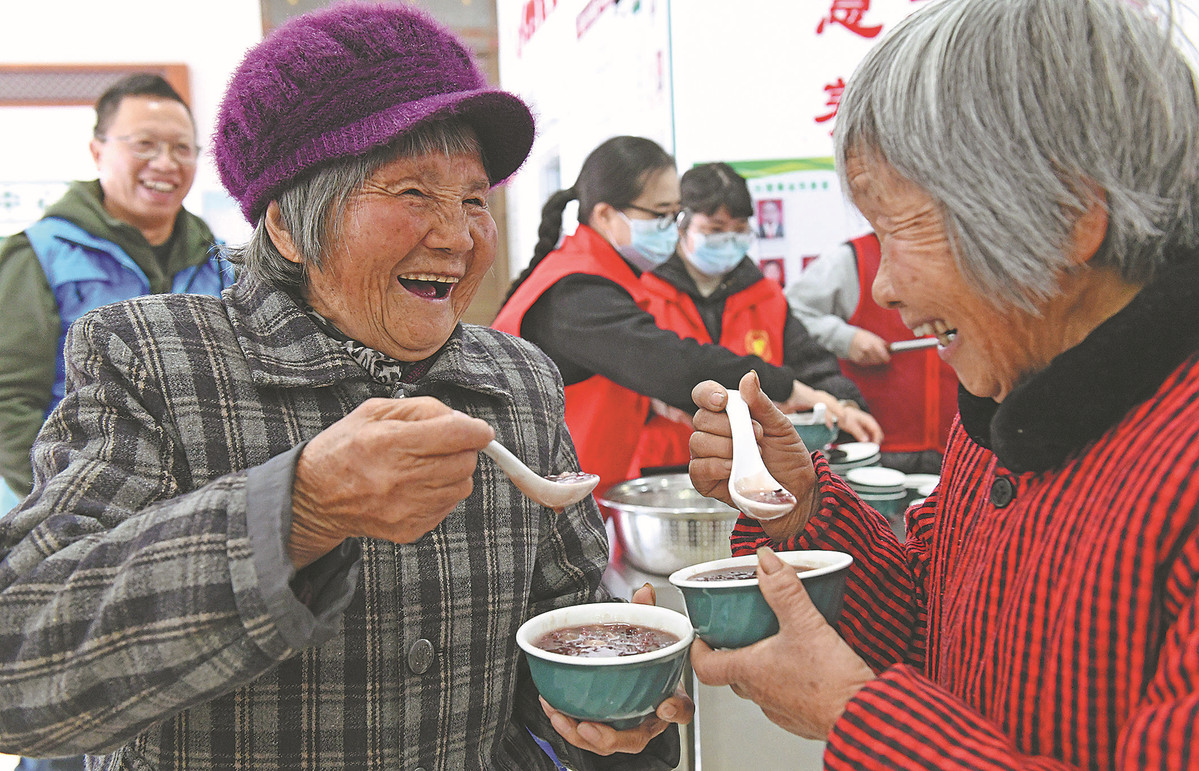
China is home to a rapidly aging population today because of decades of low fertility rates, tremendous improvements in the health of the people and a low mortality rate. But the general consensus around the world is that this demographic shift represents some kind of existential threat to China's social and healthcare systems, as well as its economic (and maybe even political) role in the world.
This view, however, is far too simplistic. Population aging is simply a new demographic reality for many countries and one which is intrinsically neither negative nor positive. It is only how countries respond to this change through their institutions, and policies and their implementation that will determine whether they prosper or not. In fact, the early stages of population aging helped drive China's remarkable economic growth over the past decades as the country turned a large working-age population into a powerful productive workforce — what we call the "first demographic dividend".
While the early stages of population aging can be conducive to economic growth, many economists argue that there can also be a "second demographic dividend": the creation of a market in which a large group of senior citizens with relatively high rates of savings consume goods and services at a higher rate. This is often called a "silver market" or "silver economy".
These goods and services can include lifestyle and health products, new technologies, leisure and tourism, and financing. On a larger scale, corporations can design new robotics and develop other technologies to support both individual users, as well as healthcare and social service operators (termed "gerontechnology").
The 14th Five-Year Plan (2021-25) recognizes the need to more vigorously address the population aging problem. The "Opinions on Developing the Silver Economy and Improving the Well-being of the Elderly", recently issued by the General Office of the State Council, China's Cabinet, reveals more details of this strategy. And a major policy of both the five-year plan and the State Council document is, indeed, to unleash the potential of the "silver economy".
In fact, China is well placed to realize the full potential of the "silver economy" for a number of reasons.
First, China does have a large and rapidly rising aging population, but the savings rates of senior citizens, in general, in China are comparatively high.
Second, because of the low fertility rate and relatively early marriage and childbearing, many older couples have become "empty-nesters" relatively early in their lives. This, coupled with the existing retirement age and longer life expectancy, means elderly people in China today have an extended consumption period.
Third, through what we call "cohort replacement", the elderly people in China will become more highly skilled, and healthier and wealthier with the passage of time and thus contribute to the economy, and boost the economy by consuming more.
Finally, as a significant industrialized economy, China can reap a "double dividend" from the "silver market" in which elderly people are consumers and the industry and service sectors producers. In fact, true intergenerational success can be achieved by engaging younger people in the "silver economy".
To ensure these initiatives succeed, however, it is crucial that goods and services are designed by or with the help of elderly people, but not necessarily for elderly people alone. This means recognizing that the end users have a better idea of what they need than, say, a 22-year-old graduate from any of China's colleges. For that, however, the design and testing process would need to be shifted out of the factories to communities. There is also a need to make regulations on quality a key part of the government's strategy, including ensuring people involved in scandals are prosecuted and punished according to law.
The "silver economy" can be a driver of economic growth, because it will open up new avenues of consumption. Yet it is important that the development of the "silver economy" is not only aimed at urban, high- and middle-income consumers. Instead, it should be inclusive, and serve as a means to improve the well-being of all older persons.
In other words, the "silver economy" should be developed in such a way that it serves a higher purpose, instead of simply boosting growth. The "silver economy" should be about enabling and empowering senior citizens, not only as consumers but also as senior members of society, as well as providing wider choices for all, regardless of their income level.
While the potential of the "silver economy" has been recognized in many parts of the world, China can break new ground by using the "silver economy" to improve the overall wellbeing of elderly people.
The views don't necessarily reflect those of China Daily.
If you have a specific expertise, or would like to share your thought about our stories, then send us your writings at opinion@chinadaily.com.cn, and comment@chinadaily.com.cn.





