



Tokyo has sadly thrown caution to the wind







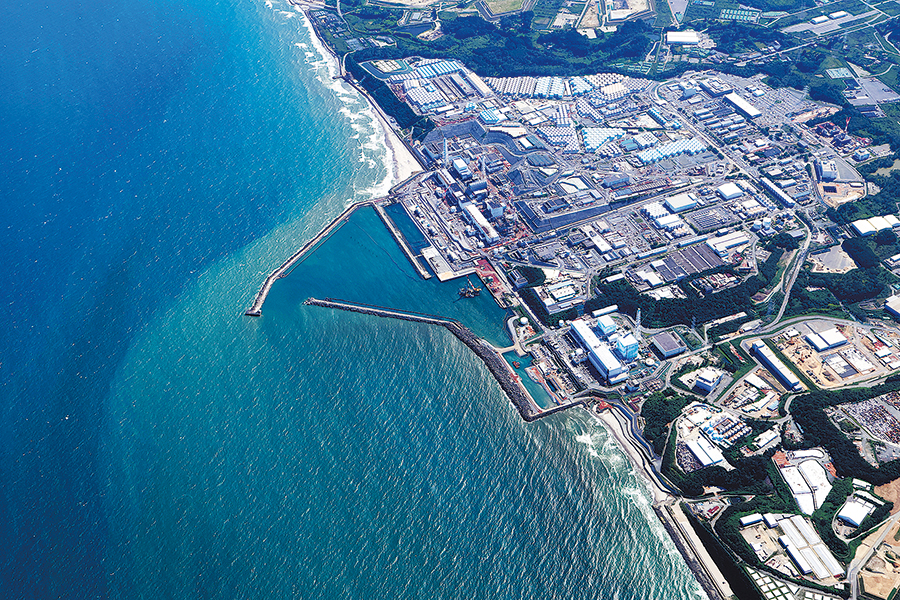
Japan has thrown caution to the wind by starting to dump the nuclear-contaminated water from the damaged Fukushima Daiichi nuclear power plant into the sea on Aug 24.
It is always better to err on the side of caution, particularly when it comes to something like nuclear-contamination and global food supply chains. What is at stake here is also the potential threat to public health on the global level — which calls for extra caution.
"Caution is the eldest child of wisdom," French novelist, poet and playwright Victor Hugo (1802-1885) famously said.
China has been vociferously opposing Japan's decision to discharge radioactive water from the Fukushima facility and responded to Japan releasing the radioactive water into the ocean by imposing a ban on a range of foodstuffs, seafood in particular, from Japan. The Hong Kong and Macao special administrative regions took similar measures.
Foreign Ministry spokesman Wang Wenbin has been repeatedly voicing Beijing's opposition to Japan's radioactive water discharge plan. Wang said that had Fukushima's nuclear-contaminated water been truly safe — after being "treated" using the Advanced Liquid Processing System-Japan wouldn't need to dump it into the sea, "and certainly shouldn't if it's not".
The decision of the Japanese government and the Tokyo Electric Power Company has been condemned by many sectors of civil society in Japan, such as fishers and ecologists. Greenpeace Japan has said the Japanese government's "decision disregards scientific evidence, violates the human rights of communities in Japan and the Pacific region, and is non-compliant with international maritime law".
Greenpeace Japan has also said the discharge plan has failed to conduct a comprehensive Environmental Impact Assessment, as required by its international legal obligations, given that there is a risk of significant transboundary harm to neighboring countries, such as the Democratic People's Republic of Korea, the Republic of Korea, China, and the Philippines.
All this shows China is not alone in its principled opposition to Japan's selfish action of releasing the radioactive water into the ocean. I find the Japanese decision especially puzzling for two reasons.
First, as the world's only country that has suffered the horrible consequences of nuclear weapons used in armed conflict, I expected Japanese politicians to be much more cautious in tackling the aftermath of the destruction the earthquake-triggered tsunami caused to the Fukushima nuclear power plant in 2011.
Second, as an island nation with a long history of fisheries and a globally appreciated culinary tradition based on seafood in particular, I expected Japan's political elite to address the radioactive water issue much more seriously and judiciously. They have failed miserably on both fronts.
I take pity on the hard-working fisher folks in Fukushima and hope their legal action against the Japanese government's move will put an end to it.
Reportedly, the alternative vapor release disposal plan proposed by some was rejected by Tokyo for not just technical but also financial reasons, as the ocean discharge plan requires only one-tenth of the cost of disposing of the radioactive water through the vapor release method.
I don't know much about physics and chemistry, but I am a strong believer in common sense, people-first policies and cautiousness in public affairs.
As a die-hard optimist, I would not rule out the possibility of common sense prevailing on Japanese leaders and prompting them to eventually withdraw their 30-year-long plan to discharge the radioactive water into the ocean and replace it with something which would not harm the marine ecology and human health.
The author is director of The Macau Post Daily.
The views do not necessarily reflect those of China Daily.





