Inbound tourism recovery key to overall sector's health








The tourism industry's recovery, which started with the lifting of the COVID-19 pandemic restrictions in December 2022, has gathered momentum with the summer vacation witnessing a boom in domestic tourism and a slight rebound in outbound tourism.
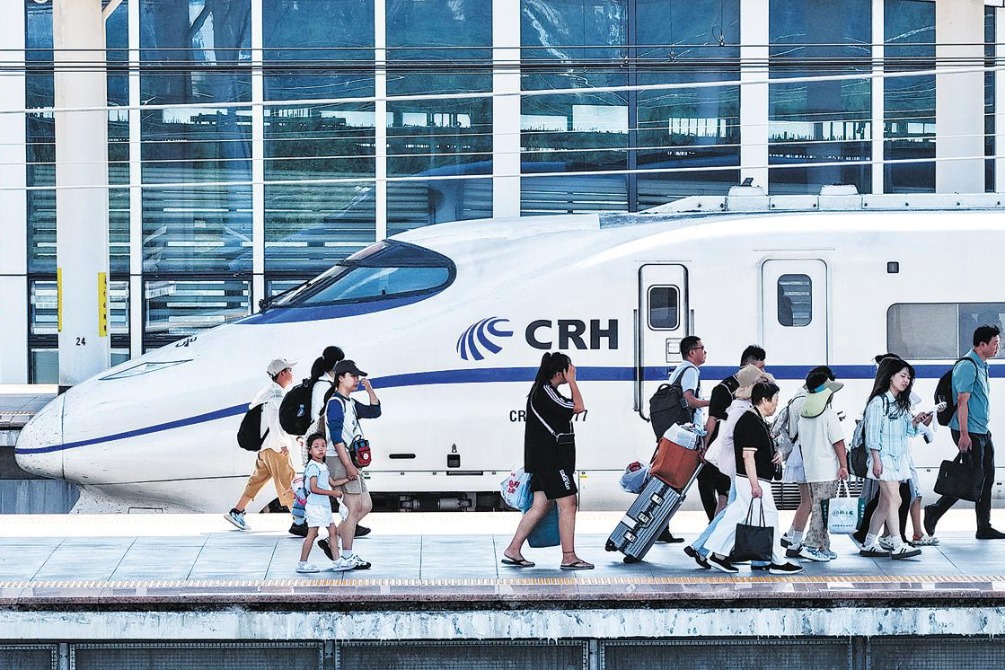
On the one hand, there is a surge in the number of passengers at airports and train stations, and tickets to museums and popular scenic spots are becoming hard to buy, making tourism one of the biggest contributors to domestic consumption this summer. On the other hand, the Ministry of Culture and Tourism recently announced the third batch of countries and regions, increasing the total number to 138, that have reopened for group tours from China from Aug 10.
While the domestic tourism industry is recovering rapidly and outbound tourism is resuming, the continuing downturn in China's inbound tourism market has aroused concerns. Several seminars have been held and many articles published over the past few months to give suggestions on the measures the authorities can take to boost the recovery of inbound tourism.
For example, Chinese embassies in many countries have announced that some visa applicants have been exempted from fingerprint collection, and the central authorities are mulling increasing international flights. Also, the recent upgrading of WeChat Pay and Paypal will enable foreign users to link international cards to their phones and use the mobile payment system in China, and the authorities have approved of and are promoting a new panda logo to attract more foreign tourists.
The number of inbound tourists reflects a country's soft power, international appeal and competitiveness. Inbound tourism also earns foreign exchange and strengthens China's soft power, shaping China's image and increasing its attractiveness to overseas tourists.
Friendship develops and strengthens due to close contact between people, and is critical to sound state-to-state relations. Overseas tourists can have a direct and objective experience of a country by traveling to its different cities and tourist attractions. The development of inbound tourism will allow more overseas tourists to experience China's rich culture, beautiful natural scenery and rapid economic growth, and allow them interact with the local people and share their views with their friends, relatives and acquaintances back home, helping them to better understand China.
Inbound tourism involves many elements, including international relations, destination marketing, visa policies, international airlines, mobile payment systems, cultural diversity, and consumption habits.
The development of inbound tourism will help remove the erroneous perception people abroad have formed about China because of some foreign media outlets' slanted reporting. It can also help China overcome the loss of its price advantage due to the appreciation of the yuan and inflation, and gain new advantages amid the fierce competition with neighboring countries, as well as balance the competitive relationship among domestic, inbound and outbound tourism. And it will make it easier for overseas tourists to book train tickets and avail of the services of tourist guides, while helping domestic tourism agencies to take advantage of new media platforms to devise new marketing strategies.
The healthy development of inbound tourism, however, depends on the joint efforts of government departments and the tourism industry. First, the authorities should implement favorable policies to promote inbound tourism and set long- medium- and short-term goals to solve problems related to visa, international airlines, payment system, ticket booking, price competition and talent training. They should also consider establishing a development fund to give tax reduction and subsidies to tourism agencies and train tourist guides, especially bilingual tourist guides.
Second, the authorities should build a multi-dimensional image of China, and better tell China's stories to other countries so the people there can better understand the country and its people. There is also a need to establish international tourism marketing institutes that would promote scientific marketing planning and practices. And overseas branches of State-owned and private companies should encourage overseas Chinese and local people who know China to promote inbound tourism.
Third, diversified marketing policies should be introduced, keeping in mind the cultural and social differences, to target new markets, while the authorities need to work with local tourism agencies and related government departments to establish a dedicated website to provide information on visa, tickets, customs and hotels in multiple languages.
Fourth, the supply chain of the tourism sector should be strengthened to encourage the return of and attract new professionals to the sector. And hotels, restaurants and scenic spots need to improve their services to attract more individual overseas tourists from different cultural and religious backgrounds and with different consumption habits.
And fifth, new technologies such as big data, artificial intelligence and virtual reality should be used to enhance overseas tourists' experience, and set up multimedia centers in major cities to attract more overseas tourists.
Since tourism can enrich societies, and promote cultural exchanges and friendship, we hope the inbound tourism industry recovers faster, so that an increasing number of overseas tourists can experience the real and multi-dimensional China.
The author is director of the Tourism Research Center, Chinese Academy of Social Sciences. The views don't necessarily represent those of China Daily.
The opinions expressed here are those of the writer and do not necessarily represent the views of China Daily and China Daily website.
If you have a specific expertise, or would like to share your thought about our stories, then send us your writings at opinion@chinadaily.com.cn, and comment@chinadaily.com.cn.