



US won't succeed in checking China's rise







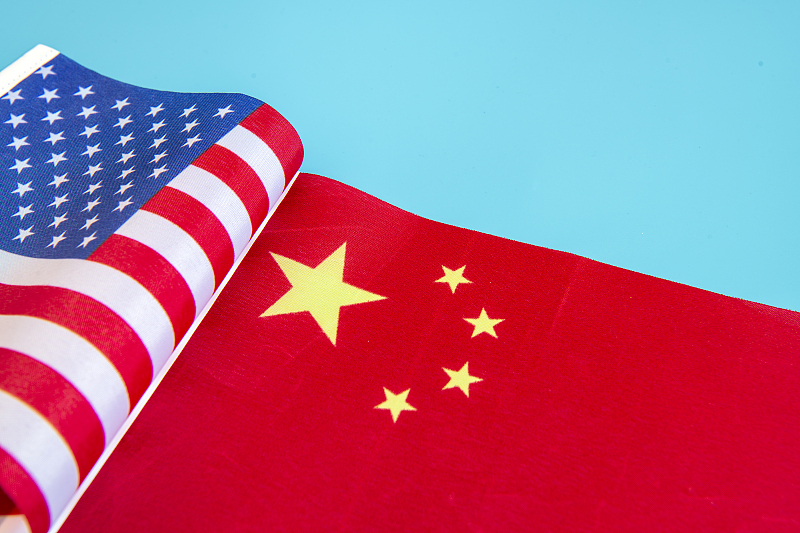
The fable of the wolf and the lamb comes to mind whenever a bully tries to defend his behavior. Like the ravenous wolf in the fable, the United States has issued legislation after legislation and taken measures after measures to disrupt China's development and check its peaceful rise, thereby impeding the economic growth of Asia as a whole. The latest piece of such legislation is the "Ending China's Developing Nation Status Act".
The bill to "end China's unfair international advantage" was proposed by Senators Chris Van Hollen of the Democratic Party and Mitt Romney of the Republican Party on Feb 9. And while the House of Representatives approved it in March, the Senate Foreign Relations Committee passed it on June 8.
The goal of the "Ending China's Developing Nation Status Act" is to prevent the granting of "developing nation" status to China in future treaties and international organizations, especially the World Trade Organization.
The US has been trying to justify its move by claiming that China "unfairly" benefits from the "favorable treatment" in the WTO due to its developing nation status. The US purposefully ignores the reality that China is home to more than 1.4 billion people, and focuses only on the size of China's economy and its foreign trade volume to object to China's developing nation status.
In a news briefing on June 9, Foreign Ministry spokesperson Wang Wenbin said:"The United States does not label China as a 'developed country' because it appreciates or recognizes China's development achievements. The real reason behind the termination of China's developing country status is to hinder China's development." He added that, "China's status as the world's largest developing country is based on facts and international law" and its "legal rights as a developing country will not be deprived by US politicians".
Wang pointed out that China's status as a developing country is recognized internationally, including by the WTO, and the United Nations Framework Convention on Climate Change and the Montreal Protocol.
The Foreign Ministry spokesman also emphasized that China's contributions to global economic growth and the UN's regular budget and peacekeeping missions are much higher than those of most developed countries. "Some US lawmakers are concerned that China will use its developing country status to evade international responsibilities. This is completely unnecessary," Wang said.
The US' primary worry is that China is challenging its hegemony in the WTO by bringing developing nations together. In the WTO, developing countries make up about two-thirds of the total 164 members. And realizing trade is critical for their development, these countries are participating more intensely in WTO affairs. So by attempting to check China's development, the US is also trying to check their development.
As a developing nation, China is aware of the obstacles to progress and the unjust treatment other developing countries have to endure. That's why China has been promoting the interests of these countries by helping accelerate just and equitable development. China sees its interests as being intertwined with the collective interests of other developing countries. As an active player in the Global South, therefore, China has been making efforts to help maintain global economic development by advocating international rules which support their right to access markets, engage in fair competition, play a role in commodity pricing, sign trade agreements with other economies and demand quality products.
China's unique position in the international community also allows it to serve as a bridge between the developed and developing economies, and balance the interests of large and small economies, thus becoming a powerful force driving shared global development.
The country's most recent white paper on foreign development cooperation, issued in January 2021, opens with a simple sentence: "China is the world's largest developing country." China asserts throughout the policy document outlining the country's vision for global cooperation that it is based on the "principle of mutual benefit" and declares that South-South cooperation, which promotes the sharing of expertise among countries in the Global South, is the focus of China's international cooperation in the 21st century.
Also, China calls on the developing world to take its future into its own hands. The US is understandably not amused by China's role on the global stage, because if a country of more than 1.4 billion people can become a high-income economy by following the Chinese development model and Chinese modernization, its impact on the world will be decisive. It will instill new confidence among developing countries that they no longer have to depend on the industry and supply chains controlled by the developed nations to further their economic development.
During the early years of England's most intense anti-absolutist campaign, Henry Herbert, earl of Pembroke (1538-1601), became famous for declaring that "A parliament can do anything, but it cannot make a man a woman or a woman a man." The US Congress' move to deprive China of its developing country status is an attempt to turn men into women. To put it politely, it is not up to the US to decide whether China is a developing country or not.
A Turkish proverb, "fear is helpless in the face of certainty!", makes it clear that fear will not prevent the inevitable from happening. Similarly, the frantic struggles of the US cannot prevent China's rise.
The author is chairman of Turkish-Chinese Business Development and Friendship Association. The views don't necessarily reflect those of China Daily.





