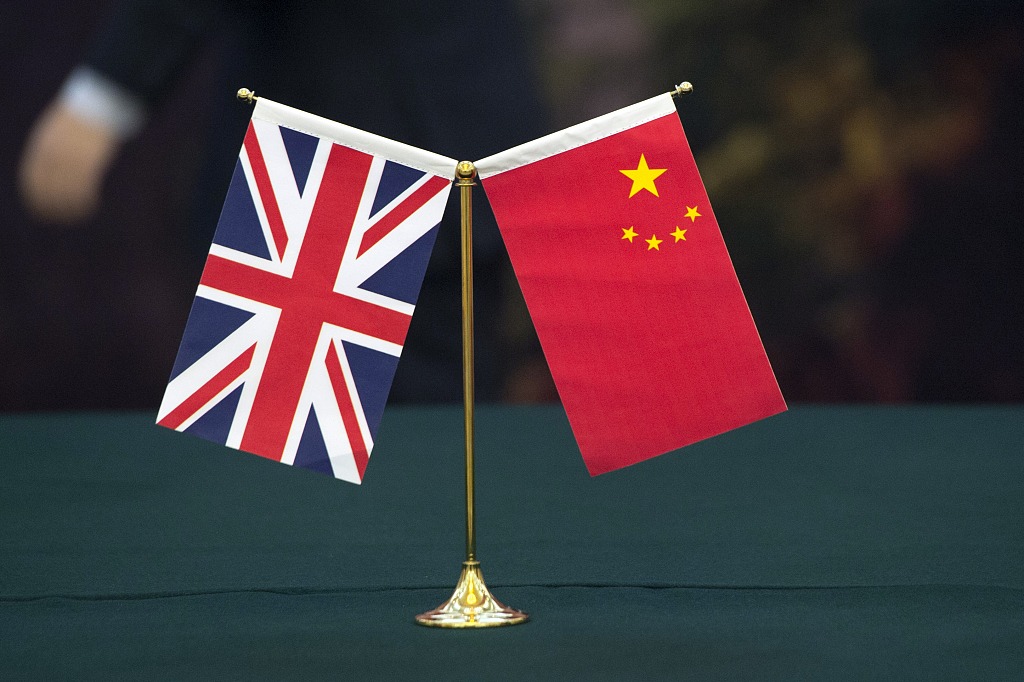
Experts' take on the Sino-US Science and Technology Cooperation Agreement







Change in attitude as relationship changes
Based on the report of the National Science and Technology Commission and the White House Science and Technology Policy Office to Congress in 2022, Denis Simon analyzed the changes in Sino-US science and technology relations in different periods. He said that from 1979 to 2006, scientific and technological cooperation, educational exchanges, trade and investment between China and the United States continued to grow, but since the tail end of the Obama administration, the United States begun to regard China as an important threat to the prosperity and well-being of Western democracies. He said the essence behind this transformation lies in the fact that the early Sino-US scientific and technological relationship was asymmetrical, unequal, and closer to that between teachers and students. With China's rapid science and technology and economic development, the Sino-US scientific and technological relationship has become much less asymmetrical and closer to equality, which has triggered a change in the attitude of the United States toward China. The data later presented by Caroline Wagner and others confirmed the growing importance of China's research capabilities as well as the increased significance of bilateral collaboration to US researchers.
After 40-plus years of development, China's role in the international science and technology system has continued to grow. From being an outsider in the Western-oriented science and technology system, Chins has gradually become a more important player in international cooperation, from playing a marginal role only slightly involved in the global innovation network to a full participant in the integration of the innovation network, with the goal of becoming an S&T leader.
Simon also reviewed the win-win results of Sino-US scientific and technological cooperation in the past four decades. The US research university management model, scientific research funding system, peer evaluation and scientific research integrity system, scientific research safety norms, scientific and technological achievement transformation system, Silicon Valley model, etc. have had a far-reaching impact on China. Both countries also have benefited from the flow of STEM talents. In addition, the two countries have achieved a series of major scientific research cooperation achievements in clean energy, life sciences and health, agriculture, earthquake monitoring, forest protection, remote sensing ground monitoring, etc. China and the United States cover the world's largest market, offer key products and resource sources, etc. The renewal of the agreement is not only symbolic, but also has many substantive aspects. These include the synergistic gains from cross-border scientific and technological cooperation, the capture of new knowledge from emerging innovation hotspots, the many benefits from joint scientific research cooperation and personnel exchanges, and joint responses to global challenges such as climate and pandemics. Simon believes that considering the growth of China's scientific and technological economic strength and the changing context of Sino-US scientific and technological relations, to make Sino-US scientific and technological cooperation smoother, it is necessary to reset the dynamics of the cooperation. He said we should not simply renew, but also to revise and update the agreement. He called for the creation of a new Sino-US Science and Technology Cooperation Agreement 2.0.
Finally, Simon raised three important questions that American officials need to think about: First, compared with the disadvantages, what are the benefits of not renewing the agreement for the United States? Is this trade-off worth it? Second, will China's recent institutional reforms related to scientific and technological innovation affect the nature of Sino-US scientific and technological cooperation? And third, can the United States' "decoupling, breaking and de-risking" policy really weaken China's scientific and technological strength? Even if it successfully hinders China's scientific and technological development in the short term, can it be guaranteed to achieve the same goal in the medium and long term?
Denis Simon is a professor with the University of North Carolina at Chapel Hill.