



Today's Tibet evinces path to modernization







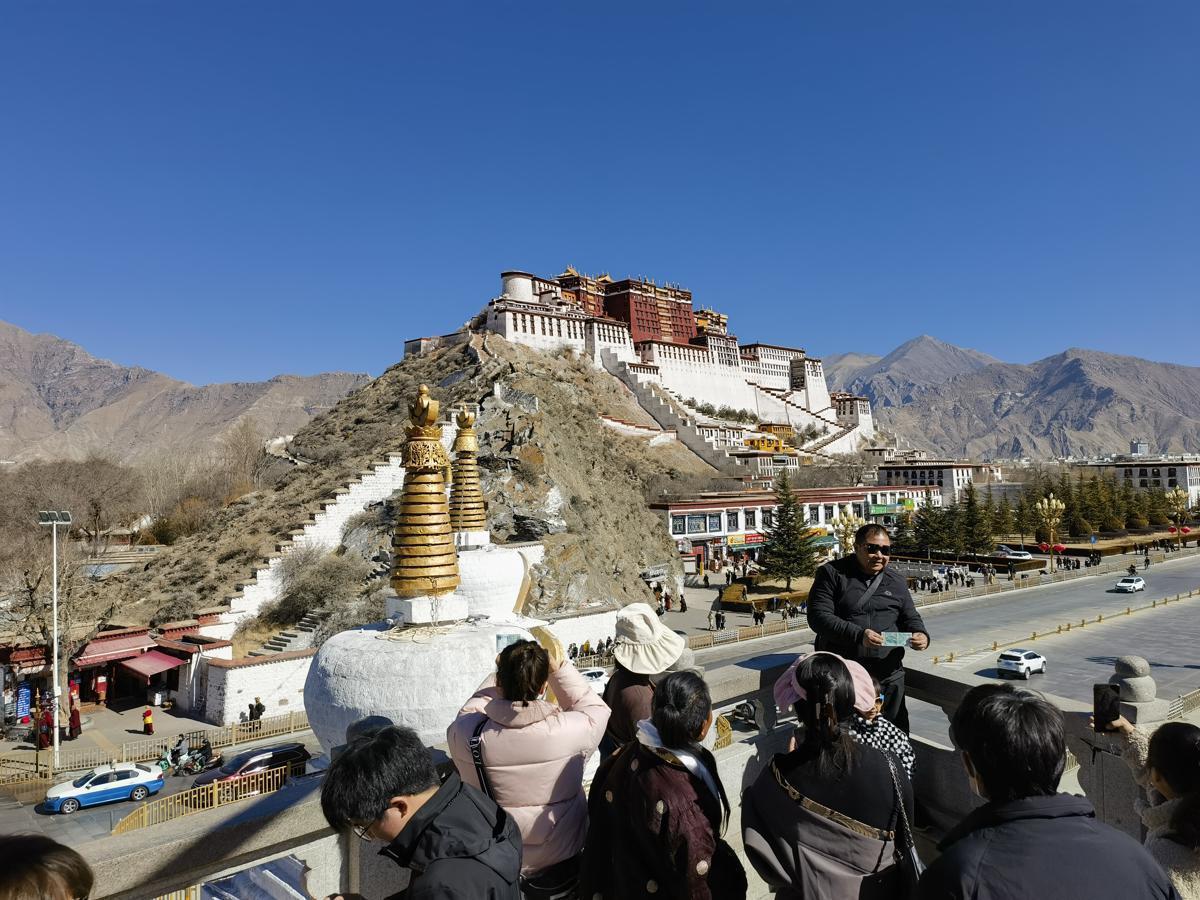
The development of Tibet and ethnic groups has always been one of the priorities for the central government. Based on equality, China's ethnic policy is aimed at realizing common prosperity and improving the lives and livelihoods of all ethnic groups. As such, the modernization of Tibet reflects Chinese-style modernization.
The modernization process of Tibet, however, has been arduous. By taking measures for the liberation of social productivity, the central authorities laid a solid foundation and gave the institutional guarantee for Tibet's modernization. Today, Tibet is a socialist society where all workers enjoy equal rights and freedom in all aspects of life.
Since the founding of the People's Republic, especially since the launch of reform and opening-up, the Communist Party of China has led the Chinese people, including members of all ethnic groups, in promoting socialist modernization and adopting a modernization path with Chinese characteristics based on the reality of the situation.
Tibet's modernization process has followed the correct direction, and gradually developed its own characteristics. Agriculture and animal husbandry had been the main sources of income for the people in Tibet for thousands of years. Even in the 1950s, agriculture and animal husbandry accounted for 97.7 percent of the total production value in the region.
However, with the long-term support of the central government and the assistance of other provinces, the economic structure of Tibet has undergone a thorough transformation. Although the agricultural output value of Tibet is at a historic high, the primary industry of agriculture and animal husbandry account for the smallest proportion of output value, while the secondary and tertiary industries, bolstered by modern economic elements, have been contributing more to Tibet's economy.
This indicates Tibet's economic structure is gradually improving. Before the peaceful liberation of Tibet in 1951, more than 90 percent of the people in the region were serfs who suffered super-economic exploitation. To change the situation, the central government led the Tibetan people in realizing development through socialist modernization practices, which helped them to emerge out of poverty and pursue high-quality development.
The implementation of the poverty alleviation program helped fulfill the Party's promise of leaving no one behind on the road to realize moderate prosperity, as it ensured all 74 counties in Tibet, the only provincial-level contiguous poverty-stricken region in China were lifted out of poverty by the end of 2019. This also helped China realize the first centenary goal of building a moderately prosperous society in all respects.
Before liberation, Tibet was a hierarchical society where most people were poor, lacked economic autonomy, and led a miserable life, forcing them to pin all their hopes on the afterlife.
After the peaceful liberation of Tibet, however, the construction of Qinghai-Tibet and Sichuan-Tibet highways greatly shortened the distance between Tibet and the rest of the country. And the establishment of new schools allowed the people of the plateau to see a different world, a world of modern education.
These democratic reforms following the liberation of Tibet helped overthrow the old system, allowing the Tibetan people to live with dignity, exercise freedom of action, and adopt modern ways in a socialist democratic country. Today, their rights are protected by national laws and regulations, and their needs are met.
In order to improve the Tibetan people's sense of gain and happiness, more than 80 percent of Tibet's budget is devoted to improving people's livelihoods. In fact, Tibetan people's livelihoods have been improving at a faster rate than the national and central-western region's average. In particular, the development of education, healthcare and other sectors has greatly improved the material and spiritual lives of the Tibetan people.
Laws and regulations related to the protection and development of ethnic languages and scripts included in China's Constitution allow Tibetan cultural texts, written in the Tibetan script, to be disseminated not only through books and classrooms but also through television and the internet.
The Qinghai-Tibetan Plateau has the world's most unique and harshest terrain with unusual distribution of species. To protect this magnificent plateau, the central government has been promoting green and sustainable development in Tibet. It has also launched large-scale environmental protection projects, including reverting farmlands to forests and grasslands, and provided exemplary financial support for Tibet's green development. For example, from 2012 to 2022, the central government allocated 29.28 billion yuan ($4.28 billion) in subsidies and rewards for the conservation of grassland ecology in Tibet.
Indeed, Tibet is taking big strides toward modernization that is in harmony with nature and conforms to the central government's new Tibet governance policy, which upholds the Party's leadership, the socialist system with Chinese characteristics and the system of regional ethnic autonomy, while strengthening ethnic unity.
As of 2017, Tibet's GDP growth rate had been in double digits for 24 consecutive years, the highest in the country. And as Tibet has been focusing more on high-quality development since 2018, the traditional barriers to industrial development have been broken, and green development enabled by industrial empowerment has accelerated, while digital industrialization has evolved rapidly and technological innovations have become a driver of the region's development.
While the development achievements of Tibet are the result of the unity and hard work of all ethnic groups living in the autonomous region, the modernization of Tibet is an apt example of what the Chinese modernization model can achieve.
The author is a researcher at the China Tibetology Research Center.
The views don't necessarily represent those of China Daily.
If you have a specific expertise, or would like to share your thought about our stories, then send us your writings at opinion@chinadaily.com.cn, and comment@chinadaily.com.cn.





