



BRI a blueprint for common development







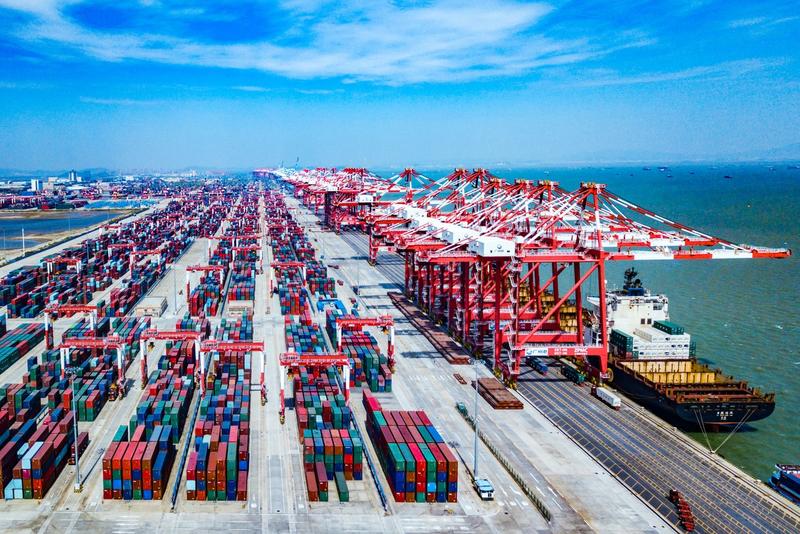
This year marks the 10th anniversary of the Belt and Road Initiative, which President Xi Jinping proposed in 2013 to improve infrastructure connectivity between countries. The Belt and Road Initiative is one of the greatest global development initiatives, and is aimed at improving connectivity (both physical and digital), promoting free and fair trade, and connecting people through cultural, social and scientific exchanges among nations.
The 10th anniversary of the initiative coincides with what experts say could be the end of the terrible COVID-19 pandemic, and the re-opening of China following the optimizing of anti-pandemic measures. But at the same time the world has entered a new cycle of insecurity and instability, both militarily and economically.
There is a wide range of disinformation proliferating in the Western media about the "real agenda" behind the Belt and Road Initiative and China's cooperation with other developing countries. It ranges from China setting "debt traps" for developing countries to China's colonial ambitions to control the strategic minerals and other natural resources of other countries, none of which is based on reality.
China's goals are simple to understand for clear-minded people but too subtle for those who practice neo-colonialism and manipulate situations.
First, China despises zero-sum games, because they are part of the imperialist legacy, and China has been a victim of such games in the past. And second, geopolitics is another notion that China rejects since it is well known how the colonial powers' geopolitics of "divide and conquer" triggered the two world wars. The Cold War which followed World War II was also the result of geopolitics.
What China believes in is win-win cooperation and the fact that interdependency among countries is a guarantee for peaceful co-existence. On the economic front, China considers its own economic progress and prosperity as part of its efforts to promote the development of other countries.
China needs stable and thriving markets for its exports. It also needs a secure and sustained flow of raw materials and other basic products to achieve the goals it has set for itself. Above all, China needs a peaceful and stable environment in which it can progress. These are completely legitimate goals that China is gradually realizing by deepening cooperation with the majority of countries through diplomatic means.
China's proposal to help build a community with a shared future for mankind means that no country can develop and prosper in isolation, and that it should not enrich itself at the expense of other countries.
China does not intend to reinvent the wheel of international relations. The hard-won UN Charter is at the core of global governance, which China supports and adheres to. This has been the basic policy of China since the 1950s when it introduced the Five Principles of Peaceful Coexistence. But with the world facing a complex situation, it was necessary for China to redefine and elucidate some of these principles.
The Global Development Initiative proposed by President Xi Jinping at the UN General Assembly in 2021 is part of China's efforts to redefine and elucidate those principles. What makes the GDI special is that it makes transparent the concept of development, with special focus on developing countries. This differs greatly from the priorities set by the G7 and the European Union, which put emphasis on "political change" rather than addressing the urgent needs of humankind such as the eradication of poverty and hunger, and providing clean water, electricity, healthcare and education for the people.
Even when the West-backed institutions like the World Bank finance "development" projects in developing countries, they do so at a small or micro level with no tangible impact on national economies. The World Bank has been opposing the notion of "mega projects" such as the hydropower projects in Ethiopia and the Democratic Republic of Congo.
The West's policies, which often translate into interference in the political and internal affairs of developing countries, by instigating regime change by destabilizing a country's political system or outright military invasion, have alienated many African and Asian countries from Western financing institutions. In contrast, China's common development principle appears more attractive to the developing countries in general, not least because China, despite itself being a developing country, has lifted about 800 million people out of extreme poverty and is marching toward realizing common prosperity.
As for the Global Security Initiative, it was proposed by Xi in April 2022 amid rising tensions in Europe over the Russia-Ukraine conflict and diminishing efforts to find a diplomatic solution to the problem. In fact, Western powers were (and still are) supplying weapons to Ukraine, making the conflict even more difficult to resolve.
In this sense, security and development are inseparable. As such, maintaining peace through economic development has become the new norm for global governance. The development requirements of the Global South are enormous, albeit even the industrialized world is suffering due to its aging infrastructure, deteriorating services, and increasing economic and social woes.
China alone cannot solve all the problems of the world. There is a need to redefine the notions of development and security by all countries to overcome the myriad of common global challenges. In this context, the Belt and Road Initiative has proved to be a suitable and attractive model for developing countries to promote their economic development. Therefore, the initiative should be supported by the Western powers, not undermined, for the benefit of all.
The author is a board member of the Belt and Road Institute in Sweden.
The views don't necessarily represent those of China Daily.





