



Experts share views on China's institutional reform







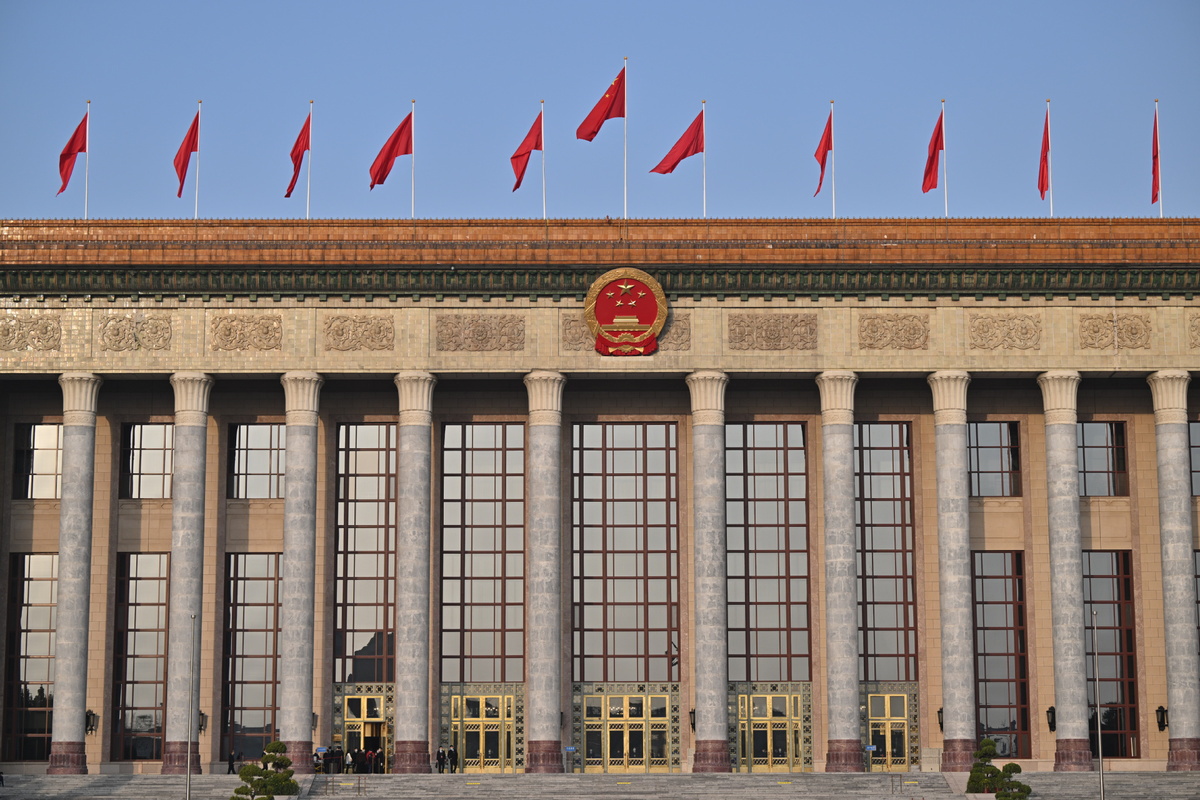
Editor's note: China's top legislature on Friday approved a plan for reforming the institutions of the State Council, China's Cabinet. The institutional reform will help improve governance efficiency, tackle risks and challenges and promote high-quality development. Three experts share their views on the issue with China Daily.
Reform key to high-quality development
by Hao Dong
Editor's note: China's top legislature on Friday approved a plan for reforming the institutions of the State Council, China's Cabinet. The institutional reform will help improve governance efficiency, tackle risks and challenges and promote high-quality development. Three experts share their views on the issue with China Daily.
The Party and State institutional reform is an important measure to implement the spirit of the 20th National Congress of the Communist Party of China, a move to modernize and improve national governance and governance capacity, and a response to the new developments at home and abroad, in order to promote high-quality development.
The 20th CPC National Congress held in October 2022 made important arrangements for deepening institutional reform, which are of far-reaching significance for building a modern socialist country and promoting the great rejuvenation of the Chinese nation.
The financial system reform is an important part of the Party and State institutional reform. With the 14th National People's Congress passing the State Council's institutional reform plan on Friday, the focus is now on optimizing and adjusting the institutional responsibilities in key areas such as science and technology, and strengthening financial regulation, and highlighting the crucial links of economic and social development.
The authorities will set up the national financial regulatory administration to strengthen the country's financial regulation system. The move comes after President Xi Jinping stressed the need for preventing major financial and ethical risks, and better protecting consumers' rights in the financial industry. The new administration will unify the regulatory responsibilities of all financial sectors except for securities, and enhance institutional, behavioral and functional supervision, and improve risk management. The administration will also oversee the supervision of financial holding companies by the People's Bank of China and improve the management of State-owned financial capital.
This reform is an important step toward building a modern financial system and optimizing regulatory mechanisms.
Additionally, China will reorganize the Ministry of Science and Technology, attaching greater importance to innovations in the field of technology in China's modernization process. The ministry will focus on strategic planning, system reform and macro-management, while optimizing the full chain management of innovations, promoting the economic application of scientific research and innovations, and integrating technology with economic and social development. The aim is to establish a new national system for technology development and further promote self-reliance in technology to strengthen strategic emerging industries and upgrade the economy.
To consolidate the centralized and unified leadership of the Party, the CPC Central Committee will also establish a central science and technology commission, so as to strengthen the Party's leadership over science and technology work.
The CPC Central Committee may also strengthen the Party's leadership in financial supervision and management, which will further strengthen the Party's institutional supervision in key areas, and leverage the advantages of the Party leadership and the socialist advantages of appropriately utilizing and allocating resources to make remarkable achievements.
The Party institutions have undergone five rounds of reform since 1982, with the theme of "streamlining" being a significant aspect of most of them, while the State Council, China's Cabinet, has gone through eight rounds of reforms, with the most Party and State institutional reform being in 2018. Over this period, the number of State Council departments has decreased from 100 to 26, resulting in better resource allocation, improved work efficiency, and lower management costs.
These reforms have not only brought economic benefits but also improved government services and administrative efficiency. They have laid a solid foundation for further modernizing the national governance system and governance capacity, and providing strong support for the historic achievements and changes in the country.
The recent proposal of a 5 percent reduction in staff members across central government agencies shows the government's modernization efforts are aimed at optimizing the organizational structure and functional allocation, transforming functions, and improving office efficiency. This will enhance the leadership of the Party in the modernization of socialism and help China use institutional advantages to improve national governance.
This round of reform of the Party and State institutions focuses on key industries and fields, and on removing deeply-rooted vested interests from them. The reform will also address the difficult and major issues of significant social concern and will have a big impact on economic and social development.
The State Council reform is a major decision made by the CPC Central Committee to oversee the development of the Party and State undertakings in a comprehensive manner, meet the requirements of developing socialism with Chinese characteristics in the new era, implement the spirit of the 20th Party Congress and the Second Plenary Session of the 20th CPC Central Committee, further advance the modernization of the national governance system and governance capacity, and help develop a new development paradigm and promote high-quality development.
The author is deputy director of the Department of Strategic Philosophy, the Party School of the Communist Party of China Central Committee.





